When a Room Isn’t Ready: Handling Housekeeping Delays Without Losing Guest Trust
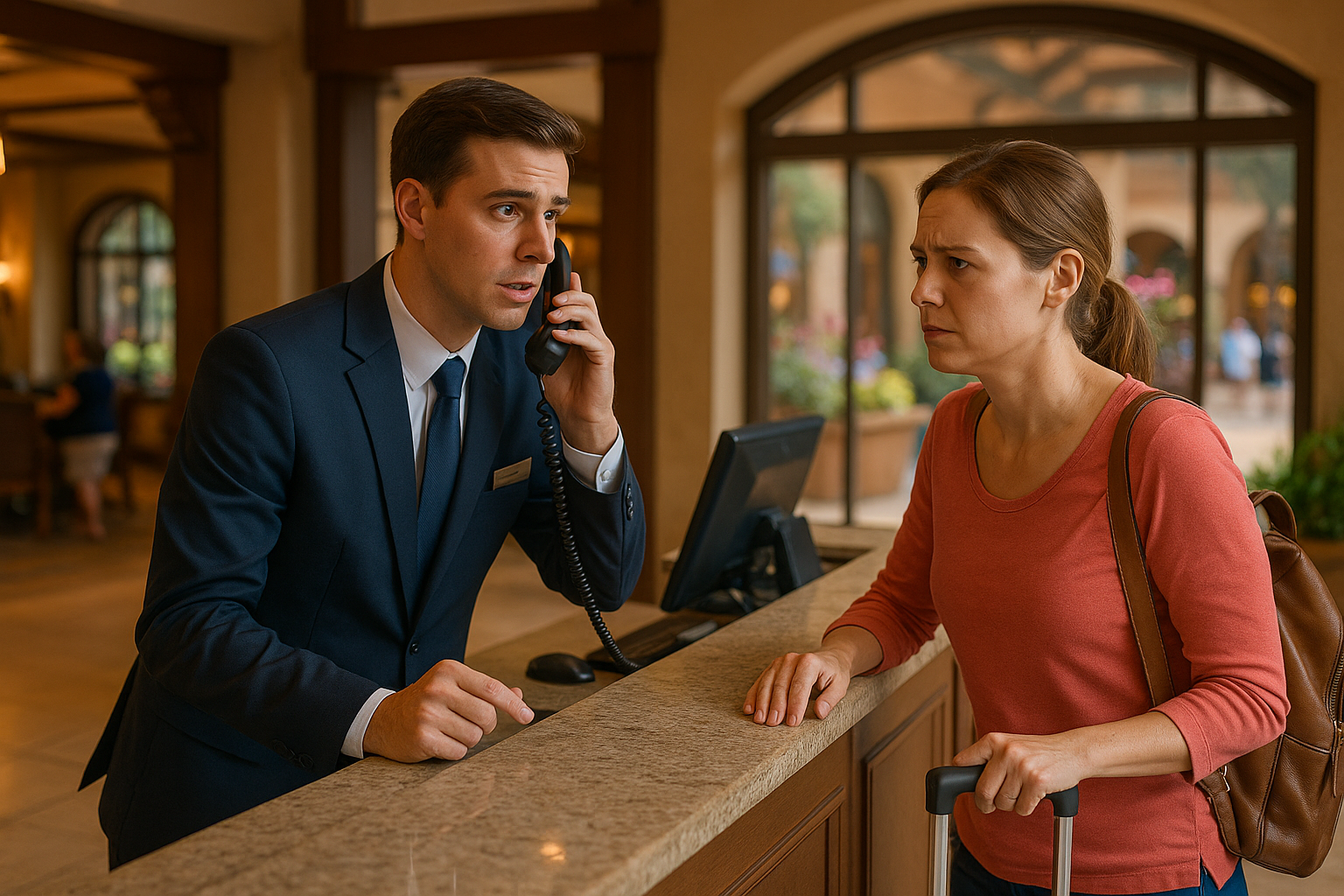
At a resort hotel, few moments create more pressure than a guest arriving before their room is ready. The front desk may be facing a growing line, housekeeping may be working through late departures, and the guest may have traveled for hours expecting to begin their stay immediately.
Room delays are a normal operational challenge in hospitality, but the way employees communicate during those delays can determine whether the guest remembers the inconvenience or the professionalism of the team. A smooth response requires more than offering an apology. It depends on accurate information, coordinated departments, and a clear plan for what happens next.
Why Room-Readiness Delays Happen
A room may be unavailable for several legitimate reasons. A previous guest might have requested a late checkout, housekeeping may have found a maintenance issue, or a room may require additional cleaning after an unusually difficult departure. During peak periods, the volume of departing and arriving guests can also create a timing gap that is difficult to avoid.
Employees should understand these causes without using them as excuses. Guests do not need a long explanation of internal workflow. They need an honest update and confidence that someone is actively managing the situation.
Common causes include:
- Late departures or approved extensions
- High occupancy and a large number of same-day turnovers
- Maintenance concerns discovered during cleaning
- Rooms requiring additional attention before assignment
- Delayed inspections or incomplete status updates
- Special requests that affect preparation time
The operational challenge is not simply getting the room cleaned. It is keeping information accurate as the room moves through each stage of the process.
Accurate Information Comes Before Reassurance
One of the most common mistakes during a room delay is giving a guest a time estimate before confirming the room’s actual status. Saying, “It should be ready in about 20 minutes,” may seem helpful, but an inaccurate estimate can create a second and more frustrating interaction when the room is still unavailable.
Before updating the guest, front desk employees should verify what they can:
- Has the previous guest fully departed?
- Has housekeeping started the room?
- Is the room waiting for inspection?
- Has maintenance placed a hold on the room?
- Is the room being prioritized for an arriving guest?
The exact communication system differs from one property to another, but the principle is consistent: share confirmed information instead of guessing. If a precise completion time is not available, provide the next update time instead. “I will check again in 15 minutes and update you personally” is more dependable than an unsupported promise.
Managing the Conversation at the Front Desk
A guest waiting for a room may be tired, hungry, worried about an event, or traveling with children. Their frustration may be directed at the front desk even when the delay began elsewhere. Employees can acknowledge the impact without becoming defensive.
A useful structure for the conversation
A strong response usually includes four parts:
- Acknowledge the inconvenience: Recognize that the guest has been waiting.
- State the current status: Explain what is known without oversharing internal details.
- Give the next step: Tell the guest what you are doing to move the situation forward.
- Set a follow-up point: Provide a realistic time for the next update.
For example, an employee might say: “I understand you were expecting to be settled by now. Your room is still being prepared, and I’m checking with housekeeping for the latest status. I’ll come back to you with an update in 15 minutes, even if the room is not ready yet.”
This approach avoids blaming another department and gives the guest something concrete to rely on.
What Housekeeping and Front Desk Teams Need From Each Other
Room delays often become more difficult when departments are working from different information. Front desk employees may see a room listed as vacant, while housekeeping knows it has not been serviced. Housekeeping may complete a room but still be waiting for an inspection or system update before it can be assigned.
Clear communication between teams helps prevent these gaps. Useful handoffs should include:
- The room number or assignment involved
- The current status of the room
- Any known maintenance or cleaning concern
- The urgency of the arrival, when relevant
- Who is responsible for the next update
Employees should also avoid creating unnecessary pressure by repeatedly interrupting housekeeping workers for updates without new information to share. A better practice is to establish a reasonable check-in rhythm and communicate all relevant details at once.
Housekeeping teams can help by updating room status promptly and flagging problems as soon as they are discovered. Front desk teams can help by passing along accurate priorities rather than labeling every delayed room as an emergency.
Helping the Guest While the Room Is Delayed
When appropriate, employees can offer practical assistance while the guest waits. The available options depend on the property and its policies, but the goal is to reduce uncertainty and help the guest use the time productively.
Possible forms of assistance may include:
- Arranging luggage storage
- Providing directions to public areas or resort amenities
- Explaining where the guest can find food, beverages, or seating
- Noting accessibility, family, or medical concerns for the appropriate team
- Offering a way to receive an update without standing at the desk
Employees should only promise benefits, amenities, or compensation they are authorized to provide. If a guest requests an adjustment or exception, the request should be escalated through the correct leadership channel rather than answered impulsively.
When the Delay Becomes a Larger Service Recovery Issue
Not every delay requires the same response. A short wait with frequent updates may be resolved quickly. A prolonged delay, repeated inaccurate estimates, or a room that becomes unavailable because of maintenance may require leadership involvement.
Escalation is especially important when:
- The guest has a time-sensitive event or reservation
- The guest has accessibility or medical needs
- The room is unavailable due to a significant maintenance concern
- The guest has already received conflicting information
- The delay affects multiple members of the same party
- The guest requests a manager or formal resolution
Escalating does not mean abandoning the guest. The employee who first handled the concern should provide the leader with a concise summary so the guest does not have to repeat the entire story. Good documentation and clear verbal handoffs make service recovery faster and less frustrating.
The Career Skills Hidden in a Delayed Check-In
Room-readiness issues are difficult, but they also develop valuable hospitality skills. Employees learn how to prioritize, communicate under pressure, protect confidential information, and coordinate with teams they do not directly supervise.
These situations can strengthen abilities that apply to future roles in:
- Front office leadership
- Guest recovery and guest services
- Housekeeping management
- Resort operations
- Training and employee development
- Quality assurance and operational planning
Employees who consistently provide accurate updates and calm direction often become trusted resources during busy arrival periods. Their effectiveness is visible not because every room is ready immediately, but because they help the operation respond professionally when conditions are not perfect.
Building Better Connections Across Hospitality Teams
Handling a delayed room well takes cooperation between front desk employees, housekeeping, maintenance, bell services, supervisors, and other resort departments. Learning how those teams work—and building relationships with the people in them—can make future challenges easier to solve.
ThemeParkConnections.com gives professionals throughout the theme park and attractions industry a place to connect with other industry employees, share experiences, learn about different departments, discover career opportunities, and expand their professional networks. For hospitality workers especially, those connections can provide a broader view of how resort operations function beyond a single shift or department.
A room delay may begin as a housekeeping or scheduling issue, but it becomes a test of communication for the entire property. When employees verify information, coordinate across departments, and keep guests informed, they turn a frustrating wait into an example of dependable hospitality.