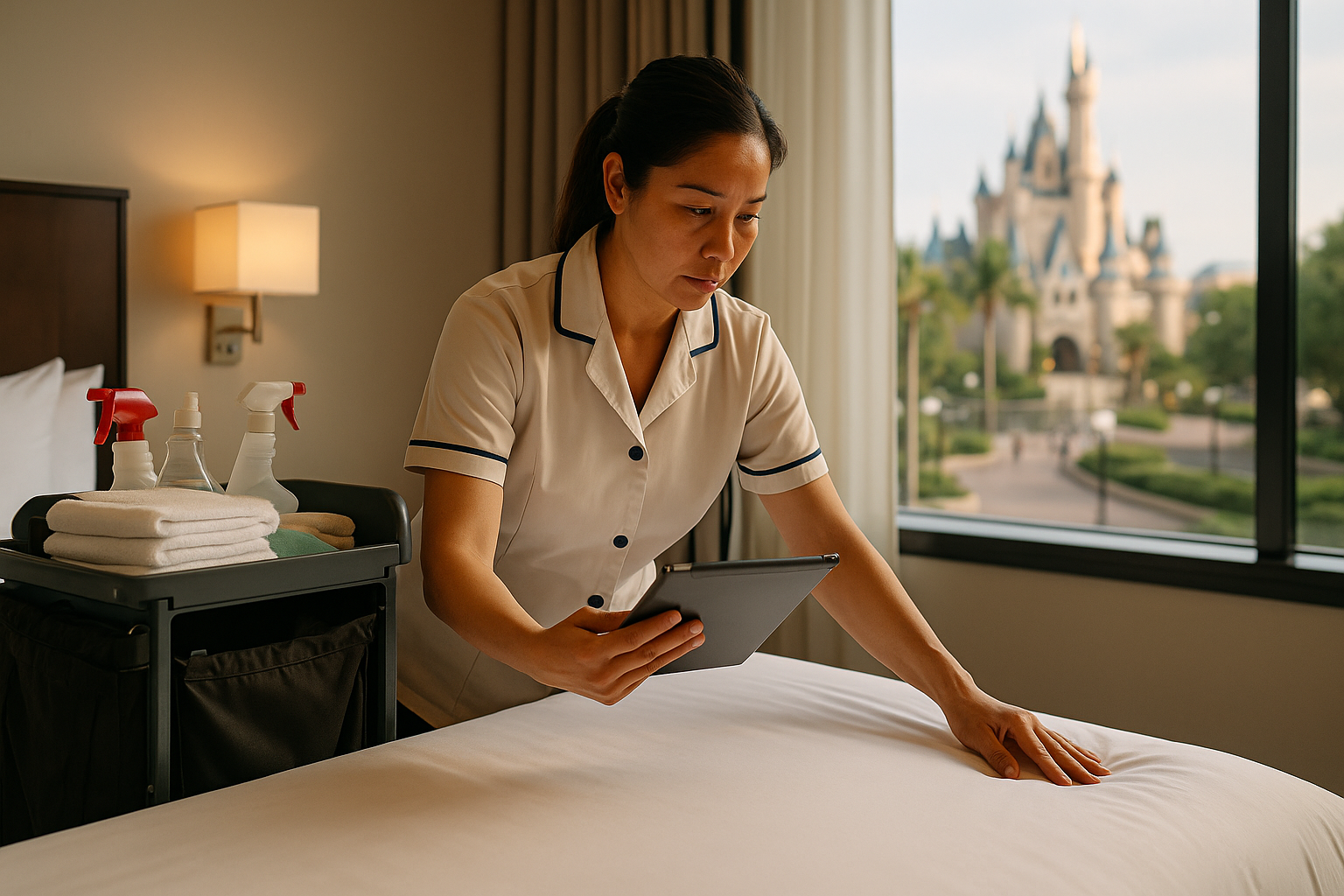
The Hotel Room Turnover Window: What Resort Housekeeping Employees Wish Every Department Understood
In a theme park resort, the time between guest checkout and the next guest’s arrival can feel impossibly short. During that window, housekeeping teams may need to clean rooms, replace supplies, report maintenance issues, reset amenities, and prepare the space to meet the property’s standards—all while front desk teams are answering arrival questions and guests are waiting for access to their rooms.
Room turnover is more than a cleaning task. It is a coordinated operation involving housekeeping, front desk, maintenance, bell services, laundry, management, and sometimes guest services. When one part of the process falls behind or communication breaks down, the effect can reach far beyond a single room.
Understanding how the turnover window works can help resort employees collaborate more effectively, reduce avoidable delays, and appreciate the operational skill required to prepare hundreds or thousands of guest rooms.
Why the Turnover Window Matters
A hotel room may look simple once it is ready for a guest, but preparing it requires a series of decisions and handoffs. The room’s status must be accurate, the space must be physically reset, and any issues discovered during cleaning must be addressed or communicated.
A delayed room can create several challenges:
- A guest may have to wait longer after a tiring travel day.
- Front desk employees may need to explain the delay or find an alternative room.
- Bell services may need to store luggage longer than expected.
- Housekeeping supervisors may need to adjust assignments in real time.
- Maintenance teams may receive a group of urgent requests at once.
One delayed room is manageable. A pattern of delays during a high-occupancy arrival period can quickly affect the entire guest experience.
What Happens During a Room Turnover?
Exact procedures vary by property, but most room turnovers involve several basic stages. Housekeeping employees often perform these steps under time pressure while maintaining attention to detail.
1. Reviewing the assignment
Before entering a room, the employee may need to understand whether it is a standard departure clean, a stayover service, a special request, or a room requiring extra attention. The assignment can also be affected by guest preferences, room type, accessibility features, or operational priorities established by leadership.
Good preparation at the beginning of the shift helps prevent unnecessary backtracking. Supplies, linens, cleaning tools, and amenities need to be available before the employee reaches the room whenever possible.
2. Removing used items and resetting the space
The room must be cleared of used linens, towels, trash, and guest-used amenities. Beds, bathrooms, floors, surfaces, and high-touch areas then need to be addressed according to the property’s standards.
This work requires efficiency, but speed cannot replace observation. A housekeeping employee may notice a damaged fixture, a missing item, a stain requiring special treatment, or a condition that should be referred to maintenance.
3. Identifying maintenance concerns
Housekeeping employees are often among the first team members to discover a room issue. A light may not work, a drain may be slow, a thermostat may display an error, or a door may not close properly.
Reporting the issue clearly is essential. A vague message such as “room problem” does not give the next department enough information to respond quickly. A more useful report identifies:
- The room location
- The specific equipment or fixture involved
- What the employee observed
- Whether the issue affects guest use or safety
- Whether the room can be released or should remain unavailable
Clear reporting helps maintenance prioritize work and prevents front desk employees from assigning a room that is not truly ready.
4. Completing the final inspection
Depending on the property, a supervisor or room inspector may review the room before it is marked ready. This second look can catch missed details and confirm that reported issues have been resolved or properly documented.
The final inspection is not simply a search for mistakes. It is a quality-control step that protects the guest, the housekeeping employee, and the resort. Accurate room status information allows other departments to make reliable decisions.
The Importance of Accurate Room Status
One of the most important pieces of communication in resort operations is the room-status update. A room that is physically clean but not properly updated may remain unavailable longer than necessary. A room marked ready too early can create a much more serious problem if the guest enters before the space has been fully inspected.
Employees should treat room-status updates as operational information, not administrative paperwork. The status affects:
- Front desk assignments
- Guest arrival expectations
- Housekeeping workload
- Maintenance response priorities
- Manager decisions during periods of high demand
If an employee is unsure whether a room is ready, the safest approach is to ask a supervisor or follow the property’s established communication process rather than guessing.
Common Challenges During High-Volume Arrivals
Early arrivals
Guests may arrive before their rooms are ready, particularly during busy travel periods. Front desk and guest services employees should avoid promising a specific completion time unless they have reliable information. A room may be close to completion, but an unexpected maintenance issue or inspection concern can change the timeline.
Housekeeping employees can support the process by communicating realistic updates through the appropriate channel. Even a simple status update can help another department set better expectations.
Last-minute room changes
Room changes may be requested because of accessibility needs, family arrangements, maintenance concerns, or operational circumstances. These changes can affect several departments at once.
When priorities shift, employees should confirm which room has priority and whether any previous assignment has changed. Working from outdated information can lead to duplicated effort or cause an urgent room to be overlooked.
Unexpected damage or excessive cleaning needs
Some rooms take longer than expected. A housekeeping employee may encounter a spill, damaged furniture, missing items, or another condition that requires additional time and support.
The goal is not to hide the delay or rush through the work. The better response is to document the issue, notify the appropriate leader, and allow the team to determine whether another room or resource can help protect the arrival experience.
How Other Departments Can Support Housekeeping
Room turnover works best when other departments understand the demands placed on housekeeping teams.
- Front desk employees can provide accurate arrival information and avoid repeated calls for updates that interrupt active work.
- Bell services employees can help guests with luggage and explain that room access depends on room readiness rather than simply arrival order.
- Maintenance employees can communicate clearly about repair progress and whether a room can be occupied safely.
- Managers can help prioritize assignments, coordinate resources, and prevent employees from receiving conflicting instructions.
- Guest services employees can record special requests accurately and make sure the request reaches the correct department.
Respectful communication matters just as much as speed. Housekeeping employees are often moving quickly through physically demanding work, so concise, specific communication is usually more helpful than repeated interruptions or incomplete messages.
Skills You Build in Room Turnover Operations
Working in resort housekeeping develops skills that apply throughout the attractions industry. Employees learn how to manage time, maintain standards under pressure, identify operational problems, communicate across departments, and make decisions when conditions change.
These skills can support future opportunities in hotel supervision, guest services, facilities, training, operations leadership, and quality assurance. Employees who consistently provide accurate updates and handle unexpected issues professionally often become trusted resources during busy operating periods.
Room turnover may happen behind the scenes, but it has a direct connection to the guest experience. Every clean, functional, accurately reported room represents a successful collaboration between multiple teams.
Building Connections Across Resort Operations
Employees who understand the room turnover process often gain a broader view of how a theme park resort operates. They see how housekeeping connects with front desk operations, maintenance, guest recovery, transportation, and leadership.
ThemeParkConnections.com gives people working throughout the theme park and attractions industry a place to connect with other professionals, expand their networks, share experiences, and learn about departments they may not encounter during a typical shift. Those connections can also help employees discover career opportunities and better understand the many paths available across the attractions industry.
A hotel room may appear ready in a matter of minutes, but that readiness reflects planning, communication, technical awareness, and teamwork. Learning to manage the turnover window is valuable not only for resort operations—it is practical preparation for almost any role that depends on delivering a consistent guest experience.