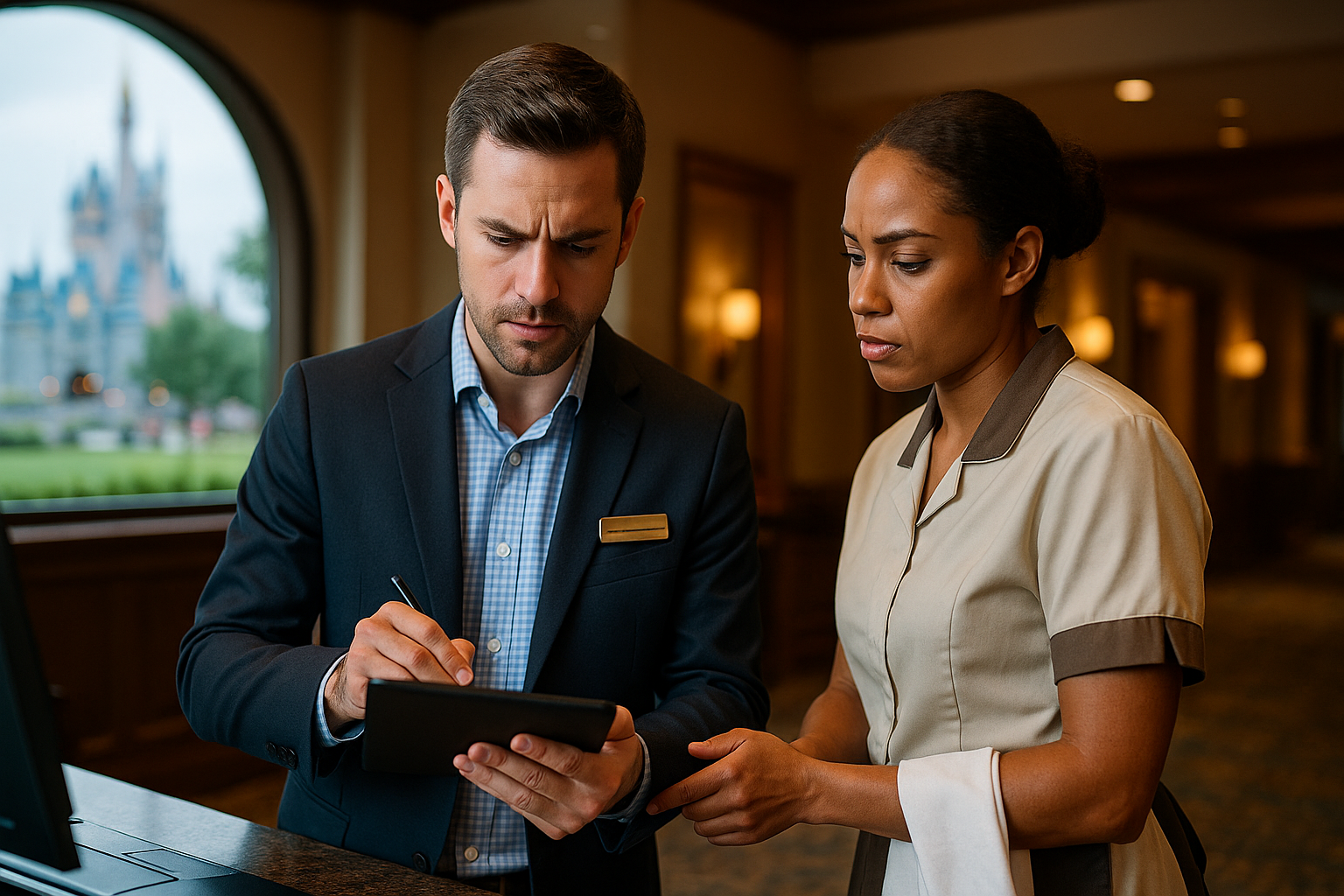
When a Resort Room Isn’t Ready: Better Handoffs Between Housekeeping and the Front Desk
A guest arriving before their room is ready is one of the most common pressure points in resort operations. The front desk may be managing a growing arrival line, housekeeping may be working through a heavy checkout day, and the guest may have already spent hours traveling. In that moment, a simple room-status update can determine whether the interaction feels organized or frustrating.
Strong communication between housekeeping and the front desk does more than move rooms through the system. It protects guest trust, reduces repeated phone calls, prevents unnecessary escalations, and helps both departments work from the same information. For employees in theme park resorts and hospitality operations, learning how to manage these handoffs is a valuable operational skill.
Why Room-Status Handoffs Matter
A room can be unavailable for several different reasons. It may still be occupied, waiting for housekeeping service, undergoing inspection, missing a maintenance repair, or being held for another operational reason. If the front desk receives only a vague update such as “It’s being worked on,” employees may not have enough information to give the guest a useful answer.
Unclear communication creates problems on both sides:
- Front desk employees may call housekeeping repeatedly for updates.
- Housekeeping team members may receive duplicate requests about the same room.
- Guests may be given estimated times that are too optimistic.
- Supervisors may need to step in simply because departments lack a shared understanding of the situation.
- Rooms that are actually ready may remain unavailable because the status was not communicated clearly.
A good handoff provides the next employee with enough context to act without having to reconstruct the entire situation.
What Makes a Useful Room Update?
The best updates are specific, current, and connected to the next action. They do not need to be long. In many cases, a concise message is more effective than a detailed explanation that gets lost during a busy shift.
Include the room’s current status
Instead of saying that a room is “almost ready,” identify what remains. For example, the room may be cleaned but waiting for inspection, or the housekeeping attendant may still be completing the bathroom and replacing linens.
Useful status descriptions might include:
- Cleaning has not started.
- Cleaning is in progress.
- Room is cleaned and waiting for inspection.
- Inspection identified an item that needs correction.
- Room is awaiting maintenance clearance.
- Room is ready and has been released in the appropriate system.
Specific language helps the front desk understand whether the room is likely to become available soon or whether another solution should be considered.
Identify the next checkpoint
An update becomes more useful when it includes a reasonable next point of contact. That does not always mean promising an exact completion time. A better approach may be to communicate when the status will be checked again.
For example, an employee might say, “The room is being finished now, and I’ll confirm the status after the inspection,” rather than guaranteeing that the guest will receive the room within a specific number of minutes.
This approach avoids creating expectations that the operation cannot control while still giving the front desk a clear follow-up plan.
Communicate changes immediately
A room-status handoff is not complete just because one department sent an update. If circumstances change, the new information needs to move quickly in the opposite direction.
A room that was expected to be ready shortly may require additional cleaning. A maintenance issue may be discovered during inspection. A guest may request extra time before departing. These changes affect the front desk’s decisions and should be communicated as soon as practical through the approved channel.
Handling the Guest Who Is Waiting
The front desk often has to communicate incomplete information without sounding dismissive. Guests may not need every internal detail, but they do need an honest explanation and a clear next step.
Employees should avoid vague phrases such as “It shouldn’t be much longer” when they do not have reliable information. Repeatedly giving uncertain estimates can damage credibility, especially when the guest has already been waiting.
A stronger approach is to explain the current status in plain language:
“Your room is still completing the final housekeeping process. I’m checking the status now and will update you as soon as I receive confirmation.”
If the delay is related to maintenance or another operational issue, the employee can acknowledge the delay without assigning blame to another department. The goal is to keep the guest informed while protecting teamwork behind the scenes.
Common Handoff Mistakes
Using the same status for every delay
“Not ready” does not tell the receiving employee enough. A room waiting for inspection requires a different response than a room with an unresolved maintenance concern. More precise information allows the front desk to make better decisions about room assignments, luggage assistance, amenities, or escalation.
Relying only on informal conversations
A quick conversation in a hallway may be helpful, but it should not replace the official system or communication process used by the property. If information exists only in one employee’s memory, it can disappear when that person goes on break or ends their shift.
Failing to close the loop
If the front desk requests a room update, the response should make clear what happens next. Likewise, when a room is released, the front desk should be able to see or receive confirmation that the room is genuinely available according to the property’s process.
Making another department the problem
Guests do not benefit from hearing that housekeeping is behind, maintenance caused the delay, or the front desk was not informed. Those statements may reflect frustration, but they weaken confidence in the entire resort. Employees can be honest about the situation while still presenting a united operation.
Building a Better Handoff Routine
Departments can improve room-status communication by agreeing on a few basic habits:
- Use consistent terms for common room conditions.
- Record important updates in the approved system rather than relying only on verbal messages.
- Identify who owns the next follow-up.
- Prioritize rooms connected to waiting guests, accessibility needs, or other time-sensitive circumstances according to local procedures.
- Notify the receiving department when the situation changes.
- Review unresolved rooms during shift changes so information does not get lost.
Supervisors can support this process by identifying recurring communication gaps. If employees repeatedly ask the same questions about room status, the issue may not be individual performance. The department may need clearer terminology, better documentation, or a more reliable escalation path.
A Skill That Supports Career Growth
Room-status communication may seem like a small part of resort operations, but it develops skills that apply across the attractions industry. Employees who can provide concise updates, manage competing priorities, document information, and remain professional during delays are valuable in many departments.
These habits can help prepare employees for roles such as:
- Front desk or guest services supervisor
- Housekeeping coordinator
- Rooms operations manager
- Guest recovery specialist
- Resort operations leader
- Cross-department training or quality assurance roles
The strongest hospitality professionals understand that service depends on coordination. A clean room matters, and so does the information that tells the right people the room is ready.
Connecting the Operation One Handoff at a Time
Reliable resort operations are built through hundreds of small interactions between departments. A clear room-status update can reduce stress for employees, improve the guest experience, and help a busy property respond more effectively during peak arrival periods.
ThemeParkConnections.com gives professionals across the theme park and attractions industry a place to connect with other industry employees, expand their professional networks, share experiences, learn about different departments, discover career opportunities, and build relationships throughout the attractions community. For hospitality employees looking to understand the wider industry, those connections can be just as valuable as the skills developed during a busy shift.