When a Guestroom Isn’t Ready: The Handoff Behind a Smooth Resort Recovery
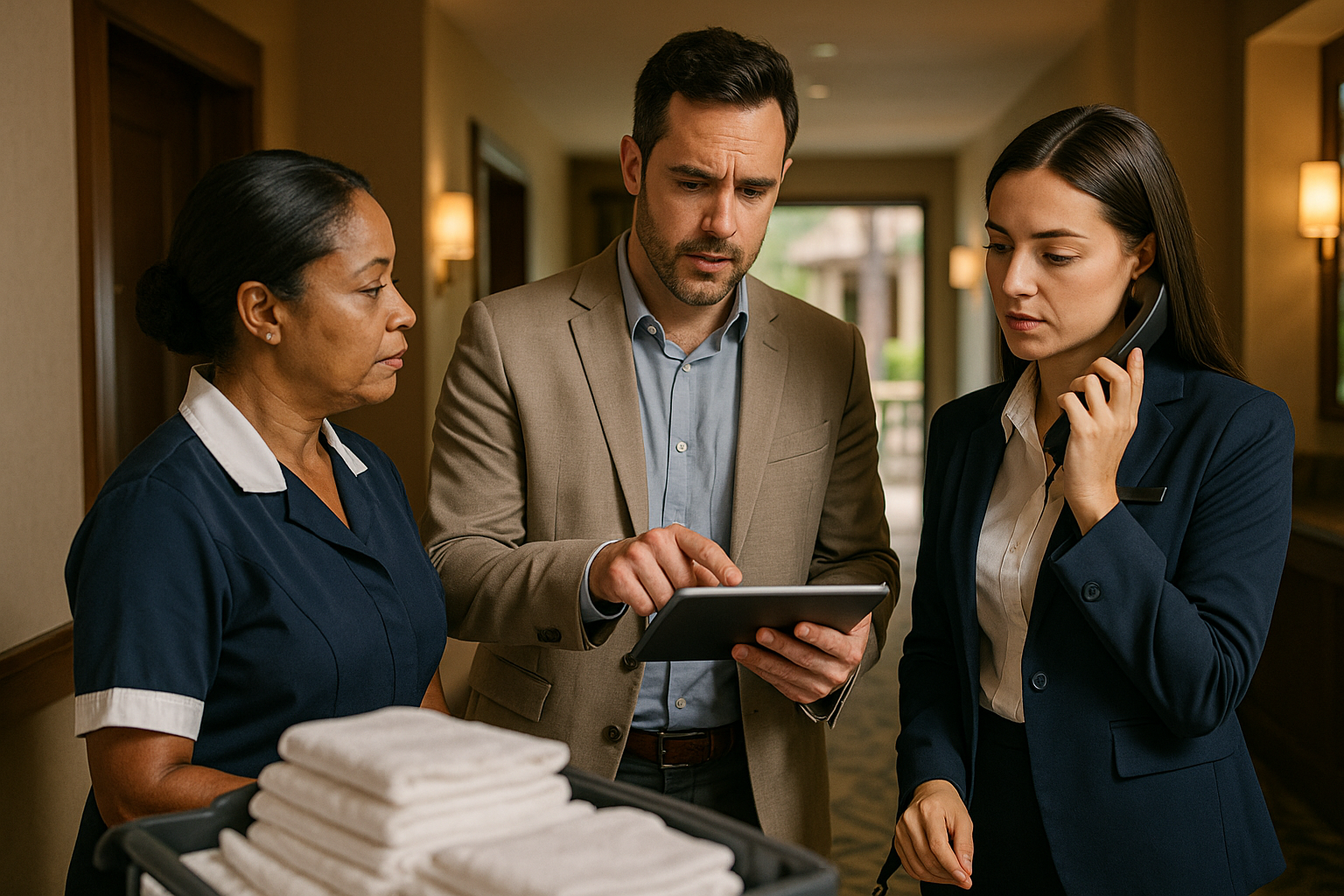
A guest arriving at a theme park resort expects more than a clean room. They expect the front desk, housekeeping, maintenance, bell services, and leadership teams to know what is happening when a room is delayed, unavailable, or still being prepared.
That coordination is easy to overlook when everything is operating normally. It becomes highly visible when a guest arrives before their room is ready, when a maintenance issue takes a room out of service, or when a room’s status is unclear in the property management system. In those moments, the quality of the internal handoff often determines whether the guest experiences a minor delay or a much larger service failure.
For employees working in resort hotels, learning how to communicate accurate room information is an important operational skill. It supports better guest service, reduces duplicated work, and helps every department make decisions based on the same information.
Why Room Status Accuracy Matters
A room can have several different realities at the same time. Housekeeping may consider it clean but waiting for inspection. Maintenance may have completed a repair but not yet released the room. The front desk may see the room as unavailable. A supervisor may know that a guest has been promised an update within the hour.
If those details are not shared clearly, employees may unintentionally give conflicting information. A front desk agent may tell a guest that the room is nearly ready while housekeeping is still waiting for replacement supplies. A housekeeper may enter a room that maintenance has not fully cleared. A manager may dispatch multiple employees to investigate the same issue because the original update was incomplete.
Accurate room status helps teams answer several practical questions:
- Is the room occupied, vacant, or awaiting arrival?
- Is the room physically clean and ready for a guest?
- Is there an unresolved maintenance or safety concern?
- Who currently owns the next action?
- Has the guest received an accurate update?
- When should the next status check happen?
The goal is not to create unnecessary paperwork. The goal is to prevent assumptions from becoming promises.
The Most Important Information in a Room Handoff
A useful handoff does not need to be long, but it should contain enough detail for the next employee or department to act without starting the investigation over.
Describe the condition, not just the label
Status terms such as “dirty,” “maintenance,” or “inspected” can mean different things to different employees. A stronger update briefly explains the actual situation.
For example, “Room is in maintenance” is less useful than “Air-conditioning issue reported; technician is waiting for a replacement part, and the room should remain unavailable until the repair is complete.” The second version gives the receiving team context, limitations, and a reason for the delay.
Identify the next action
Every unresolved room issue should have a clear next step. That might be:
- Housekeeping completing the room clean
- A supervisor inspecting the room
- Maintenance testing equipment after a repair
- Front desk contacting the arriving guest
- Leadership reviewing relocation or recovery options
If no one knows who is responsible for the next action, the room can remain stalled even though several departments are aware of the problem.
Include timing without overpromising
Employees often want to be helpful by offering a specific completion time. However, a time estimate should be based on the work that remains, not on the pressure of the moment.
“We are waiting for the technician to confirm whether the repair is complete” is more honest than promising that the room will be ready in fifteen minutes when no one has verified the repair. Guests generally respond better to a realistic update than to a confident estimate that later changes.
Common Breakdowns Between Departments
Room delays rarely result from one department refusing to help. More often, the problem develops through small communication gaps.
Maintenance completes the repair, but the room is not released
A technician may finish the physical repair, but the room may still need testing, cleaning, or inspection before it can be assigned. If the completion of the repair is treated as the same thing as the room being guest-ready, the front desk may release the room too early.
The better handoff separates those stages: the repair is complete, the equipment has been tested, and the room is or is not ready for occupancy.
Housekeeping discovers a problem but does not provide enough detail
Housekeeping employees often identify issues before other departments do. A leaking fixture, damaged furniture, missing amenity, or unusual odor may require follow-up. Reporting only “room problem” forces the next employee to repeat the inspection.
A concise description of what was observed, where it was found, and whether the issue affects guest readiness makes the report much more useful.
The guest receives different updates from different employees
When several employees speak with the same guest, they should know the current status and the approved next step. This does not mean every interaction needs to sound scripted. It means the team should avoid giving contradictory explanations.
If the situation changes, the update should change for everyone. A quick message to the appropriate team can prevent a guest from hearing that a room is “almost ready” from one employee and “not available” from another.
A Practical Handoff Routine
Each resort has its own systems and procedures, but employees can use a simple communication pattern in almost any property environment.
- State the room and current condition. Identify the room and explain what is happening.
- Explain the guest impact. Note whether the room is delaying arrival, affecting an occupied guest, or preventing a room move.
- Identify the owner. Make clear which department or person is handling the next step.
- Give a realistic follow-up point. Say when the status should be checked again.
- Close the loop. Confirm that the room status was updated and that affected teams received the final information.
For example: “Room 428 is still unavailable because the bathroom leak was repaired but the area needs to be dried and inspected. Maintenance has released it to housekeeping for final attention. Front desk is holding the arriving guest’s room assignment and will receive an update after inspection.”
This kind of message is clear without assigning blame. It also gives each team enough information to perform its part of the recovery.
How Employees Can Improve Their Handoff Skills
Strong communication is not limited to supervisors. Any employee who touches the room-status process can make the operation more reliable.
Use specific observations
Describe what you saw, heard, or completed rather than relying on vague conclusions. Specific observations are easier for another employee to verify.
Ask for confirmation when the status is unclear
If a room appears ready but the system still shows a restriction, pause and verify before making a promise. A short clarification can prevent a larger guest recovery later.
Document changes promptly
Information that exists only in a hallway conversation can disappear during shift changes. Updating the appropriate system or communication channel helps the next team begin with accurate information.
Respect the difference between urgency and panic
A delayed room may be important, but rushing employees into incomplete work can create additional problems. Calm, direct communication allows teams to move quickly without skipping necessary checks.
The Career Value of Operational Communication
Employees who consistently provide reliable handoffs become valuable beyond their immediate assignment. They demonstrate judgment, attention to detail, accountability, and an understanding of how departments affect one another.
Those skills matter when pursuing roles such as lead, coordinator, supervisor, rooms operations manager, guest recovery specialist, or training facilitator. Leaders need employees who can identify the current problem, communicate its impact, and help move the next action forward.
A room that is not ready may seem like a small operational issue, but the response reveals a great deal about a resort team. Clear handoffs protect the guest experience, support fellow employees, and keep a difficult situation from becoming unnecessarily complicated.
Build Connections Across the Attractions Industry
Resort operations are only one part of the larger theme park and attractions community. Employees in hospitality, housekeeping, front desk operations, maintenance, food and beverage, entertainment, retail, and guest services all solve similar challenges from different perspectives.
ThemeParkConnections.com gives people working throughout the industry a place to connect with other professionals, expand their networks, share experiences, learn about different departments, discover career opportunities, and build relationships throughout the attractions industry.
The next time a guestroom delay requires several departments to work together, remember that the handoff is not a minor administrative step. It is one of the tools that turns separate teams into one coordinated operation.