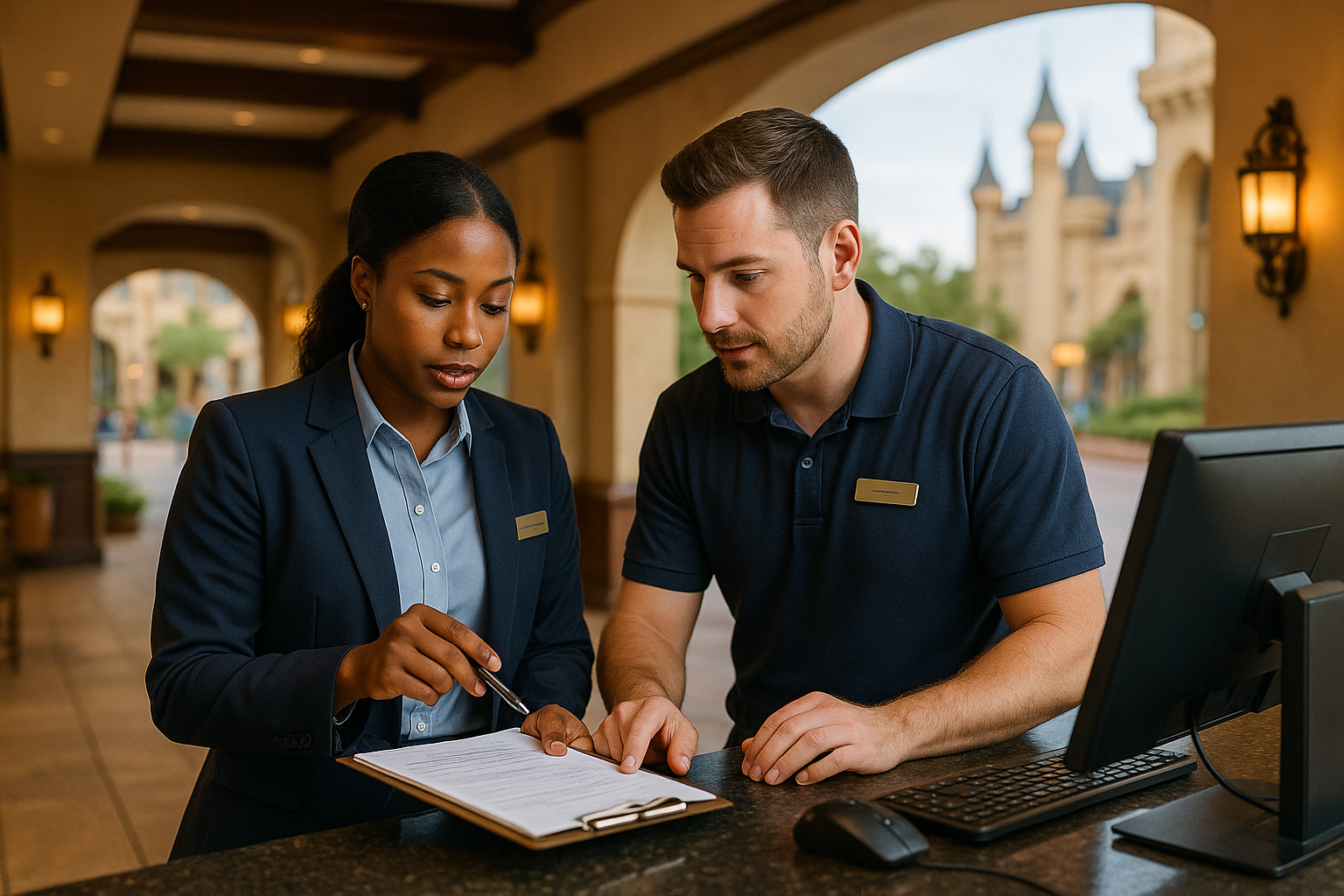
The Handoff Behind a Smooth Theme Park Hotel Check-In
A guest’s hotel experience can be shaped long before they reach the front desk. A room may be clean, but not ready. A maintenance issue may have been repaired, but not updated in the system. A late arrival may have special circumstances that the next department never hears about.
In a theme park resort, a smooth check-in depends on more than friendly service. It requires accurate information moving between housekeeping, front desk teams, maintenance, bell services, reservations, and sometimes park operations. When those handoffs work well, guests experience the resort as organized and welcoming. When they fail, even a small communication gap can create delays, frustration, and unnecessary work for several departments.
Why Hotel Handoffs Matter
Theme park hotels often manage large numbers of arrivals, departures, room changes, maintenance requests, packages, accessibility needs, and special events at the same time. Each department sees only part of the guest experience.
Housekeeping knows which rooms have been serviced. Maintenance knows which rooms require follow-up. The front desk understands arrival patterns and guest concerns. Bell services may know when a family has arrived with oversized luggage or mobility equipment. Reservations may have important details about the booking that are not obvious at check-in.
The handoff connects those pieces. Without it, employees may make decisions using incomplete or outdated information.
A strong handoff helps answer practical questions such as:
- Which rooms are ready for arriving guests?
- Which rooms are clean but still waiting for inspection or a repair?
- Which maintenance concerns remain open?
- Which guests need additional assistance or follow-up?
- Which requests require another department to take action?
Clear communication also protects employees. When information is documented and passed along properly, the next team does not have to guess what happened earlier in the day.
The Difference Between “Clean” and “Ready”
One of the most important concepts in hotel operations is that a room can be clean without being ready for assignment.
A room may still need an inspection, a replacement item, a maintenance check, or an update in the property management system. It may have been serviced but temporarily held because a problem was reported. If the front desk sees only that housekeeping has visited the room, employees may assume it is available when it is not.
That distinction makes precise status updates essential. Instead of using vague language such as “almost done,” teams should communicate the actual condition of the room whenever possible:
- Cleaning has not started.
- Cleaning is in progress.
- Cleaning is complete and awaiting inspection.
- Room is ready for assignment.
- Room is being held for maintenance.
- Room requires additional housekeeping attention.
The exact terminology will vary by employer and system, but the principle remains the same: the next department needs information it can act on.
What Makes a Good Shift Handoff?
A useful handoff is brief, accurate, and specific. It does not need to include every detail from the previous shift. It should highlight information that affects guest service, safety, room readiness, or the next team’s workload.
Focus on Changes and Exceptions
Most routine tasks may already be recorded in the appropriate system or checklist. The handoff should draw attention to anything unusual or unresolved.
Examples might include:
- A room that was expected to be ready but is delayed because of a repair.
- A guest waiting for a room change after reporting a problem.
- A delivery or item that must be brought to a guest before a specific time.
- A room requiring follow-up from housekeeping after maintenance completes work.
- An arriving guest who has already contacted the resort about an urgent concern.
Employees should avoid assuming that “someone else probably knows.” If an issue could affect the guest’s next interaction, it deserves a clear handoff.
Use Specific Details
“Room issue” is not enough information for another employee to respond effectively. A better handoff identifies the room or guest record, the current status, the action already taken, and what still needs to happen.
For example:
Less useful: “The guest in that room called again.”
More useful: “The guest in the assigned room reported a recurring air-conditioning concern. Maintenance was contacted, and the room is currently being held pending a follow-up check. Please confirm the next update before assigning the room.”
The second version gives the next employee a clear starting point without requiring them to reconstruct the situation.
Common Handoff Problems
Relying Only on Verbal Communication
A verbal conversation can be helpful, especially during a busy arrival period, but it should not be the only record of an important issue. Employees may be interrupted, misunderstand the details, or forget the conversation during a long shift.
Follow workplace procedures for documenting updates in the approved system, log, checklist, or communication channel. The goal is not to create unnecessary paperwork. It is to make sure critical information remains available after one employee leaves.
Passing Along Unconfirmed Information
Rumors and assumptions create confusion quickly. If a room is believed to be ready, verify the status before promising it to a guest. If a repair is believed to be complete, check whether the responsible department has officially cleared the room.
When information is uncertain, say so clearly. “I’m waiting for confirmation from maintenance” is more professional and more useful than presenting an assumption as a fact.
Forgetting the Guest Impact
Employees can become focused on internal terms such as room numbers, queues, work orders, and task lists. Those details matter, but the handoff should also explain what the guest is waiting for.
A room delay may mean a family is carrying luggage through the lobby. A missing delivery may affect a celebration. A room move may be especially difficult for a guest who has already unpacked or requires specific accessibility features.
Understanding the guest impact helps the next team prioritize appropriately and communicate with empathy.
Building Better Handoff Habits
Employees in every department can improve handoffs by developing a few consistent habits:
- Close the loop. If another department accepts a request, confirm that it was received and understand what happens next.
- Update information promptly. A status change that is delayed may lead to incorrect room assignments or repeated guest contacts.
- Separate facts from assumptions. Clearly identify what has been confirmed and what is still pending.
- Prioritize unresolved guest-impacting issues. Not every task has the same urgency.
- Ask clarifying questions. It is better to spend a minute confirming details than to create a larger problem later.
- Respect the next shift. Leave organized information rather than expecting incoming employees to search through scattered notes or messages.
These habits apply beyond hotel operations. Attractions teams use handoffs when communicating ride status. Food and beverage employees pass along equipment or inventory concerns. Entertainment teams coordinate schedule changes and technical needs. Maintenance departments document work that affects other areas of the property.
A Transferable Professional Skill
Strong handoff communication is a valuable skill for anyone building a career in the attractions industry. It demonstrates organization, judgment, accountability, and respect for other departments.
Employees who consistently provide useful updates often become trusted during busy periods because coworkers know they will communicate clearly. That reputation can support future opportunities as a trainer, coordinator, lead, supervisor, or department specialist.
Good handoffs do not require dramatic leadership moments. They are built through small, reliable actions: recording the right information, giving an accurate update, and making sure the next person understands what needs to happen.
Building Connections Across the Attractions Industry
Theme park and resort operations depend on people who understand how individual departments work together. Theme Park Connections gives professionals throughout the attractions industry a place to connect with other industry professionals, expand their networks, share experiences, and learn about departments beyond their current roles.
Whether you work in hospitality, guest services, maintenance, entertainment, food and beverage, retail, or attractions, conversations with people in other areas can reveal new career paths and practical lessons. Visit ThemeParkConnections.com to discover career opportunities and build connections throughout the attractions industry.