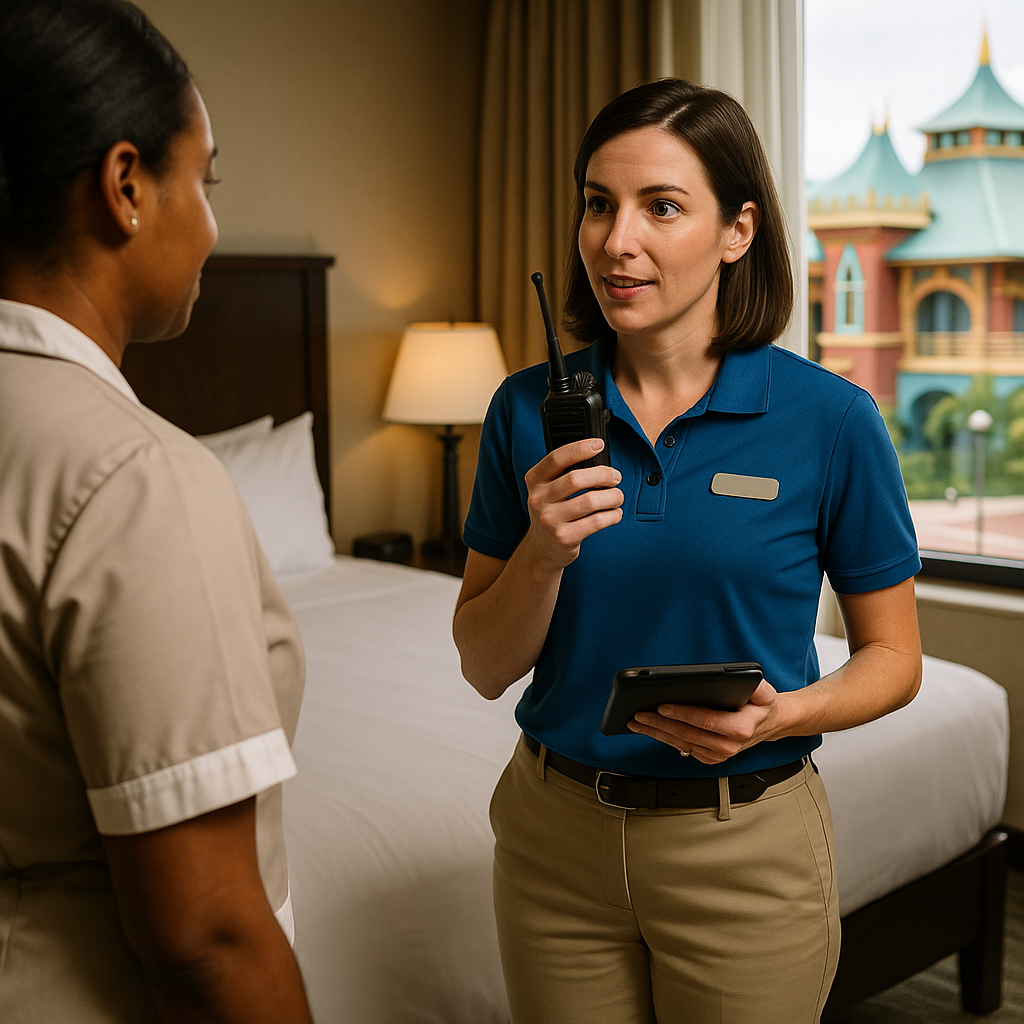
The Room Isn’t Ready Until the Handoff Is Complete: Communication Lessons from Resort Housekeeping
In a theme park resort, a guest may never see the housekeeping team, but they feel the results of its work immediately. A clean room, a correctly updated room status, and a smooth arrival can turn a long travel day into a positive first impression. A missed detail, delayed update, or unclear handoff can create frustration before the guest even enters the park.
That is why communication between housekeeping, front desk, maintenance, and leadership matters just as much as cleaning standards. Resort operations depend on accurate information moving from one team to another. When that information is incomplete, every department spends more time correcting the problem.
Why Room Status Communication Matters
Housekeeping teams do more than clean guest rooms. They help maintain an operational picture of the resort. Front desk employees need to know which rooms are ready for arrival, which require additional attention, and which are unavailable because of maintenance concerns. Supervisors need accurate updates to assign work and prioritize rooms. Maintenance teams need clear descriptions of defects so they can respond efficiently.
A room can look nearly finished while still being unavailable for several reasons:
- A missing amenity or supply has not been replaced.
- A maintenance issue was discovered during cleaning.
- Lost property requires handling according to workplace procedures.
- The room needs a second inspection.
- The room status has not yet been updated in the appropriate system.
From the guest’s perspective, the distinction between “almost ready” and “ready” is significant. If the front desk assigns a room too early, the guest may encounter unfinished work or have to wait while another department responds.
The Three Parts of a Strong Handoff
1. State the Current Status Clearly
Vague updates create unnecessary follow-up questions. Saying “that room should be done soon” does not tell another employee whether the room is clean, inspected, awaiting maintenance, or simply still in progress.
A useful handoff identifies the current condition and the next action. For example:
“Room 412 is cleaned but not ready for release. The bathroom light is not working, and maintenance has been contacted. I will recheck the room after the repair.”
This message gives the receiving employee enough information to understand what has happened and what still needs to occur.
2. Identify the Ownership of the Next Step
One of the most common communication failures in resort operations is assuming someone else will finish the process. A housekeeper may report a problem, a supervisor may mention it to maintenance, and the front desk may continue waiting without knowing who is responsible for the final update.
A strong handoff makes ownership visible. The next step may belong to:
- The housekeeper, who needs to replace an item or complete a final check.
- A housekeeping supervisor, who needs to inspect or reassign the room.
- Maintenance, which must repair a room defect.
- The front desk, which needs to adjust expectations or assign another room.
- A leader, who must escalate a delay affecting multiple arrivals.
Ownership does not mean one person must solve every issue. It means the team knows who is tracking the issue until it is resolved.
3. Close the Loop
Reporting a problem is only the beginning. The loop is closed when the appropriate employee confirms that the next action has been completed and the room status accurately reflects the result.
For example, after maintenance repairs an air-conditioning issue, the room may still require a follow-up check. The repair itself does not automatically mean the room is ready for a guest. Someone must confirm that the original concern has been addressed and that no additional problems were created during the repair.
Closing the loop prevents outdated information from remaining in circulation. It also protects the next shift from having to reconstruct what happened.
Common Handoff Problems in Housekeeping Operations
Assuming the System Tells the Whole Story
Operational systems are valuable, but a status code may not explain the reason behind a delay. A room marked out of service, for example, may require a plumbing repair, a deep clean, an inspection, or another type of follow-up. Employees should use the approved system accurately while also sharing the practical information their coworkers need.
Using Unclear Time Estimates
“Five more minutes” can become twenty minutes when a room needs maintenance, inspection, or additional supplies. Instead of giving an optimistic estimate without enough information, communicate what is known and what remains uncertain.
A more useful update might be:
“The room is waiting for maintenance, so I cannot confirm a release time yet. I will provide another update after the technician assesses the issue.”
Leaving Notes Without Context
Written notes can help during shift changes, but a note that simply says “problem in room” forces the next employee to investigate from the beginning. Good documentation should be brief, factual, and specific enough for another team member to act on it.
Failing to Mention Guest Impact
Not every room issue has the same operational urgency. A delayed room for a guest arriving later in the evening may require a different response than a room assigned to a family already waiting in the lobby. Employees should share relevant context without making assumptions or promising outcomes they cannot control.
Building Better Shift Handoffs
Effective shift handoffs do not need to be long meetings. They need to focus on unresolved work, changing priorities, and information the next team cannot easily find elsewhere.
Before ending a shift, employees can review:
- Rooms still awaiting cleaning, inspection, or release.
- Maintenance issues that have been reported but not verified.
- Special requests or follow-up items requiring another department.
- Rooms affected by unusual circumstances, such as access problems or repeated service concerns.
- Tasks that were reassigned during the shift.
When possible, organize the handoff by urgency rather than simply listing rooms in numerical order. A room affecting an immediate arrival should be identified before a room with a flexible completion window.
Communication Skills That Build Career Value
Employees who communicate well during room turnovers develop skills that apply far beyond housekeeping. They learn to prioritize, document accurately, manage incomplete information, and coordinate across departments. Those abilities are valuable in front desk operations, resort leadership, guest recovery, training, and operations planning.
Strong communicators also become trusted sources of information. Coworkers know that their updates are specific, realistic, and followed through. That reputation can lead to additional responsibility, including mentoring new employees, supporting supervisors, or participating in cross-department projects.
The goal is not to create more paperwork or add unnecessary conversation to a busy shift. The goal is to make sure that important information does not disappear between departments, radios, systems, or shift changes.
A Reliable Handoff Protects the Guest Experience
Guests may never know which employee cleaned their room, reported a defect, or confirmed its readiness. They will notice, however, whether the arrival process feels organized. Accurate handoffs help employees prevent avoidable delays, reduce repeated work, and respond more confidently when something does not go as planned.
In a resort environment, “ready” is more than a clean room. It means the necessary work is complete, the information is current, and the next department can rely on what it has been told.
Theme Park Connections gives professionals throughout the theme park and attractions industry a place to connect with other industry employees, expand their professional networks, and share experiences from different departments. Whether you work in hospitality, housekeeping, maintenance, guest services, or resort leadership, ThemeParkConnections.com can also help you learn about unfamiliar career paths and discover opportunities throughout the attractions industry.