The Shift Handoff Details That Keep Theme Park Hotels Running Smoothly
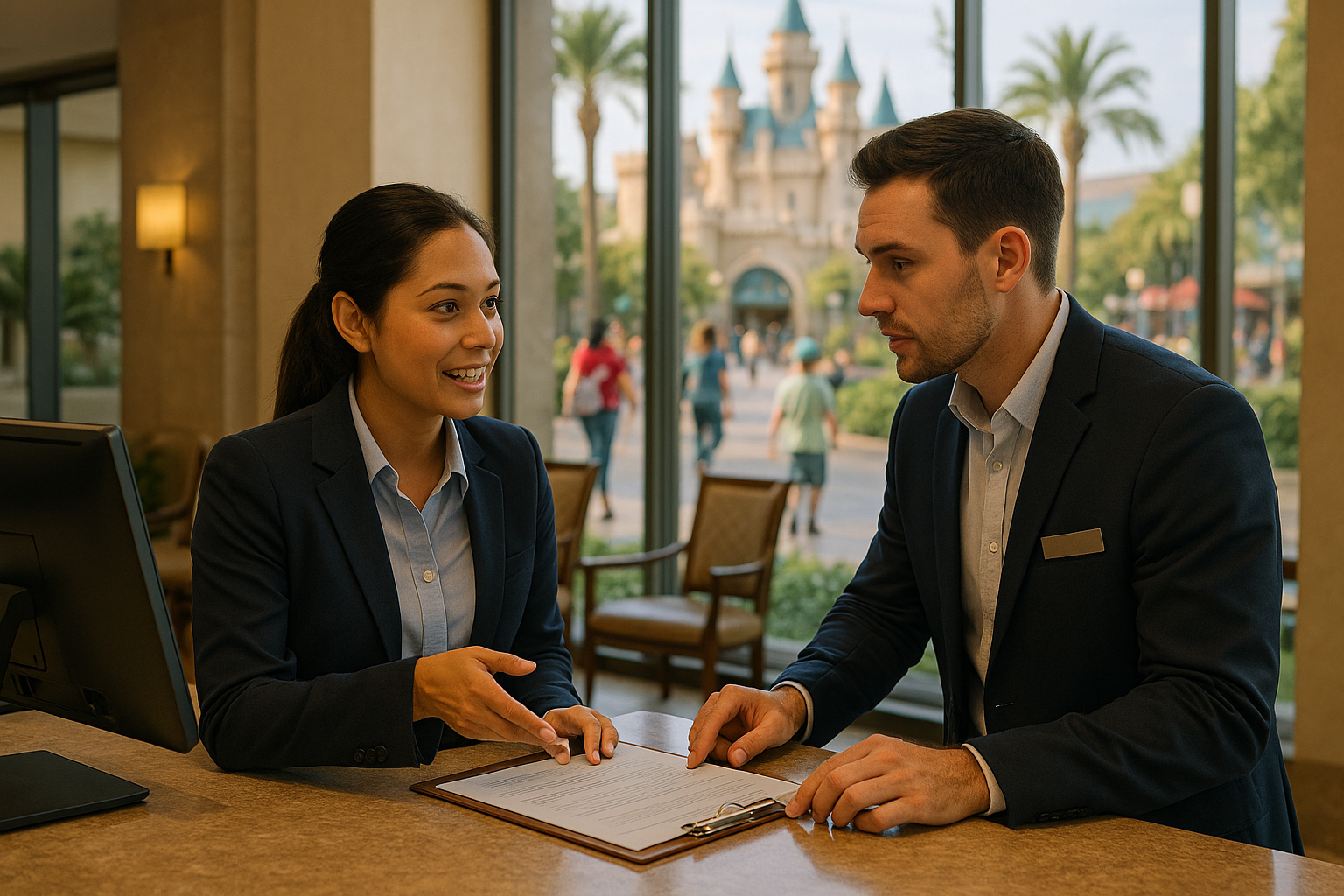
In a theme park resort, a shift handoff can look simple: one employee gives an update, another asks a few questions, and the next team takes over. In practice, those few minutes can influence housekeeping productivity, front desk wait times, guest satisfaction, and the way quickly a problem gets resolved.
A strong handoff is more than a list of unfinished tasks. It gives the incoming employee enough context to make good decisions without forcing them to reconstruct the entire situation from scattered notes, messages, or conversations. For resort employees, learning how to give clear shift handoffs is a practical skill that improves daily operations and builds a reputation for reliability.
Why Shift Handoffs Matter in Theme Park Hospitality
Resort operations rarely stop when one employee clocks out. Guests may be waiting for a room, maintenance may be responding to a problem, housekeeping may be working through a changing room status list, and front desk teams may be monitoring special circumstances that began several hours earlier.
Without an effective handoff, important details can disappear between shifts. The incoming employee may not know that:
- A guest is expecting a follow-up call.
- A room requires additional attention before it can be released.
- A maintenance concern has been reported but not yet resolved.
- A family has a time-sensitive request connected to transportation or dining.
- A supervisor has already approved a particular solution.
These gaps can result in duplicated work, delayed responses, inconsistent communication, and frustrated guests. A clear handoff protects the guest experience while helping the next employee begin the shift with confidence.
Separate Facts, Actions, and Follow-Up
One of the most useful ways to structure a handoff is to divide information into three parts: what happened, what has been done, and what still needs to happen.
What happened
Start with the situation itself. Keep the description factual and specific. Instead of saying, “The guest was upset about the room,” explain what the guest reported and when the concern was raised.
For example: “The guest in Room 214 contacted the desk at approximately 3:00 p.m. because the room was not ready when they arrived. They are traveling with two young children and asked for an update before returning from the park.”
This gives the next employee useful context without adding assumptions or personal judgments.
What has been done
Next, explain the actions already taken. Mention who was contacted, what information was provided, and whether a solution has been offered or approved.
“Housekeeping was contacted and estimated the room would be available within 30 minutes. The guest was offered access to the resort amenities while waiting and said they would return to the lobby at 3:45 p.m.”
This prevents the incoming employee from repeating steps that have already been completed.
What still needs to happen
End with the next action and, when appropriate, a deadline. “Please check the room status before 3:45 p.m. and update the guest even if the room is not yet ready.”
A handoff becomes much more useful when the incoming employee knows exactly what ownership looks like.
Include the Details That Change the Decision
Not every detail belongs in a shift handoff. The goal is not to repeat every conversation from the previous shift. The goal is to share information that could affect what the next employee does.
Useful details often include:
- Time sensitivity: Is the guest waiting now, or is the request needed later in the evening?
- Current status: Is the issue open, in progress, resolved, or waiting for confirmation?
- Ownership: Which department or employee is handling the next step?
- Guest expectations: Was a call, message, room visit, or update promised?
- Operational impact: Does the issue affect room availability, transportation, housekeeping, dining, or another service?
- Escalation history: Has a leader already been involved or given direction?
These details help the incoming employee prioritize instead of treating every open item as equally urgent.
Use Neutral Language, Especially During Difficult Situations
Handoffs can become unhelpful when employees use emotional or judgmental descriptions. Phrases such as “difficult guest,” “they were being unreasonable,” or “maintenance never came” may communicate frustration, but they do not help the next person solve the problem.
Neutral language is more professional and more actionable. Try describing observable behavior instead:
- “The guest requested to speak with a supervisor.”
- “The guest has contacted the desk twice for an update.”
- “A maintenance request was submitted at 8:15 p.m.; completion has not been confirmed.”
- “The guest declined the first proposed solution and asked what additional options were available.”
This approach protects coworkers and guests from unnecessary labels while giving the next employee information they can use.
Make the Handoff Two-Way
A handoff is not complete simply because the outgoing employee has finished speaking. The incoming employee should have an opportunity to ask questions, confirm priorities, and identify anything unclear.
Useful questions include:
- “Which item needs attention first?”
- “Has the guest been given a specific time for the next update?”
- “Who should I contact if the room is still unavailable?”
- “Was a leader involved in this decision?”
- “Is there anything documented in the department’s approved system?”
These questions are particularly important during busy arrivals, late-night operations, special events, and periods when multiple departments are working through the same issue.
Common Handoff Mistakes to Avoid
Giving too much background
A long explanation can bury the information that matters most. Share enough history to explain the current situation, then focus on status and next steps.
Assuming someone else will follow up
Statements such as “Housekeeping knows about it” or “Someone from maintenance is checking” leave ownership unclear. Identify the department, person, or process responsible for the next action when possible.
Failing to mention promises
If a guest was promised a call, update, amenity, or supervisor conversation, that commitment must be included in the handoff. Guests often remember the promise even when employees change shifts.
Relying only on memory
Busy resort shifts involve too many moving parts to depend entirely on verbal recall. Use the department’s approved documentation, communication, and tracking tools where appropriate. Written records should be clear enough that another employee can understand the situation without hearing the original conversation.
Build a Reputation for Reliable Follow-Through
Employees who give organized handoffs become trusted by coworkers across departments. Front desk teams know they will receive useful information. Housekeeping and maintenance partners know their work will be tracked accurately. Leaders can make decisions more quickly because the facts are easier to understand.
This skill also supports career growth. Supervisors, trainers, coordinators, and managers all depend on accurate communication between shifts. A well-structured handoff demonstrates judgment, attention to detail, accountability, and respect for the next team.
The best handoffs are brief, factual, and focused on ownership. They help the next employee answer three questions: What happened? What has already been done? What must happen next?
Connect With Other Attractions Industry Professionals
Great operational habits are often learned by comparing experiences with people in other departments and organizations. ThemeParkConnections.com gives professionals throughout the theme park and attractions industry a place to connect with other industry professionals, expand their networks, share experiences, and learn how different departments operate.
Whether you work in resort operations, housekeeping, front desk services, attractions, food and beverage, entertainment, maintenance, or guest services, those connections can help you discover career opportunities and build relationships throughout the attractions industry.