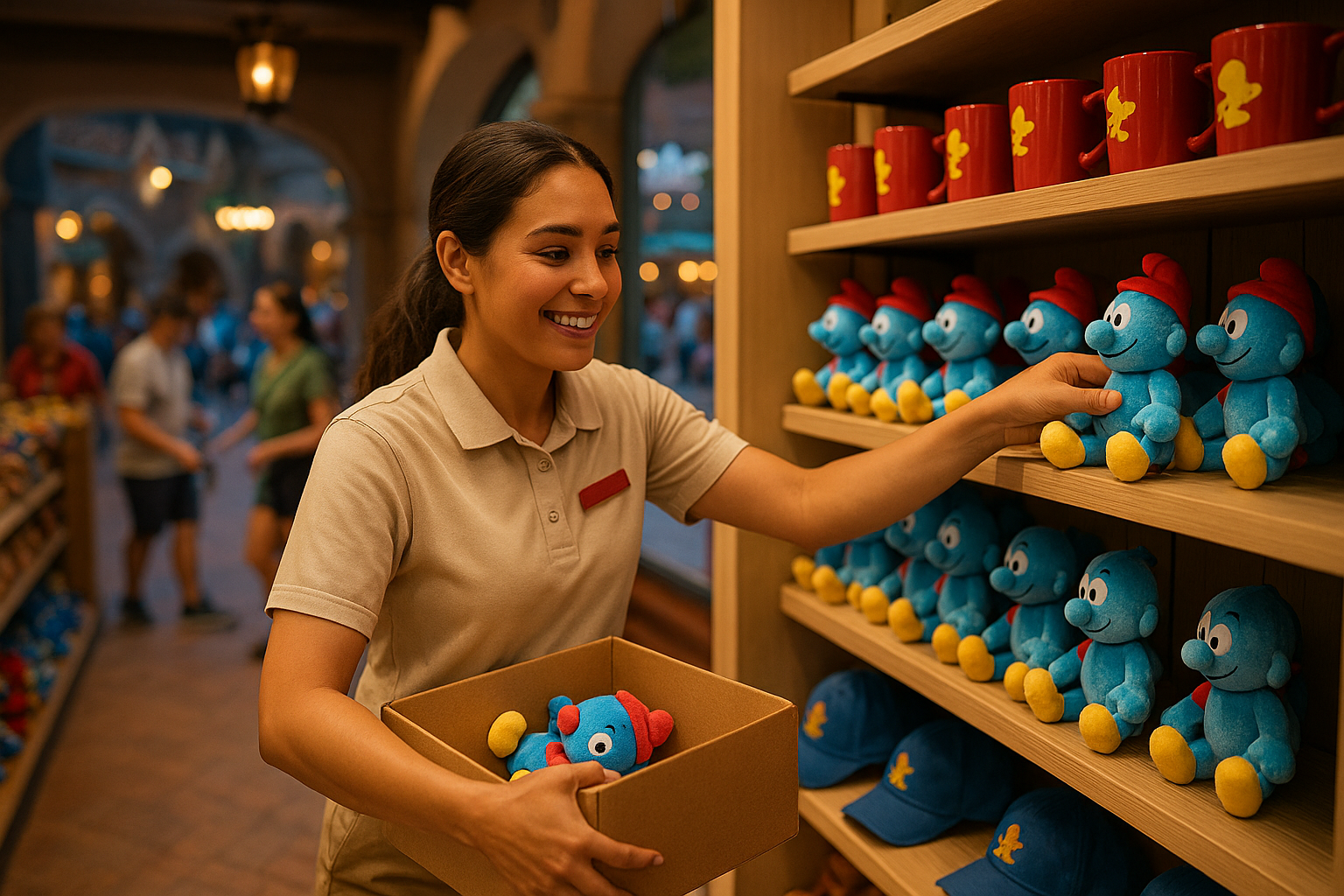
The Stockroom Is Part of the Show: Reliable Merchandise Replenishment During Peak Operations
Guests may only see the sales floor, but a retail operation’s success often depends on what happens behind the stockroom door. During a busy park day, an empty display can mean more than a missed sale. It can create unnecessary guest questions, put pressure on sales associates, disrupt visual standards, and make a popular product appear unavailable when more inventory is only a few steps away.
Merchandise replenishment is especially challenging during holidays, special events, product launches, and high-attendance weekends. Employees must move quickly without creating clutter, losing track of inventory, or interrupting the guest experience. A dependable replenishment process helps the entire retail team work with greater confidence.
Why Merchandise Replenishment Matters
Retail teams are balancing several priorities at once: serving guests, processing transactions, maintaining displays, protecting merchandise, and keeping sales areas presentable. Replenishment connects all of those responsibilities.
When products are not replenished consistently, several problems can develop:
- Guests may assume an item is sold out when it is still available in the stockroom.
- Sales associates may leave the sales floor repeatedly to search for products.
- Displays can become uneven, incomplete, or visually confusing.
- Employees may overfill fixtures and create safety or presentation concerns.
- Stockroom inventory can become difficult to locate during the busiest parts of the day.
A well-run stockroom supports the guest-facing team without drawing attention away from it. The goal is not simply to move merchandise from one place to another. The goal is to make the right products available at the right time while preserving an organized operation.
Start With the Sales Floor
Effective replenishment begins with observation. Before bringing out additional merchandise, employees should understand what the sales floor actually needs.
Look for more than completely empty shelves. A display may need attention when:
- Only one or two units remain in a high-demand section.
- Sizes, colors, or product variations are unevenly represented.
- Merchandise has been placed in the wrong location.
- Products have been moved by guests and no longer match the display plan.
- A fixture appears full but the most popular items are hidden behind other products.
Priorities can change throughout the day. A product that receives little attention in the morning may become a top seller after a parade, show, event, or weather change. Retail employees who pay attention to guest questions and purchasing patterns can often identify demand before a display becomes empty.
Build a Replenishment Rhythm
Waiting until a display is completely bare creates unnecessary urgency. A more reliable approach is to establish regular opportunities to check key areas. The exact rhythm will vary by location, staffing, and business volume, but the principle remains the same: inspect before the shortage becomes obvious.
Use High-Traffic Moments Carefully
Some periods are better suited for replenishment than others. A quieter stretch may allow an employee to bring out multiple items and recover a display properly. During a major guest surge, the priority may be a quick refill of only the most visible or highest-demand products.
Employees should also consider traffic flow. Moving boxes or carts through a narrow sales area during a crowded period can create congestion and interfere with guests. If replenishment cannot be completed safely and efficiently, it may be better to coordinate with a leader or wait for a more appropriate opening.
Separate Urgent Needs From Routine Work
Not every empty space requires the same response. A missing high-demand item near the entrance may require immediate attention. A partially depleted display in a less active area may be handled during the next scheduled stock check.
Useful questions include:
- Is the item currently being requested by guests?
- Is the product part of a featured display or event collection?
- Will leaving the space empty make the entire fixture look incomplete?
- Can the product be located quickly in the stockroom?
- Will bringing it out now disrupt guest service or create a safety issue?
Keep the Stockroom Easy to Work In
A disorganized stockroom turns a simple refill into a search assignment. Employees may know that an item is somewhere in the back, but locating it can take several minutes—especially when boxes have been opened, products have been moved, or new deliveries have not been integrated into the existing layout.
Reliable stockrooms generally depend on consistent habits:
- Return merchandise to its designated location after opening a case.
- Keep similar products together whenever the layout allows.
- Do not place loose items in unlabeled or unrelated areas.
- Keep walkways and access points clear.
- Communicate when a product has been relocated or temporarily staged.
- Break down packaging and remove waste according to location expectations.
Organization is not only about appearance. It helps employees answer guest questions faster, reduces unnecessary movement, and makes shift handoffs more accurate.
Communicate Before a Product Becomes a Problem
Retail employees should communicate more than the fact that something is empty. A useful update includes what happened, what is available, and what action may be needed.
For example, “The medium black hoodies are nearly gone, but we have additional units in the stockroom” gives the team useful information. “We are out of the blue event mugs on the floor, and the back stock needs to be checked” identifies a possible follow-up without assuming the product is completely unavailable.
Communication is especially important when:
- A popular item is selling faster than expected.
- A product is difficult to locate in the stockroom.
- Multiple sales areas share the same inventory.
- A featured display needs frequent recovery.
- Guests are repeatedly asking for an item that is not currently visible.
Clear updates help leaders make informed decisions about labor, product movement, and guest communication.
Make Replenishment Guest-Friendly
Even a routine stock run can affect the guest experience. Employees should avoid placing boxes where guests need to walk, blocking displays while searching for a product, or carrying large loads through crowded areas without considering visibility and traffic.
When a guest asks about an item during replenishment, acknowledge the question before continuing the task. If possible, assist the guest or direct them to an available team member. A stockroom task should never make guests feel as though they are in the way.
Small choices also matter on the sales floor. Face products forward, restore size order, remove empty packaging, and leave the fixture looking intentional. Replenishment is complete only when the display is ready for the next guest.
Turn Replenishment Into a Career Skill
Merchandise replenishment develops skills that apply far beyond retail. Employees learn to prioritize competing demands, recognize patterns, communicate operational information, manage time, and make decisions with incomplete information.
Those abilities can support future opportunities in retail leadership, inventory control, visual merchandising, warehouse operations, purchasing, event merchandise, and other departments that depend on organization and coordination.
Employees who want to improve can begin by tracking which products require the most attention, asking experienced coworkers how they prioritize stock runs, and learning how the location communicates low inventory or product shortages. Consistency builds trust. When leaders know an employee will notice problems early and communicate clearly, that employee becomes a stronger part of the operation.
Building Connections Beyond the Sales Floor
Retail operations are connected to nearly every part of the attractions industry, including entertainment, food and beverage, events, hospitality, inventory, and leadership. Learning how other departments manage peak demand can provide valuable perspective and help employees discover career paths they may not have considered.
ThemeParkConnections.com gives professionals throughout the theme park and attractions industry a place to connect with other industry employees, expand their professional network, share experiences, learn about different departments, discover career opportunities, and build relationships across the field.
The next time you restock a display, remember that the task is more than moving products from the stockroom to the sales floor. You are supporting the guest experience, protecting the operation’s standards, and developing the judgment that keeps a busy retail environment running smoothly.