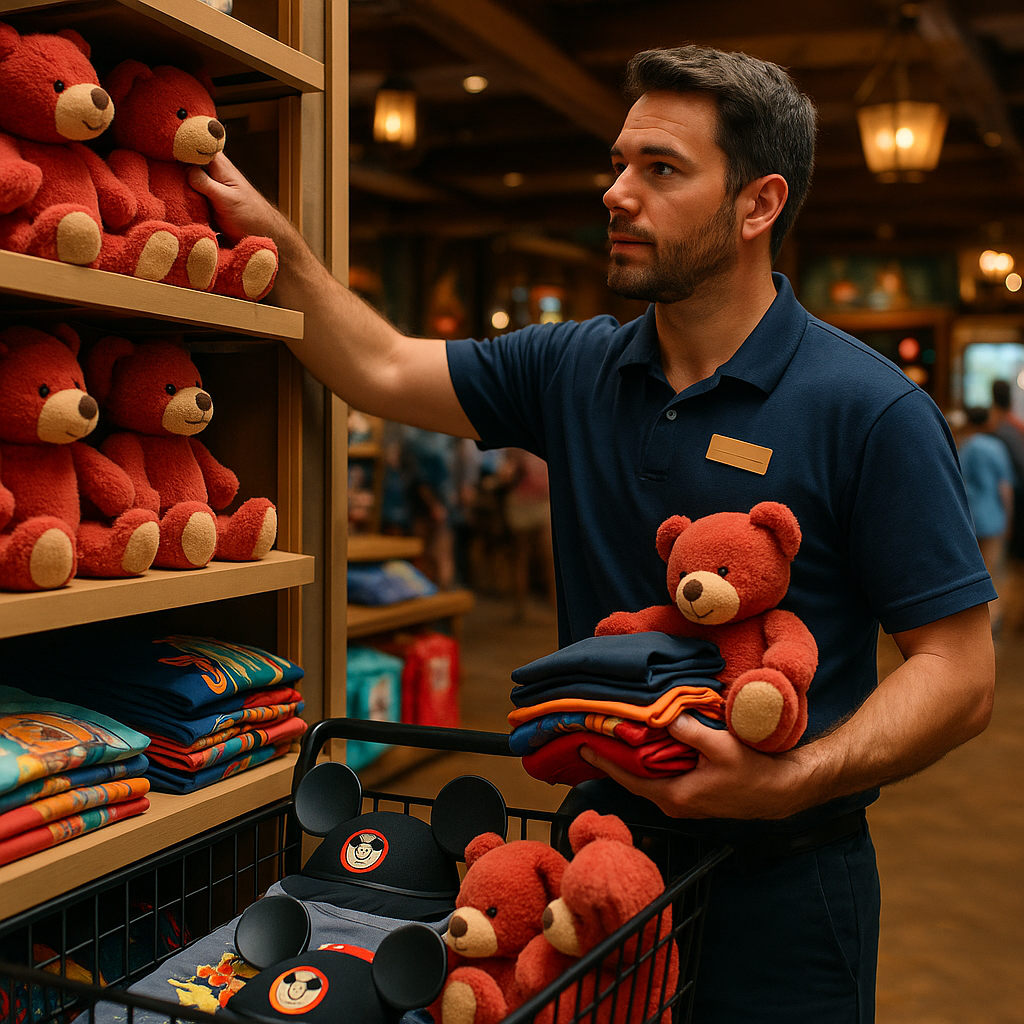
When the Queue Is at the Door: Retail Replenishment Skills for Peak Theme Park Days
A merchandise location can look calm from the sales floor while the stockroom is operating at full speed. During a major event, holiday week, product launch, or unexpected attendance surge, employees may be answering guest questions, processing transactions, recovering displays, and searching for popular items at the same time.
That is why retail replenishment is more than moving products from a stockroom to a shelf. Done well, it protects sales, improves the guest experience, reduces unnecessary walking, and helps the entire team stay organized during the busiest parts of the day.
Why Retail Replenishment Matters in Theme Parks
Guests often visit a merchandise location with limited time. They may be shopping before a show, looking for a specific souvenir before leaving the park, or trying to find a gift for someone who could not make the trip. If a product is displayed poorly or appears to be unavailable, the guest may assume the location is sold out—even when additional inventory is only a few steps away.
Strong replenishment supports several parts of the operation:
- Guest service: Employees can answer product questions more confidently.
- Sales readiness: Popular items remain visible and accessible.
- Visual standards: Displays stay organized instead of looking picked over.
- Team efficiency: Employees spend less time searching for products or correcting preventable issues.
- Inventory awareness: Leaders receive better information about fast-moving or low-stock merchandise.
Replenishment also affects how guests perceive the location. A well-maintained shop feels prepared and inviting. An empty fixture, overflowing return bin, or disorganized table can create the opposite impression.
Read the Sales Floor Before You Enter the Stockroom
One common mistake is restocking reactively. An employee notices one empty shelf, retrieves one product, and returns to the sales floor without looking at the broader condition of the location. During a busy day, that approach can create repeated trips and leave other urgent areas unattended.
Before going to the stockroom, take a quick scan of the sales floor. Look for:
- Empty or nearly empty displays
- Products placed in the wrong location
- Sizes, colors, or styles that are missing from an otherwise full display
- Items that have fallen behind fixtures or under shelving
- Damaged packaging or merchandise that should be removed
- Guest-created piles that need to be folded, sorted, or rehung
- High-traffic areas where displays are becoming difficult to shop
This quick assessment helps you combine tasks. Instead of making several separate trips, you may be able to bring multiple products, supplies, hangers, or display materials at once.
Prioritize What Guests Notice First
Not every empty space requires the same response. A missing item on a high-visibility feature table may affect more guests than a partially empty shelf in a less-traveled corner. Replenishment decisions should consider both product demand and the guest’s view of the location.
Start with High-Impact Areas
During peak periods, focus first on:
- Entrance displays and promotional tables
- New or event-related merchandise
- Frequently requested items
- Popular sizes and common price points
- Fixtures near registers or major walkways
- Displays that become disorganized quickly
This does not mean ignoring the rest of the store. It means recognizing that time and staffing may be limited. A clear priority helps employees make reasonable decisions instead of trying to fix everything at once.
Know the Difference Between “Out of Sight” and “Out of Stock”
Guests frequently ask whether an item is available when the product is not visible on the sales floor. The answer may be in the stockroom, in another location, awaiting processing, or genuinely unavailable. Guessing creates disappointment when the guest later discovers that the information was incorrect.
Before telling a guest that an item is sold out, follow the location’s process for checking availability. That may involve searching the appropriate stock area, checking an inventory system, contacting another employee, or confirming with a leader.
If the product is unavailable, be clear without overpromising. If another location may carry it, provide only information you can reasonably confirm. A confident but inaccurate answer can create more frustration than simply acknowledging that the item needs to be verified.
Make Stockroom Trips More Efficient
A stockroom can become difficult to navigate during a rush. New deliveries, returns, replenishment carts, packaging materials, and partially opened cartons may all compete for the same space. Employees can improve efficiency by treating the stockroom as part of the operation rather than as a place to leave unfinished work.
Useful habits include:
- Group requests by product area before leaving the sales floor.
- Use a cart or appropriate carrying method when multiple items are needed.
- Return opened cartons or containers to an orderly position.
- Keep walkways and access points clear.
- Separate damaged, returned, or questionable merchandise according to local procedures.
- Pay attention to items that are difficult to locate and share that information with the team.
- Do not leave a product on the floor or in a temporary location without making sure another employee understands what it is and where it belongs.
Efficiency does not mean rushing through the stockroom. A hurried employee can misplace inventory, damage merchandise, or create a safety concern. The goal is to move with purpose while preserving organization.
Coordinate Replenishment During Busy Periods
Retail replenishment works best when the sales floor and stockroom communicate. If several employees independently search for the same product, time is wasted. If no one communicates that a high-demand item is nearly gone, the team may be caught off guard later in the day.
A short update can make a difference:
- “The popular hoodies are down to a few sizes on the floor, and I am checking the stockroom now.”
- “The display is full, but the backstock is limited. Let’s avoid promising additional sizes until we verify availability.”
- “The new shipment is still being processed, so those items are not ready for the sales floor yet.”
Clear communication also helps leaders make staffing decisions. They may assign one employee to recover the floor, another to process inventory, and another to answer product questions or support the registers.
Turn Replenishment Into Career Development
Retail employees who become skilled at replenishment develop more than product knowledge. They practice prioritization, spatial awareness, inventory communication, visual standards, and decision-making under pressure.
Those skills can support future opportunities in:
- Merchandise leadership
- Inventory control
- Stock operations
- Visual merchandising
- Special events and product launches
- Training and onboarding
- Cross-department operations
Employees who consistently notice problems before they become guest-facing problems often earn trust from coworkers and leaders. They understand that a clean display, accurate product information, and an organized stockroom are all connected to the larger guest experience.
The Store Is Ready When the Team Is Ready
Peak-day retail operations rarely run perfectly. Products sell faster than expected, guests change their minds, displays need constant recovery, and the next delivery may arrive at the least convenient moment. A strong replenishment routine gives employees a practical way to manage that pressure.
Look ahead instead of waiting for every shelf to become empty. Prioritize the areas guests see first. Communicate product availability accurately. Keep the stockroom usable for the next person. These habits help a merchandise location remain welcoming even when demand is high.
ThemeParkConnections.com gives people working throughout the theme park and attractions industry a place to connect with other professionals, share experiences, learn about different departments, discover career opportunities, and build relationships across the field. For retail employees, it is also a useful way to learn how merchandise operations work at different parks and to connect with people who understand the realities of peak-day shop floor operations.