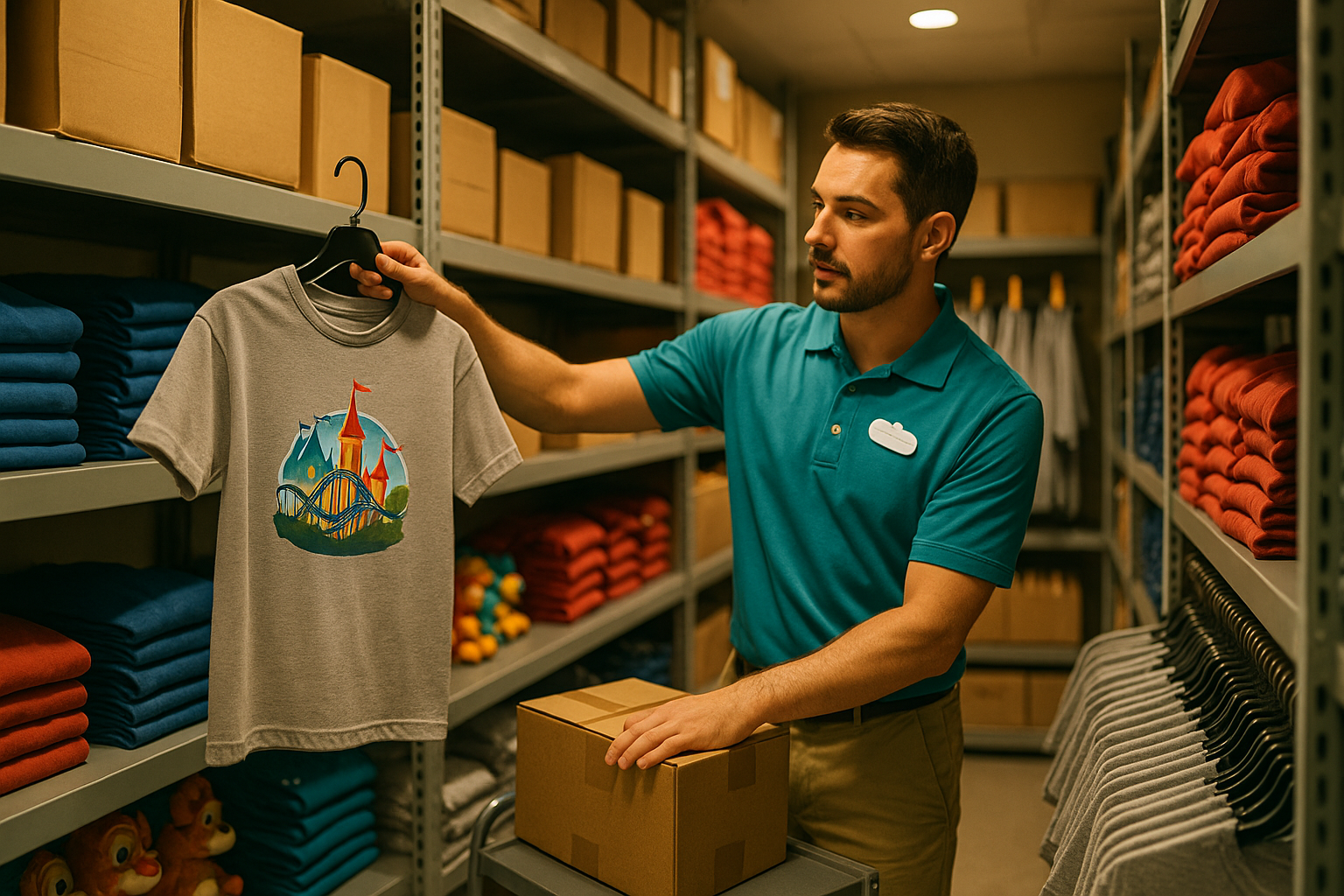
The Stock Room Is Part of the Guest Experience
Guests may never see a retail stock room, but the work happening inside it can shape their entire visit. A missing size, an empty display, or a popular item that never makes it back to the sales floor can turn a simple shopping stop into a frustrating interaction.
For theme park retail employees, stock room operations are not just about moving boxes. They involve organization, timing, communication, product knowledge, and judgment. Strong stock room habits help merchandise locations stay visually appealing, reduce unnecessary delays, and give sales floor employees more confidence when answering guest questions.
Why Stock Room Operations Matter in Theme Park Retail
Retail locations in theme parks often face conditions that are different from traditional stores. Demand can change quickly based on weather, park attendance, entertainment schedules, holidays, new product releases, or a nearby event. A product that sits untouched in the morning may become one of the most requested items by the afternoon.
The stock room supports the sales floor in several important ways:
- Keeping popular products available during busy periods
- Providing alternate sizes, colors, or styles when displays are empty
- Protecting merchandise from damage, dirt, and unnecessary handling
- Helping employees locate products quickly
- Supporting accurate replenishment and inventory awareness
- Allowing the sales floor to remain organized and guest-ready
When the stock room is difficult to navigate, employees spend more time searching and less time assisting guests. During a rush, even a few extra minutes can result in missed sales or a guest leaving without the item they wanted.
Organization Is More Than Making Shelves Look Neat
A well-organized stock room should make sense to more than one person. If only the employee who arranged it can find anything, the system is not truly effective.
Product placement should be logical and consistent. Depending on the location, merchandise might be grouped by product type, character, collection, size, color, or sales floor area. The exact method may vary, but the goal is the same: an employee should be able to find an item without relying on guesswork.
Build a system that supports speed
Several basic habits can make a stock room easier to work in:
- Keep similar products together whenever possible.
- Use clear labels or location markers if they are available.
- Place frequently requested products where they are easy to reach.
- Keep walkways, doors, and access points clear.
- Return misplaced merchandise to its proper location instead of creating temporary piles.
- Separate damaged, incomplete, or questionable items from sellable inventory.
Organization also includes maintaining the space throughout the shift. A stock room rarely becomes disorganized all at once. It usually happens through small shortcuts: a box left in the aisle, folded apparel placed on the wrong shelf, or merchandise set aside with the intention of putting it away later.
Those shortcuts create extra work for the next employee and can slow down the entire operation during a busy period.
Replenishment Requires Judgment
Restocking is not simply a matter of filling every empty space. Employees need to pay attention to what is selling, what is likely to sell next, and what the sales floor can reasonably hold.
For example, a retail location near an attraction exit may see increased demand for seasonal apparel after a show, parade, or special event. A store near a water attraction may need to monitor certain products differently on hot or rainy days. Employees who recognize these patterns can prepare before the sales floor becomes empty.
Good replenishment decisions often involve questions such as:
- Which products are guests asking for repeatedly?
- Are multiple sizes or variations missing from the display?
- Is the current sales floor quantity appropriate for the expected traffic?
- Will bringing out more product create clutter?
- Are there items that need to be rotated, folded, or presented more clearly?
Restocking should support the appearance and function of the sales floor. Bringing out too much merchandise can make a display look crowded, while bringing out too little creates unnecessary trips to the stock room.
Communication Prevents Repeated Guest Disappointments
One of the most valuable stock room skills is communicating what you know. If an employee searches for an item and discovers that the location is out of stock, that information should be shared with the team according to the location’s normal communication process.
This helps prevent multiple employees from giving guests conflicting answers or repeatedly searching for the same unavailable product.
Useful information to communicate may include:
- A product that is temporarily unavailable
- A size or variation that is nearly depleted
- Merchandise that has been moved to a different location
- Items that arrived damaged or incomplete
- Products that are selling faster than expected
- Displays that need attention from a visual merchandising or leadership team
Communication should be clear and specific. “We’re low on shirts” is less useful than “The blue anniversary hoodie is down to one medium and no large in the stock room.” Specific information helps leaders and sales floor employees make faster decisions.
Handling the “Can You Check in the Back?” Question
Guests often ask employees to check the stock room for another size or item. This request may sound simple, but it requires a careful approach.
First, listen closely to the request. Confirm the product, size, color, and any identifying details before leaving the sales floor. Once in the stock room, search methodically rather than moving random boxes or assuming the item is unavailable.
If the product cannot be found, check whether it may be displayed in another section, placed on a different fixture, or grouped with a related collection. If it is still unavailable, return to the guest with a clear answer. Avoid promising that another location has the item unless that information has been verified through the appropriate channel.
A professional response might include an alternative product, another size, or information about where the guest could continue looking. Even when the answer is no, a thorough search and respectful explanation can protect the guest relationship.
Protecting Merchandise and Personal Safety
Stock rooms often contain narrow pathways, stacked cartons, shelving, hangers, fixtures, and equipment. Speed matters, but it should not come at the expense of safe movement or product protection.
Employees should follow their location’s training and safety expectations when lifting, carrying, reaching, and storing merchandise. They should also pay attention to unstable stacks, blocked access points, damaged packaging, and items stored in ways that could fall or create a trip hazard.
Merchandise can also be damaged through rushed handling. Apparel may become wrinkled, fragile products may be scratched, and boxed items may be crushed when placed under excessive weight. Careful handling reduces waste and makes the sales floor easier to maintain.
Stock Room Skills Can Lead to Larger Opportunities
Retail employees who become dependable in stock room operations develop skills that apply well beyond merchandise locations. They learn inventory awareness, prioritization, visual standards, communication, and problem-solving under pressure.
Those skills can support future opportunities in:
- Retail leadership
- Inventory and merchandise operations
- Visual merchandising
- Warehouse and distribution work
- Purchasing or product coordination
- Training and operational support
Employees who understand both the back-of-house workflow and the guest-facing experience are especially valuable. They can see how a decision in the stock room affects the display, the sales interaction, and the guest’s final impression.
The Work Guests Do Not See Still Shapes Their Visit
A clean, organized, responsive stock room creates a stronger retail operation. Guests may only notice the finished display or the employee who finds the right size, but those moments depend on preparation behind the scenes.
For retail employees, treating the stock room as part of the guest experience can change the way they approach the work. Every labeled shelf, accurate update, careful restock, and thorough product search contributes to a smoother day for both guests and coworkers.
ThemeParkConnections.com gives professionals across the theme park and attractions industry a place to connect with other industry employees, expand their professional networks, share experiences, and learn how different departments operate. For retail team members interested in inventory, visual merchandising, leadership, or other career opportunities, those connections can provide useful insight into paths they may not encounter in their daily role.