When the Stockroom Becomes the Bottleneck: Keeping Theme Park Merchandise Replenished During Peak Days
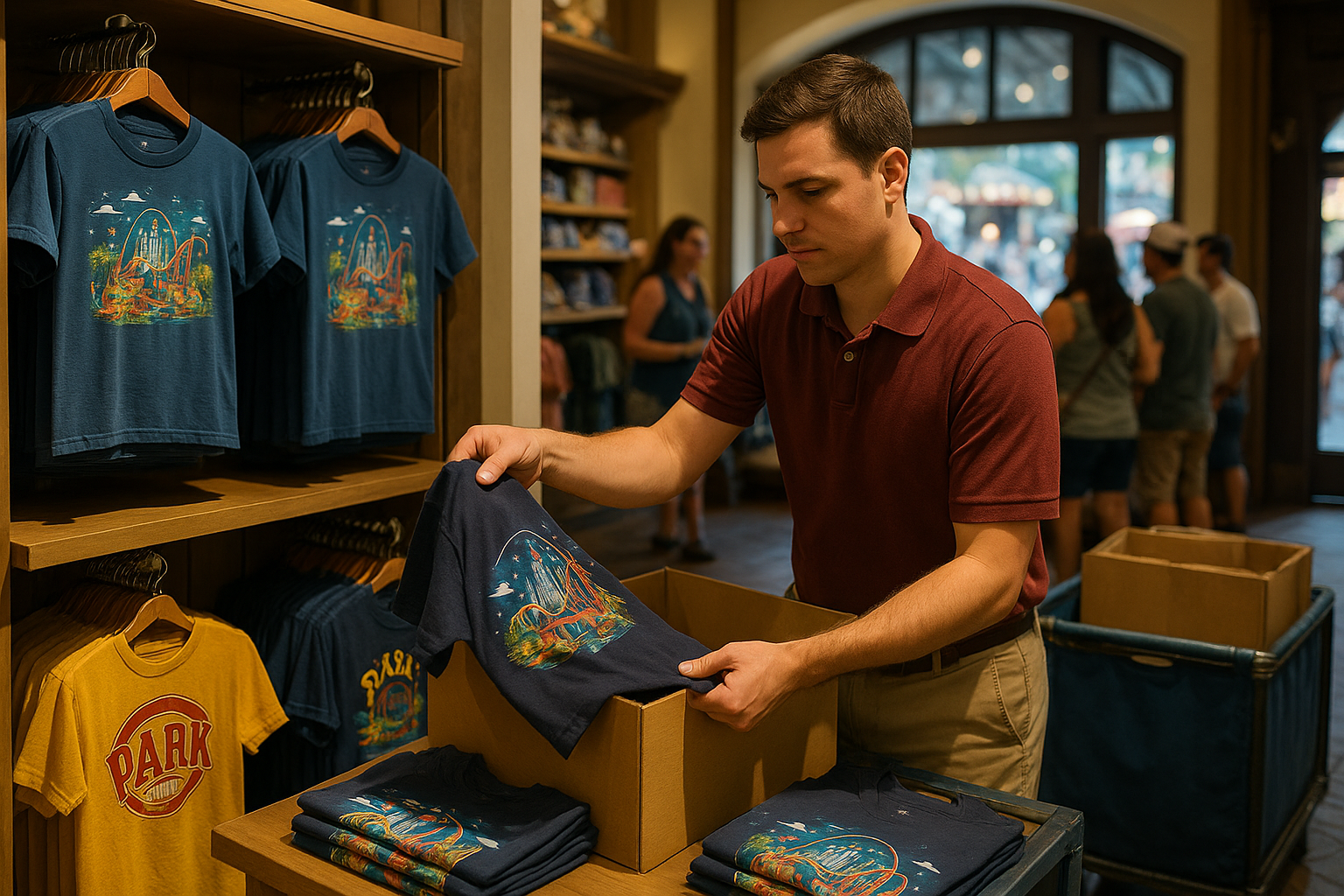
Guests may see a beautifully organized merchandise shop, but they rarely see the work required to keep it that way. Behind the sales floor, retail employees are checking delivery carts, locating sizes, opening cartons, replenishing displays, answering product questions, and trying to keep pace with demand that can change by the hour.
On a busy theme park day, the stockroom can become the point where everything slows down. A popular item sells out on the floor, a team member cannot find the correct carton, and a guest waits while several employees search for the same product. Good stockroom organization is not just a back-of-house preference. It directly affects sales, guest service, employee workload, and the appearance of the entire location.
Why Merchandise Replenishment Gets Difficult During Peak Days
Retail demand in a theme park is rarely evenly distributed. A new product release, seasonal event, character appearance, parade route, or sudden change in weather can shift what guests want almost immediately.
A shop that is quiet in the morning may become crowded after a nearby show ends. A rainstorm can create a rush for ponchos, jackets, towels, or footwear. A popular attraction may send a wave of guests toward a location looking for themed souvenirs connected to that experience.
At the same time, employees are balancing several responsibilities:
- Serving guests at registers and on the sales floor
- Maintaining visual standards and recovery
- Locating products in the stockroom
- Receiving or processing new merchandise
- Answering questions about sizes, colors, and availability
- Managing fitting rooms, returns, or damaged items
- Supporting nearby locations when inventory is needed elsewhere
Without a clear system, replenishment becomes reactive. Employees spend more time searching, the sales floor looks incomplete, and guests may assume an item is unavailable even when it is sitting somewhere in the stockroom.
Build a Stockroom System That Makes Sense to the Team
The best stockroom layout is not necessarily the one that looks most organized to one individual. It is the one that allows multiple employees to find products quickly and return them to the correct location.
Group products by how employees use them
Depending on the location, products may be organized by collection, category, size, style, or sales floor placement. The exact system will vary, but employees should be able to understand the logic without needing a personal tour from the person who created it.
For example, a useful layout might separate:
- High-volume core products from slower-moving specialty items
- Adult, youth, and infant apparel
- Different product collections or park areas
- Backstock for the main sales floor from items held for special displays
- Damaged, returned, or pending merchandise from sellable inventory
Labels, shelf markers, and consistent carton placement can make a major difference. If products move during a reset or seasonal change, update the signs rather than expecting employees to remember the new arrangement.
Keep the fastest-moving items easiest to reach
Employees should not have to climb over slow-moving inventory to reach the products guests request most often. High-demand sizes, popular souvenirs, and frequently replenished items should be positioned where they can be retrieved safely and efficiently.
This does not mean placing everything near the entrance. It means paying attention to actual work patterns. If a particular product is pulled dozens of times during a shift, its location should support that activity.
Replenish Before the Sales Floor Looks Empty
Waiting until a display is completely bare creates unnecessary pressure. It also affects the guest’s perception of the shop. An empty rack or partially cleared table can make the location appear understocked, even when more inventory is available nearby.
Experienced retail employees learn to identify early warning signs:
- Only one or two sizes remain on a popular apparel rack
- A display has noticeable gaps after a busy wave of guests
- Customers are repeatedly asking whether more inventory is available
- Employees are moving products from other displays to fill empty spaces
- A product is selling quickly enough that one restock will not last through the shift
During peak periods, a quick floor check can be more useful than waiting for a formal restock request. Team members can communicate what is running low and prioritize the products most likely to affect guest satisfaction or sales.
Use Clear Communication Between the Floor and Stockroom
Many replenishment problems begin with vague requests. “We need more shirts” does not tell the stockroom employee which design, size range, or quantity is needed.
A stronger request includes specific information:
- Product name or description
- Collection, character, or location
- Sizes or colors needed
- Approximate quantity
- Exact sales floor location
- Whether the request is urgent or can wait for the next restock cycle
For example, “Can someone check for more adult medium and large blue attraction-logo shirts for the wall display?” gives the receiving employee a clear task. It also reduces the chance of bringing out the wrong product or making multiple trips.
Communication should work in both directions. Stockroom employees should tell the sales floor when an item is unavailable, only partially available, or located in a different section. That allows floor employees to give guests accurate information instead of repeatedly sending someone to search.
Do Not Let Organization Create a Safety Problem
A crowded stockroom can become hazardous quickly, especially during deliveries or high-volume replenishment. Boxes left in walkways, unstable stacks, blocked access points, and rushed lifting can create risks for employees and make it harder to locate inventory.
Good merchandise operations include basic habits such as:
- Keeping walkways and access points clear
- Returning cartons and equipment after use
- Stacking products securely and within workplace guidelines
- Using appropriate equipment for moving heavy or awkward items
- Asking for assistance instead of forcing a lift
- Separating damaged or leaking merchandise from sellable product
- Reporting recurring space or storage problems to a leader
Speed matters during a rush, but a fast restock that creates a trip hazard or damages inventory is not an efficient restock.
Turn Replenishment Into a Professional Skill
Retail employees who understand inventory flow often become valuable beyond the sales floor. They learn to recognize demand patterns, prioritize competing requests, communicate clearly, and stay organized under pressure.
Those skills can support future opportunities in retail leadership, visual merchandising, inventory control, receiving, operations, and broader theme park management. A team member who notices that a product consistently sells out before a major event—and communicates that pattern clearly—is contributing more than a single restock. They are helping the operation plan better.
The strongest employees also avoid treating the stockroom as “someone else’s problem.” Sales floor employees, stockroom team members, leads, and managers all influence how smoothly merchandise moves from delivery to display to guest.
Make the Next Restock Easier Than the Last
At the end of a demanding day, take a moment to identify what created unnecessary work. Were popular items stored too far away? Did several employees search for the same product? Were labels unclear? Did the team discover too late that a display needed replenishment?
Small adjustments can have a lasting effect. Improving a sign, relocating a high-volume item, creating a clearer request process, or documenting a recurring demand pattern may save time on every future shift.
Merchandise replenishment is easy to overlook because guests rarely see it. Yet it is one of the behind-the-scenes functions that keeps a theme park shop ready, responsive, and welcoming throughout the day.
ThemeParkConnections.com gives people working throughout the theme park and attractions industry a place to connect with other professionals, expand their networks, share experiences, and learn how different departments operate. For retail employees interested in inventory, visual merchandising, leadership, or other career opportunities, those connections can offer useful perspective as they build their next step in the industry.