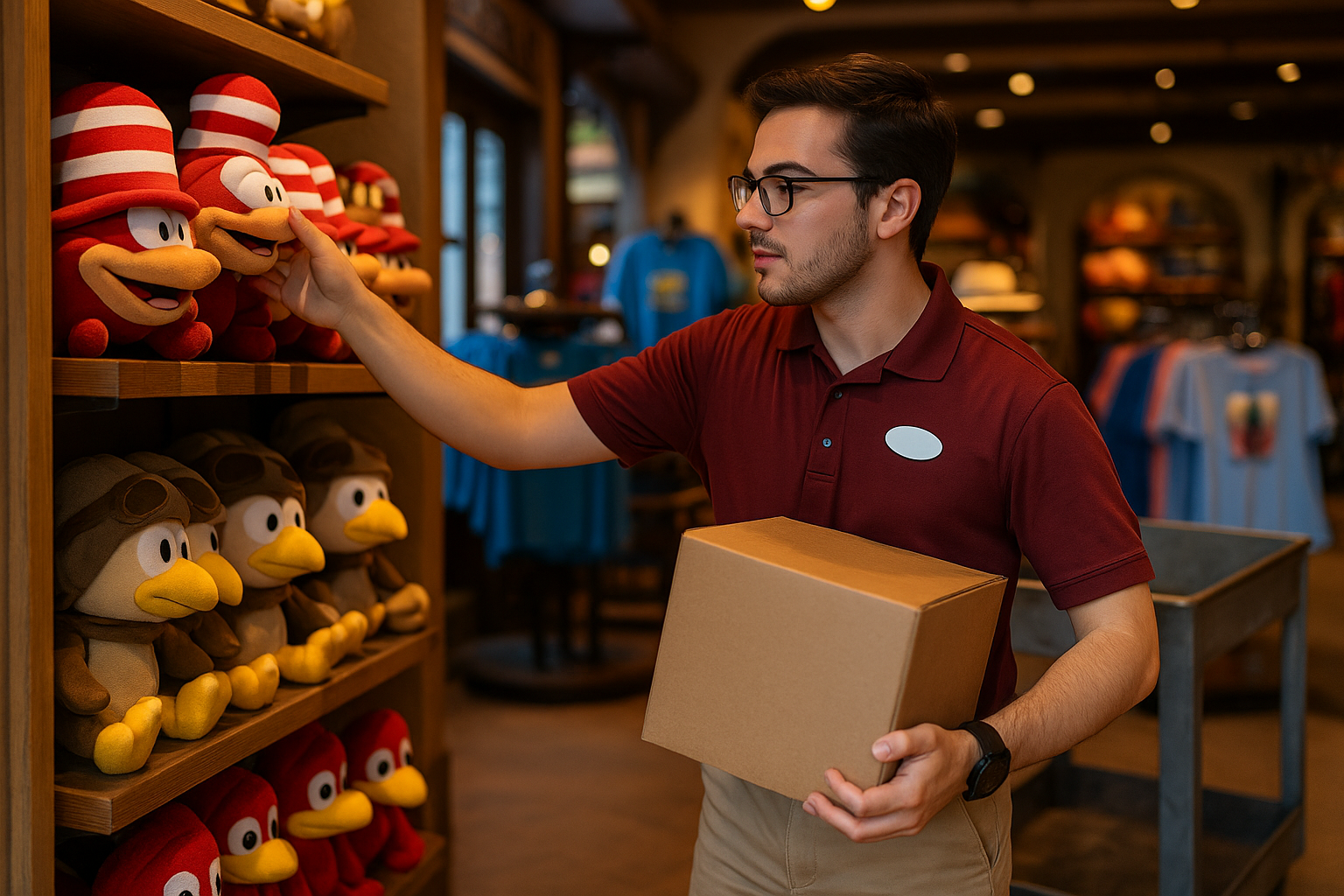
The Retail Replenishment Run: Keeping High-Demand Merchandise Moving During a Theme Park Shift
In theme park retail, a sales floor can change dramatically in a matter of minutes. A popular souvenir may disappear from a display after one attraction unloads nearby. A new event item may sell faster than expected. A sudden weather change can send guests looking for ponchos, jackets, hats, or other practical merchandise all at once.
That is why replenishment is more than carrying boxes from a stockroom to a sales floor. A strong retail replenishment run requires timing, organization, product knowledge, and awareness of what is happening around the store. Employees who handle it well help protect sales, reduce guest frustration, and keep the operation looking intentional even during peak attendance.
Why Merchandise Replenishment Matters
Guests often assume that an item is unavailable when they do not see it on the sales floor. They may not know that additional inventory is stored nearby, or that a team member is already working to bring it out. A full display communicates availability. An empty or disorganized display can create unnecessary questions, missed sales, and extra work for the rest of the team.
Replenishment also affects the guest experience in less obvious ways. A crowded fixture can make it difficult to browse. An overflowing rack can create safety concerns. Merchandise left in unopened cartons may block pathways or make the store appear unfinished. Keeping products available is important, but how and when they are replenished matters just as much.
Read the Sales Floor Before You Enter the Stockroom
Effective replenishment begins with observation. Before pulling product, take a quick look at the entire sales floor rather than focusing only on the most obvious empty shelf.
Notice:
- Which displays are nearly empty
- Which products are being handled or tried on frequently
- Where guests are stopping to ask questions
- Whether a display has become disorganized or mixed with other items
- Which fixtures are difficult to access because of crowds
- Whether a nearby event, parade, attraction, or weather change may affect demand
This short scan helps you prioritize. A display with two remaining units of a popular item may need attention before a fully stocked fixture with slower-moving products. At the same time, a product that is selling quickly may not be the only priority if its display is located in a congested area.
Build a Replenishment Routine That Works During Busy Periods
Every store has its own layout and procedures, but a consistent personal routine can make replenishment faster and more accurate.
Group the Trip Before You Pull Product
Avoid making repeated trips for individual items whenever the operation allows. Review the floor, identify several nearby needs, and collect them together. Grouping products by location or department can reduce time in the stockroom and help you return to the sales floor with a clear plan.
Do not overfill a cart or carry more than you can safely manage. Speed is not useful if products are damaged, the cart blocks a guest pathway, or you lose track of what belongs in each area.
Confirm the Product Before Leaving the Stockroom
Merchandise may have similar colors, designs, sizes, or packaging. Check the item carefully before bringing it to the floor. Pulling the wrong product creates extra work and can result in an inaccurate display or a disappointed guest who was waiting for a specific item.
When inventory is limited, accuracy becomes even more important. If you are unsure whether an item is the correct version, pause and ask for help rather than guessing.
Return With the Floor in Mind
The most direct path is not always the best path. A busy sales floor may require you to wait for a clear opening, use an approved route, or coordinate with another employee before moving a cart or large quantity of product.
Stay aware of guests who may be browsing, using mobility devices, managing children, or carrying several bags. Merchandise replenishment should support the shopping experience, not create an obstacle course.
Replenishment Is Also Recovery
Restocking an item is only part of the job. Once the product reaches the sales floor, take a moment to recover the surrounding area.
This may include:
- Facing products so labels and designs are visible
- Returning misplaced items to the correct section
- Separating sizes or styles when they have become mixed
- Removing empty packaging or damaged materials
- Checking that hangers, shelves, and fixtures remain orderly
- Making sure displays are not overloaded
A replenishment run is an opportunity to notice problems that may otherwise go unreported. You may find a damaged shelf, a broken hanger, a price sign that no longer matches the product, or an item that repeatedly ends up in the wrong location. Report those concerns through the appropriate channel rather than simply working around them.
Communicate When Inventory Does Not Match Demand
Retail employees are often the first people to notice that a product is moving faster than expected. If guests repeatedly ask for an item that is not on the floor, or if a display empties soon after each replenishment, share that information with the appropriate lead or supervisor.
Useful communication is specific. Instead of saying, “We are running low,” explain:
- Which product is affected
- Where it is selling
- How frequently the display is being emptied
- Whether guests are asking for particular sizes, colors, or designs
- Whether another location appears to have the same item
This information can help the team make better decisions about display placement, replenishment timing, product transfers, or guest communication. Never promise that an item will be available later unless you have confirmed that information through the appropriate process.
When Guests Ask While You Are Replenishing
Replenishment often happens in the middle of guest interaction. Someone may ask whether a certain size is available while you are holding a carton, or a guest may want to know where a product can be found while you are moving between the stockroom and the floor.
Acknowledge the guest before continuing with the task. If you know the answer, provide clear directions. If you need to check inventory, explain what you can do next without making assumptions. A simple, honest response is more useful than pointing vaguely toward a display or promising to return without a plan.
When the store is busy, prioritize immediate safety and guest access. Set product aside in an organized way if you need to assist someone, and avoid leaving open cartons or equipment unattended in a public area.
The Career Skills Hidden in a Stockroom Run
Merchandise replenishment develops skills that transfer well beyond retail. Employees learn to prioritize competing tasks, manage time, notice patterns, communicate operational information, and stay aware of guest needs while completing physical work.
Those habits can support future opportunities in:
- Retail leadership and visual merchandising
- Inventory and stockroom operations
- Guest services
- Food and beverage supply coordination
- Event merchandise operations
- Training and department support roles
Employees who consistently keep displays organized, communicate demand changes, and remain calm during high-volume periods become trusted members of the operation. The work may happen behind a sales floor or in a stockroom, but its effect is visible to every guest who finds what they came to buy.
Strong Replenishment Keeps the Store Ready
The best replenishment work is often unnoticed because the store looks prepared before guests realize it needed attention. Products are available, displays are easy to browse, pathways remain clear, and the team knows which items require follow-up.
For retail employees, that level of readiness comes from small decisions repeated throughout the shift: observing before pulling product, moving safely, recovering the display, communicating demand, and treating each stockroom trip as part of the guest experience.
ThemeParkConnections.com gives people working throughout the theme park and attractions industry a place to connect with other professionals, expand their networks, share experiences, learn about different departments, discover career opportunities, and build relationships across the field. For retail employees interested in merchandising, inventory, leadership, or other areas of park operations, connecting with people who understand the work can be a valuable part of building the next step in a theme park career.