The Hidden Skill of Theme Park Retail: Keeping a Stockroom Guest-Ready During Peak Attendance
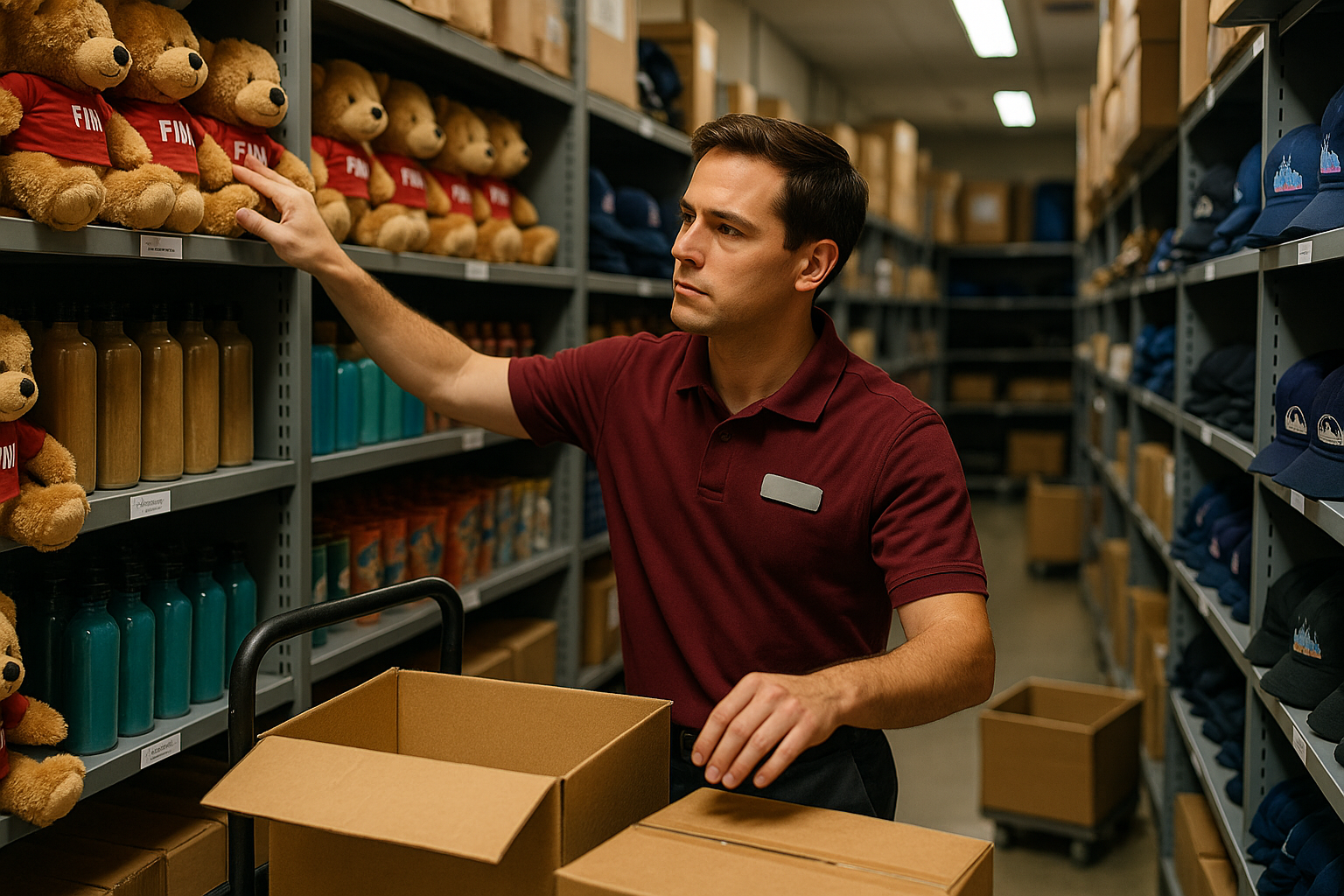
A theme park retail location can look polished, organized, and effortless from the guest side of the counter. Behind the sales floor, however, the stockroom may be handling a completely different reality: rapidly changing inventory, crowded aisles, delivery carts, replenishment requests, damaged merchandise, and employees trying to locate a specific item before a guest decides to leave without it.
During peak attendance, stockroom organization becomes more than a housekeeping task. It directly affects sales, guest satisfaction, employee stress, and the team’s ability to keep the store operating smoothly. Employees who learn to manage retail inventory under pressure develop practical skills that can help them move into lead, visual merchandising, inventory control, operations, and management roles.
Why Stockroom Organization Matters During Busy Days
A poorly organized stockroom creates problems that may not be visible immediately. An employee may know that an item was delivered but be unable to find it. A popular product may sell out on the floor while additional units sit behind unrelated merchandise. Replenishment can take too long, leaving displays empty during the busiest part of the day.
These delays affect more than the retail team. Guests may ask multiple employees for help, supervisors may need to interrupt other responsibilities, and nearby departments may receive complaints about products that are technically available but difficult to locate.
A well-run stockroom helps employees:
- Replenish the sales floor faster.
- Answer guest questions with greater confidence.
- Reduce unnecessary searching and duplicate work.
- Identify low-stock and high-demand items earlier.
- Process deliveries and returns more efficiently.
- Keep emergency paths, work areas, and access points clear.
The goal is not to make the stockroom look perfect at every moment. The goal is to make it functional enough that employees can find what they need quickly and safely.
Build an Organization System Employees Can Actually Use
The best stockroom system is usually the one that employees can understand during a busy shift. A complicated arrangement may seem efficient to the person who created it but become frustrating when several team members need to use it at once.
Group merchandise by a logical pattern
Stockrooms can be organized in several ways, depending on the operation. Common approaches include grouping by product type, location, collection, size, or sales-floor destination. For example, apparel may be separated from home goods, while high-demand souvenirs may be positioned closest to the replenishment door.
Consistency matters more than choosing one “perfect” system. If one shelf contains a mixture of plush, drinkware, and accessories simply because there was space available, employees will spend more time searching and are more likely to overlook inventory.
Make labels easy to understand
Labels should be visible, current, and understandable to employees who are not assigned to the stockroom every day. A label that uses unfamiliar abbreviations or outdated product names can slow down the entire team.
Useful labels may identify:
- Product category or collection.
- Size or color range.
- Sales-floor section.
- Seasonal or event merchandise.
- Items requiring special handling.
When merchandise moves, the label or location information should be updated as soon as practical. Temporary changes that are never documented quickly become permanent confusion.
Prioritize Replenishment Instead of Moving Randomly
During peak attendance, employees may be asked to refill several displays at once. Without priorities, it is easy to spend too much time on low-impact tasks while the most popular areas continue to look empty.
A useful replenishment order may consider:
- Items that are completely sold out on the sales floor.
- Products with strong guest demand or frequent requests.
- Displays that are highly visible from the entrance or main walkway.
- Merchandise tied to a current event, promotion, or seasonal period.
- Lower-volume areas that can be replenished during a quieter moment.
This does not mean employees should ignore other sections. It means the team should understand which tasks have the greatest immediate effect on guests and sales.
Communication also helps. If one employee is already searching for a popular item, another team member should know before repeating the same search. A quick radio message, verbal update, or shared task list can prevent duplicate work.
Handle High-Demand Merchandise Carefully
Popular merchandise creates unique challenges. A product may be available in the stockroom but difficult to count accurately because units are being brought out continuously. Employees may also find opened packaging, misplaced sizes, or items that guests have returned to the wrong area.
For high-demand products, employees should pay attention to:
- Whether the sales-floor display is being replenished at a steady rhythm.
- Whether the stockroom quantity appears consistent with the inventory system.
- Whether guests are repeatedly asking for a variation that is not displayed.
- Whether damaged or incomplete items are being separated correctly.
- Whether the product is being stored in a location that all team members know.
If the same item is difficult to locate several times in one shift, that is a process problem worth reporting. The solution may be as simple as moving the product to a more accessible location or creating a clearer identification method.
Keep the Stockroom Safe During Pressure Periods
Busy shifts can encourage shortcuts. Employees may place boxes in walkways, stack merchandise higher than is practical, or leave carts where someone could trip. These decisions may save a few seconds in the moment but create larger risks for coworkers and disrupt the next replenishment run.
Basic stockroom discipline remains important during the busiest periods:
- Keep walkways and access points clear.
- Do not block equipment, doors, or designated work areas.
- Place merchandise securely rather than forcing items into unstable stacks.
- Return carts and equipment when they are no longer needed.
- Separate damaged, defective, or questionable items from sellable inventory.
- Ask for assistance with awkward or heavy loads instead of improvising.
Employees should always follow their employer’s training and safety requirements. Efficiency is valuable, but it should never depend on creating a hazard.
Use Quiet Moments to Prepare for the Next Rush
A slow period is not only an opportunity to catch up on personal tasks. It is also the best time to prepare the stockroom for the next wave of guests.
Helpful preparation may include consolidating partial boxes, facing merchandise so labels are visible, removing empty packaging, checking frequently requested items, and organizing the next delivery area. Employees can also review which products were difficult to find earlier in the day and correct those issues before demand increases again.
This type of preparation turns the stockroom into an operational tool rather than a place where problems are temporarily hidden.
What Stockroom Work Can Teach You About Your Career
Retail stockroom responsibilities build skills that apply well beyond merchandise operations. Employees learn prioritization, attention to detail, inventory awareness, physical organization, communication, and decision-making under pressure.
Those skills can support future opportunities in:
- Retail leadership and supervision.
- Inventory control and receiving.
- Visual merchandising.
- Warehouse and distribution operations.
- Event and seasonal merchandise planning.
- Cross-department operations.
Employees who want to grow should look for ways to understand the full process: how merchandise arrives, how it is recorded, how the sales floor is replenished, how demand changes, and how the team responds when inventory is unavailable. Seeing that larger picture can make everyday stockroom work more meaningful and prepare an employee for greater responsibility.
Find More Connections Across the Attractions Industry
Many theme park employees discover that the skills developed in one department can lead to opportunities in areas they had not originally considered. A retail employee may become interested in inventory operations, hospitality, event production, or leadership after learning from coworkers in other parts of the business.
ThemeParkConnections.com gives professionals throughout the theme park and attractions industry a place to connect with other industry professionals, expand their networks, share experiences, learn about different departments, discover career opportunities, and build relationships across the attractions community.
The next time a busy retail day depends on finding the right item quickly, remember that stockroom organization is not just behind-the-scenes cleanup. It is part of the guest experience—and a practical way to build valuable operations skills.