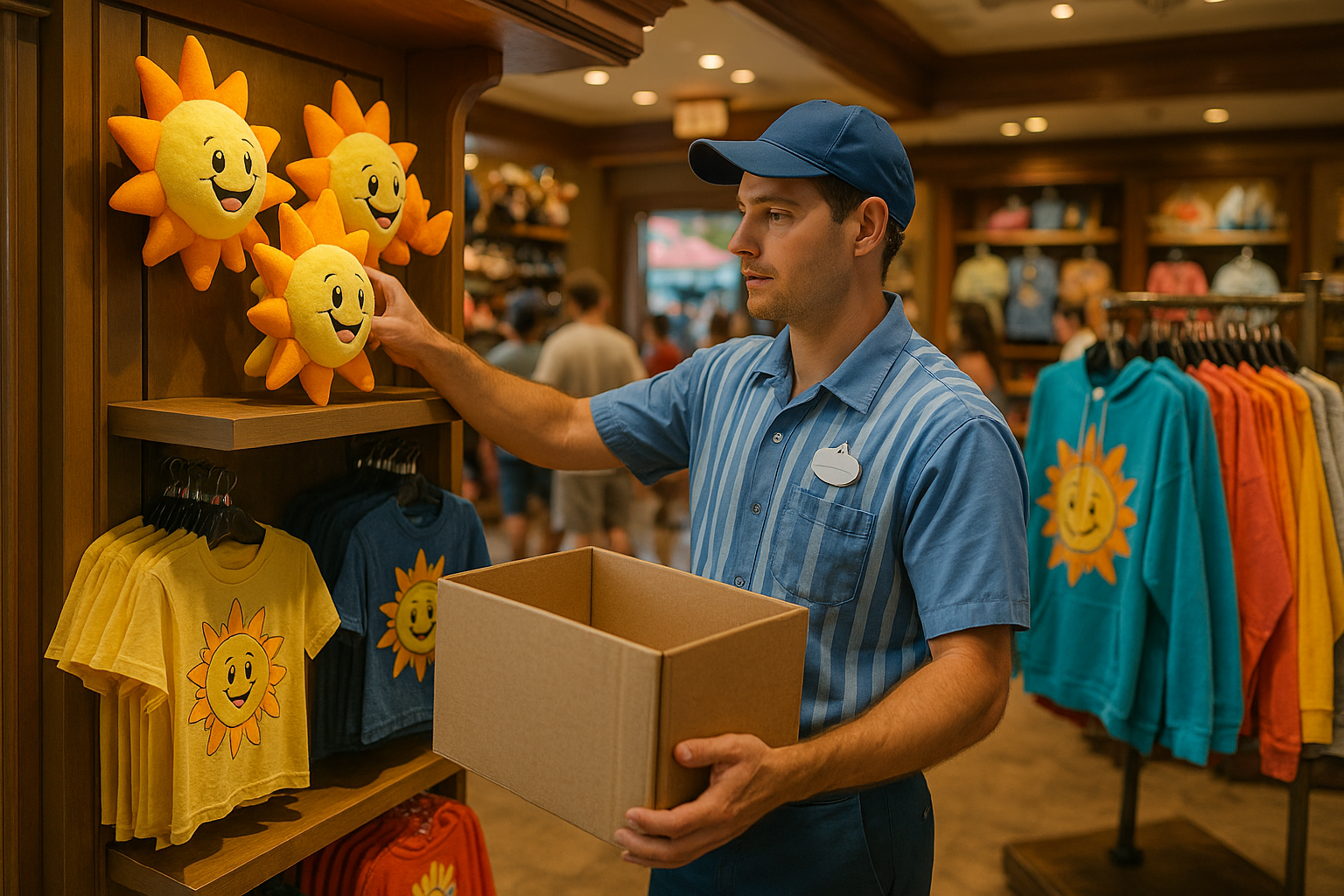
The Stockroom-to-Sales-Floor Connection: Preventing Merchandise Gaps During Peak Hours
A busy merchandise location can change in minutes. A new product drops, a parade ends, a popular attraction releases its guests, or a holiday event sends a wave of shoppers toward the same store. The sales floor fills quickly, displays lose their shape, and the items guests are asking for may be sitting just a few feet away in a stockroom—but unavailable to anyone who cannot find, retrieve, or communicate about them.
That is why strong merchandise operations depend on more than friendly service and attractive displays. The connection between the stockroom and the sales floor has a direct effect on guest satisfaction, team efficiency, and sales performance. Employees who learn to manage that connection become valuable problem-solvers during the busiest parts of the day.
Why Merchandise Gaps Happen
A merchandise gap occurs when a product is technically available but not accessible to guests on the sales floor. Sometimes the item is sold out. Other times, it is in an unopened carton, placed in the wrong location, waiting for a replenishment run, or difficult to identify because similar products share a shelf or fixture.
These gaps are especially common during:
- Park opening and closing rushes
- New product releases
- Holiday events and seasonal celebrations
- Post-parade or post-show guest surges
- Special promotions and limited-time offerings
- Large school, convention, or tour-group visits
The challenge is not simply moving more product. Employees must balance speed, accuracy, safety, and guest service while the operation continues around them.
Read the Sales Floor Before It Becomes a Problem
Strong retail employees do not wait for a display to look empty before they respond. They learn to recognize early warning signs.
A display may need attention when:
- The front row is thin even though additional product is nearby.
- Guests are picking through stacks and leaving merchandise disorganized.
- Popular sizes, colors, or designs are disappearing faster than others.
- Employees are answering the same product-availability question repeatedly.
- A fixture looks full from a distance but has large gaps behind the first row.
- Guests are carrying items from different displays and returning them to the wrong places.
During a quiet moment, take a quick visual walk through the sales floor. Notice which products attract attention, which areas are difficult to shop, and which displays are likely to empty first during the next guest wave. That awareness helps the team prepare instead of constantly reacting.
Build a Practical Replenishment Rhythm
Replenishment is most effective when it follows a rhythm rather than happening randomly. The exact process will vary by location, but the basic approach is broadly useful: identify priority areas, retrieve the correct product, restock efficiently, and return the area to a guest-ready condition.
Start with priority products
Not every empty space requires the same urgency. A missing item on a high-traffic feature table may deserve attention before a less visible shelf near the back of the store. Prioritize products based on guest demand, sales-floor visibility, upcoming traffic patterns, and the importance of the display.
For example, if a popular character item is nearly gone from a front entrance display shortly before a parade ends, replenishing it may be more urgent than reorganizing a fully stocked wall of lower-demand accessories.
Bring the right product the first time
Rushing into the stockroom without confirming the item can create more work. Check the product name, design, size, color, and quantity before leaving the sales floor. When possible, use packaging labels, location references, or inventory tools available to your team.
A few extra seconds of verification can prevent an unnecessary trip back to the stockroom and reduce the chance of placing a similar-looking product in the wrong location.
Restock for the next guest, not just the current one
A replenished display should be easy to shop. Face products forward, keep sizes or variations organized, and remove damaged packaging or empty cartons from guest view. If the display is likely to empty again soon, communicate that to the next team member rather than assuming someone else will notice.
Keep the Stockroom Searchable
A disorganized stockroom slows down every part of retail operations. It makes replenishment take longer, increases misplaced merchandise, and creates unnecessary frustration when guests are waiting for an answer.
Even during a busy shift, small habits make a difference:
- Return unopened product to its assigned area whenever possible.
- Keep cartons and equipment out of walkways.
- Separate similar products clearly enough to avoid confusion.
- Do not leave partial cases where another employee will assume they are full.
- Communicate when product has been moved temporarily.
- Flag damaged, questionable, or incomplete merchandise instead of returning it to sellable stock.
Stockroom organization is not only a behind-the-scenes concern. It affects how quickly employees can answer guest questions and how confidently they can say whether an item is available.
Communicate Availability Clearly
Guests often ask, “Do you have another one in the back?” The answer should be based on a reasonable check, not a guess. If you are unsure, explain what you are checking and return with a clear update.
If the item is unavailable, useful service may include:
- Checking whether another nearby location carries it, if your operation allows that.
- Suggesting a comparable product without pretending it is identical.
- Explaining that a display is being replenished.
- Informing a lead when a popular product is repeatedly requested but unavailable.
- Recording or communicating recurring demand according to department practice.
A guest may be disappointed that an item is unavailable, but they are more likely to appreciate a direct and informed answer than a vague promise or an unnecessary delay.
Coordinate During Peak Periods
During a rush, the best merchandise teams divide responsibilities. One employee may remain visible on the sales floor, another may focus on replenishment, and a lead may monitor guest flow, product demand, and break coverage.
Clear communication helps prevent several employees from searching for the same item while another area receives no attention. Before leaving the floor, let the team know where you are going and what you are retrieving. When you return, share anything the next employee should know, such as a rapidly selling product or a stockroom location that needs attention.
Peak-period teamwork also requires judgment. If the sales floor is crowded, carrying a large carton through guests may not be practical. You may need to wait for a safer opening, use a smaller quantity, or ask for assistance. Speed matters, but not at the expense of safe movement or a positive guest experience.
Turn Retail Awareness Into a Career Skill
Merchandise replenishment develops skills that apply well beyond a sales floor. Employees learn to prioritize competing tasks, notice operational patterns, communicate concise updates, and make decisions based on guest behavior.
Those skills can support future opportunities in:
- Merchandise leadership
- Inventory and receiving
- Visual merchandising
- Retail training
- Event and product-launch support
- Operations coordination
- Guest-facing leadership roles
Employees who consistently notice problems before they become visible to guests often earn trust from leads and supervisors. The goal is not to move constantly or appear busy. It is to understand what the operation needs next and help the team prepare for it.
Build Connections Across the Attractions Industry
Retail may look different from attractions, food and beverage, entertainment, hospitality, or maintenance, but the same operational skills appear across every department: awareness, communication, prioritization, and follow-through.
ThemeParkConnections.com gives people working throughout the theme park and attractions industry a place to connect with other professionals, share experiences, learn about different departments, expand their networks, and discover career opportunities. Conversations with employees in other areas can reveal new ways to approach familiar challenges—and may introduce career paths you had not considered.
The next time a busy store begins to run low, look beyond the empty shelf. A strong stockroom-to-sales-floor connection is a team effort, and learning to manage it well can make you a more effective retail employee and a stronger candidate for future opportunities across the industry.