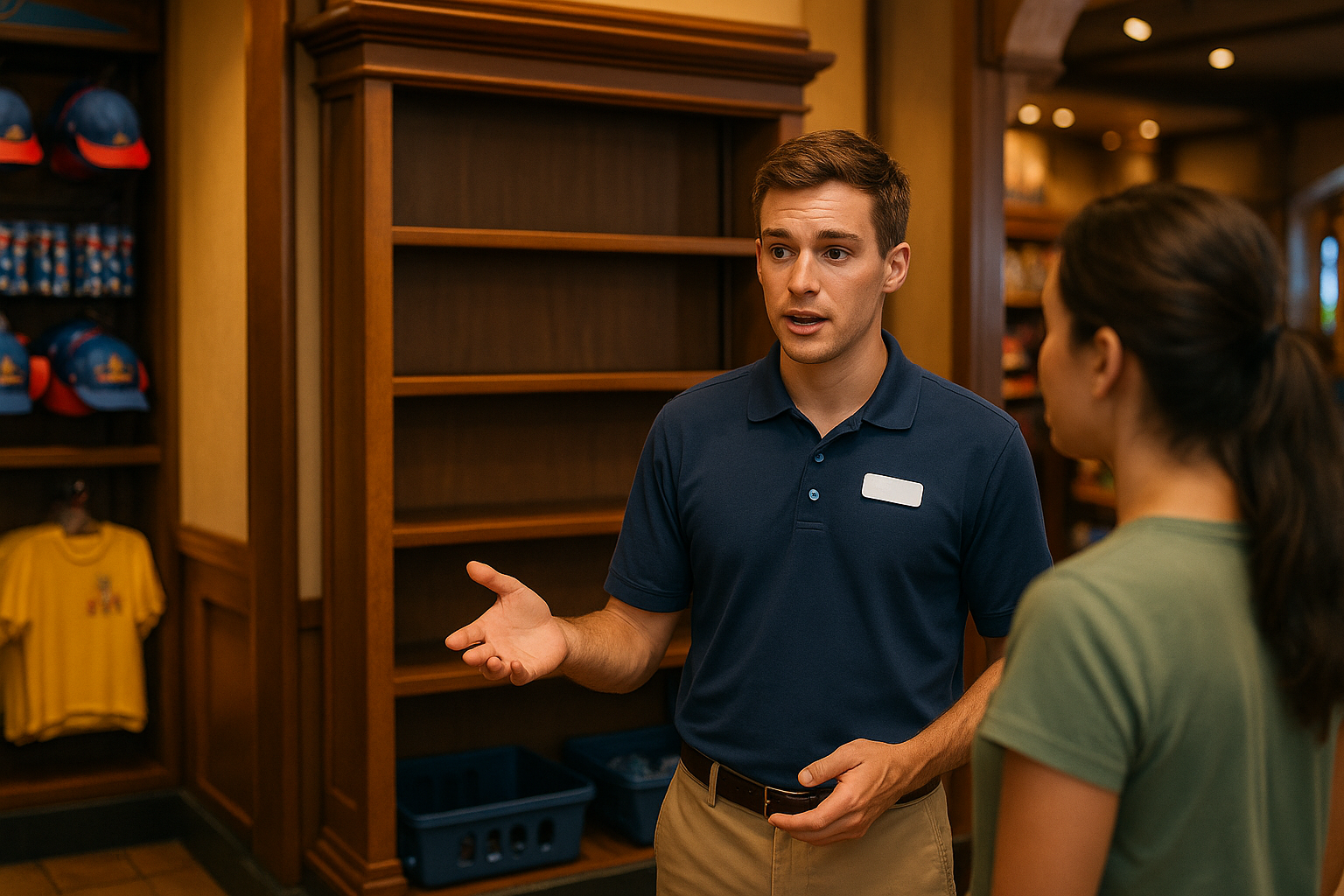
When the Shelf Is Empty: Recovering Retail Stock During Peak Park Days
A merchandise location can look fully stocked at opening and still run out of a popular item before lunch. A new product release, holiday crowd, weather change, or unexpected surge near a parade route can empty a display faster than the next delivery arrives.
For retail employees, the challenge is not simply finding more product. It is determining what happened, communicating the shortage clearly, and helping the team recover without creating confusion for guests or unnecessary work for the stockroom. Strong stock recovery is one of the less visible skills that keeps theme park retail operations moving.
Why Retail Stockouts Become Operational Problems
An empty shelf affects more than the guest who cannot find a shirt, toy, pin, or souvenir. It can also create additional work for several employees:
- Sales floor employees must answer repeated questions about availability.
- Stockroom employees may search for product that has already been moved or sold.
- Leaders may need to decide whether to transfer merchandise from another location.
- Cashiers may need to explain why an item shown in promotional material is unavailable.
- Guests may become frustrated if different employees provide different answers.
The first goal is accuracy. Guessing that more merchandise is “probably in the back” may sound helpful, but it can send employees on an unnecessary search and create expectations the team cannot meet.
Start With a Fast, Accurate Check
When a guest asks whether an item is available, begin with the sales floor. Check the expected display location, nearby fixtures, endcaps, baskets, and any approved secondary locations. Merchandise is often moved during busy periods, especially when guests compare sizes, colors, or styles.
Then check the stockroom using the location information and product description available to your team. Avoid relying only on memory. A similar item may have a different size, color, style, or product code.
Confirm the Details Before You Search
Before asking someone to look for an item, clarify exactly what the guest wants:
- Product name or design
- Size or variation
- Color or character
- Quantity needed
- Whether a similar alternative would work
This matters when a guest says they are looking for “the blue hoodie,” but the location carries several blue hoodies. A precise description saves time and reduces the chance of bringing back the wrong product.
Use a Simple Stockout Response
Guests generally respond better to a clear answer than to a long explanation about the search process. If the item is unavailable, explain what you know and what you can verify.
For example, you might say, “I checked this location and our available stock, and we do not have that size here right now. Let me see whether another location may have it.”
This response does several things well. It avoids promising that another store has the item, confirms that the employee made a reasonable effort, and gives the guest a clear next step.
If you do not have access to inventory information for other locations, say so directly and offer the options available within your training. Those options may include checking with a leader, suggesting a nearby merchandise location, or showing a comparable product.
Know When to Stop Searching
Searching can become inefficient when several employees are looking in the same places or when the product has already been confirmed unavailable. A good stockroom search should have a clear stopping point.
Once the expected locations have been checked, communicate the result to the appropriate person or team. Continuing to search without new information may delay other work, especially during a high-volume period when the stockroom is receiving deliveries, replenishing displays, or preparing orders.
Do not climb, move equipment, open unapproved containers, or search areas outside your training. A merchandise recovery effort should never create a safety problem or interfere with stockroom operations.
Communicate the Shortage Before It Becomes a Repeated Question
If a product is popular, one guest asking about it may be the beginning of a larger pattern. Once an item is confirmed unavailable, make sure the information reaches the employees who are likely to receive the next question.
Depending on the operation, that may involve:
- Updating the sales floor team
- Notifying the stockroom or replenishment team
- Informing a leader about a fast-selling item
- Removing or adjusting an empty display when appropriate
- Sharing accurate information with nearby locations
Keep the message specific. “We are out of merchandise” is not useful. A better update might identify the product, the unavailable sizes or variations, the last confirmed search, and whether another location is being contacted.
Clear communication also prevents employees from giving conflicting answers. If one employee says an item is sold out and another tells guests to wait for a delivery that has not been confirmed, the team may unintentionally create frustration.
Turn the Empty Shelf Into a Better Guest Interaction
A stockout does not have to end the conversation. Employees can still help guests find an alternative that fits the same need.
Ask what attracted the guest to the original item. Was it the character, color, price, style, or usefulness? A guest looking for a specific character may appreciate another product featuring the same character. Someone shopping for a gift may be open to a different item in the same price range.
Do not pressure the guest to buy something they do not want. The goal is to provide useful options, not to disguise the shortage. A respectful alternative may leave a better impression than a rushed sales pitch.
What Strong Retail Employees Learn From Stockouts
Handling an empty shelf develops skills that are valuable beyond merchandise operations:
- Observation: You learn to notice buying patterns, misplaced products, and displays that need attention.
- Communication: You practice giving concise, accurate updates to guests and coworkers.
- Prioritization: You decide when to search, when to escalate, and when to move on to the next task.
- Product knowledge: You become more familiar with alternatives, locations, and merchandise collections.
- Operational judgment: You learn how a small sales floor issue can affect several departments.
These skills can help employees become dependable closers, trainers, stockroom specialists, visual merchandising partners, or retail leaders. Managers notice employees who do more than report a problem. They notice people who verify the facts, communicate the situation, and help the team respond professionally.
Make the Next Search Easier
After the immediate guest need is handled, take a moment to consider whether the issue should be documented or discussed. A recurring stockout may point to a display problem, a product that needs more frequent replenishment, an inaccurate location record, or a demand pattern the team has not yet recognized.
You may not control ordering or inventory planning, but your observations can still be valuable. Share useful details such as the time the item sold out, the variation guests requested most often, or whether multiple guests asked for the same product during a short period.
Retail operations improve when employees treat these moments as information rather than isolated annoyances. An empty shelf may be inconvenient, but it can also reveal what guests are looking for and where the operation needs better communication.
Theme Park Connections gives professionals across merchandise, attractions, food and beverage, entertainment, hospitality, maintenance, and guest services a place to share those lessons. By connecting with other industry professionals, learning how different departments operate, expanding your network, and discovering career opportunities throughout the attractions industry, you can turn everyday operational experiences into long-term professional growth.