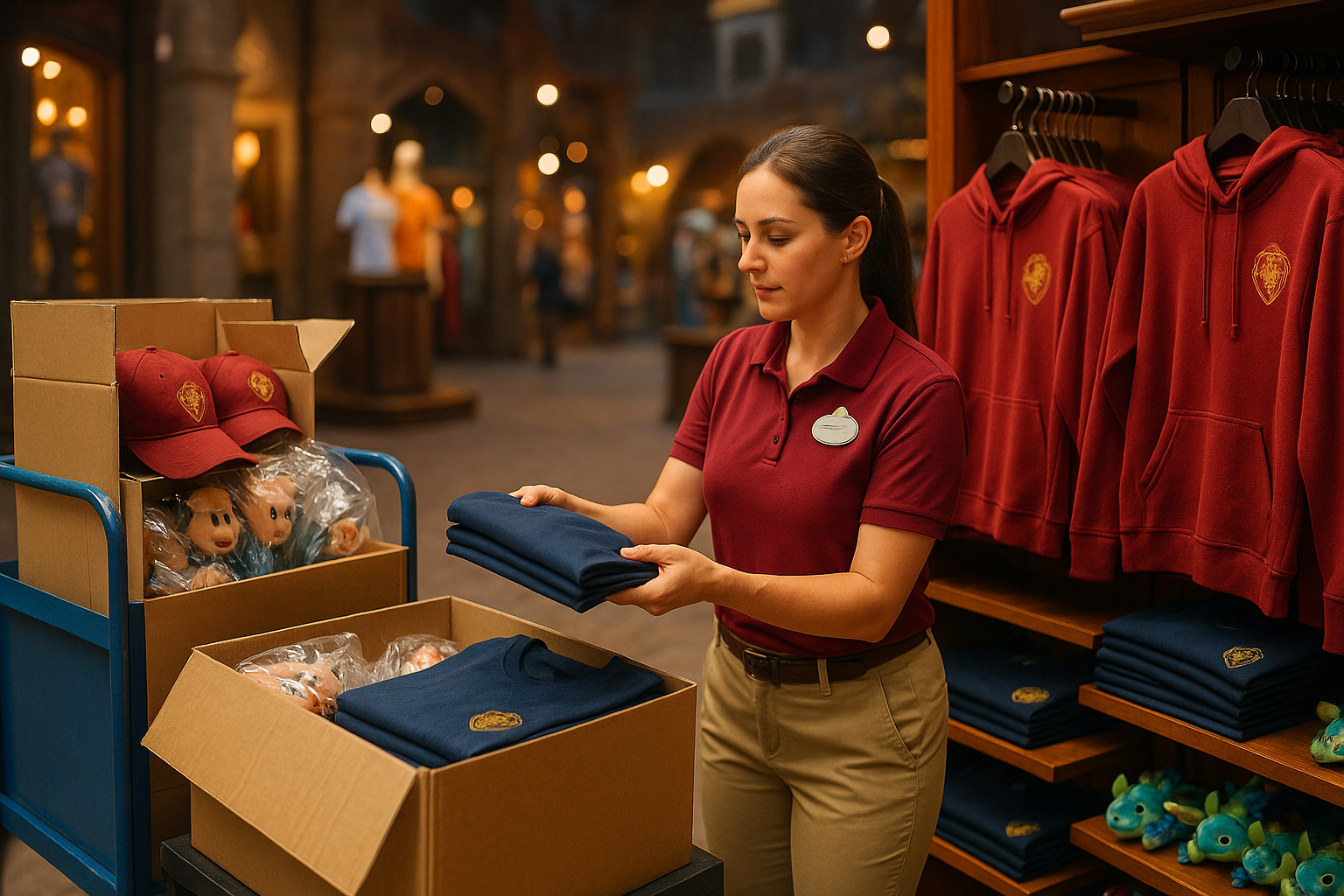
The Stockroom Is Part of the Show: Keeping Theme Park Merchandise Floors Ready
A merchandise location can look calm from the guest side while the team behind the scenes is moving constantly. Sizes need to be replenished, new deliveries must be organized, high-demand items disappear quickly, and the sales floor has to remain presentable through changing crowds.
That work depends on more than having enough inventory. It requires a dependable stockroom routine, clear communication, and an understanding of how backstage decisions affect the guest experience. For merchandise employees, learning to manage replenishment well can build valuable skills in organization, prioritization, teamwork, and operational awareness.
Why Merchandise Replenishment Matters
Guests rarely know why an item is unavailable. They may see an empty peg, an incomplete size range, or a display that looks picked over. From their perspective, the product simply is not there.
For the merchandise team, the situation may be more complicated. The item could be in the stockroom, waiting to be processed, stored in the wrong location, mixed into a delivery cart, or reserved for another part of the operation. A strong replenishment process helps employees find the answer quickly instead of sending guests away unnecessarily.
Effective stockroom work supports several parts of the operation:
- Keeping popular merchandise available during high-volume periods
- Reducing time employees spend searching for products
- Protecting the appearance and organization of the sales floor
- Helping teammates answer guest questions accurately
- Making deliveries easier to receive, process, and store
- Reducing unnecessary back-and-forth between the floor and stockroom
The goal is not to keep every shelf completely full at every moment. The goal is to make smart decisions about what needs attention first.
Start With a Floor Walk
One of the most useful habits for merchandise employees is beginning a shift with a deliberate floor walk. Rather than waiting for a coworker to point out an empty display, look for potential problems before the location becomes busy.
Pay attention to:
- Empty hooks, shelves, tables, or display fixtures
- Popular sizes or colors that are nearly gone
- Products placed in the wrong location
- Displays that have become disorganized during the previous shift
- Items that need folding, hanging, sizing, or front-facing
- Merchandise that appears damaged or incomplete
A floor walk also helps employees notice patterns. If a particular style is selling quickly every morning, that may affect how the team prepares the stockroom. If guests repeatedly ask for a product that is difficult to locate, the issue may involve signage, placement, or communication rather than inventory alone.
Prioritize Replenishment Instead of Chasing Every Empty Space
Not every gap on a sales floor requires immediate attention. During a busy period, trying to correct every small imperfection can pull employees away from guests and create more disruption.
A practical replenishment priority might look like this:
- Guest-facing shortages: Address products guests are actively requesting or trying to purchase.
- High-volume areas: Refill merchandise that is moving quickly or supports a major display.
- Size and assortment gaps: Restore missing sizes, colors, or variations when possible.
- Presentation issues: Refold, rehang, and straighten areas that affect the appearance of the location.
- Low-impact details: Handle minor gaps and less frequently purchased items when traffic allows.
This approach keeps the team focused on what has the greatest effect on guests and sales floor readiness. It also gives employees a clear explanation when a supervisor asks why one area was handled before another.
Build a Stockroom That Works Under Pressure
An organized stockroom is not simply a cleaner stockroom. It is a faster, safer, and more useful workspace.
Employees should be able to identify where major product groups are stored without searching through every box or rack. That does not require a complicated system. Consistent labeling, logical grouping, and returning items to their proper locations can make a significant difference during a busy shift.
When organizing merchandise, consider grouping products by:
- Product category
- Collection or design
- Size or variation
- Sales floor location
- Delivery status
- Items requiring additional processing
Leave clear access to frequently used areas whenever possible. A popular item buried behind rarely requested merchandise may technically be in stock, but it is not operationally accessible.
It is also useful to avoid creating temporary piles that become permanent. A box set aside for “later” can quickly become difficult to identify, especially when multiple employees contribute to the same stockroom. If an item cannot be fully processed immediately, make its status clear to the next person.
Communicate Before a Small Problem Becomes a Guest Complaint
Merchandise teams often discover inventory issues before anyone else does. A product may be selling faster than expected, a shipment may contain an incorrect quantity, or a display may require an item that is not available in the stockroom.
Share that information clearly and early. A useful update includes:
- What product is affected
- Where the issue was found
- What has already been checked
- Whether replacement inventory is available
- What guests are currently asking for
- What action may be needed next
For example, “We are out of medium blue hoodies on the floor” is useful, but “The medium blue hoodies are out on the floor and in the stockroom; guests are still asking for them, and the remaining sizes are on the front table” gives the team more context.
Good communication also prevents duplicate work. If one employee has already searched a delivery cart or checked a secondary storage area, the next person should not have to repeat the same process without new information.
Make Replenishment Guest-Friendly
Restocking often happens while guests are shopping. Employees may need to move carts, open boxes, use a ladder, or carry folded merchandise through a crowded location. The task still has to be completed without making the space feel closed or difficult to navigate.
When replenishing during operating hours:
- Keep walkways clear and avoid creating unnecessary obstacles.
- Use awareness of guest traffic before moving carts or larger items.
- Pause when a guest needs assistance rather than continuing to work around them.
- Keep packaging and waste contained instead of allowing it to collect on the floor.
- Maintain a professional appearance even during a demanding recovery.
Guests may interpret visible organization as a sign that the location is well cared for. A fast restock that leaves boxes scattered around the sales floor can create a different impression than a slightly slower, more controlled recovery.
Use the End of the Shift to Help the Next Team
A strong closing routine does more than straighten the store. It sets up the next team for a better start.
Before leaving, review the areas that received the most activity. Note products that are running low, deliveries that still need attention, displays that require follow-up, and guest requests that could return the following day. If your location uses a written log or another communication tool, provide specific information rather than general comments such as “stockroom needs work.”
Details like “new shipment is sorted by collection but still needs floor placement” or “guests asked repeatedly for larger sizes in the front display” give the next team a useful starting point.
Why Stockroom Skills Help Your Career
Merchandise replenishment can appear routine, but it develops skills that apply across the attractions industry. Employees learn to manage competing priorities, recognize operational patterns, communicate incomplete information, and make decisions without constant direction.
Those skills can support future opportunities in retail leadership, inventory control, visual merchandising, warehouse operations, purchasing, event merchandise, and other departments that depend on organization and timing.
The best stockroom employees are not invisible workers who simply move boxes. They understand how inventory, presentation, guest service, and team communication fit together. That broader perspective is what turns a basic replenishment task into valuable operational experience.
Connect With Other Theme Park Professionals
Every park and merchandise operation has its own layout, product mix, and busiest moments. Comparing experiences with people from other locations can reveal practical ideas for organizing stock, handling rushes, and improving communication.
ThemeParkConnections.com gives people working throughout the theme park and attractions industry a place to connect with other professionals, expand their networks, share experiences, learn about different departments, discover career opportunities, and build connections across the industry. For merchandise employees, those conversations can be a useful way to learn how other teams solve the same daily challenges.