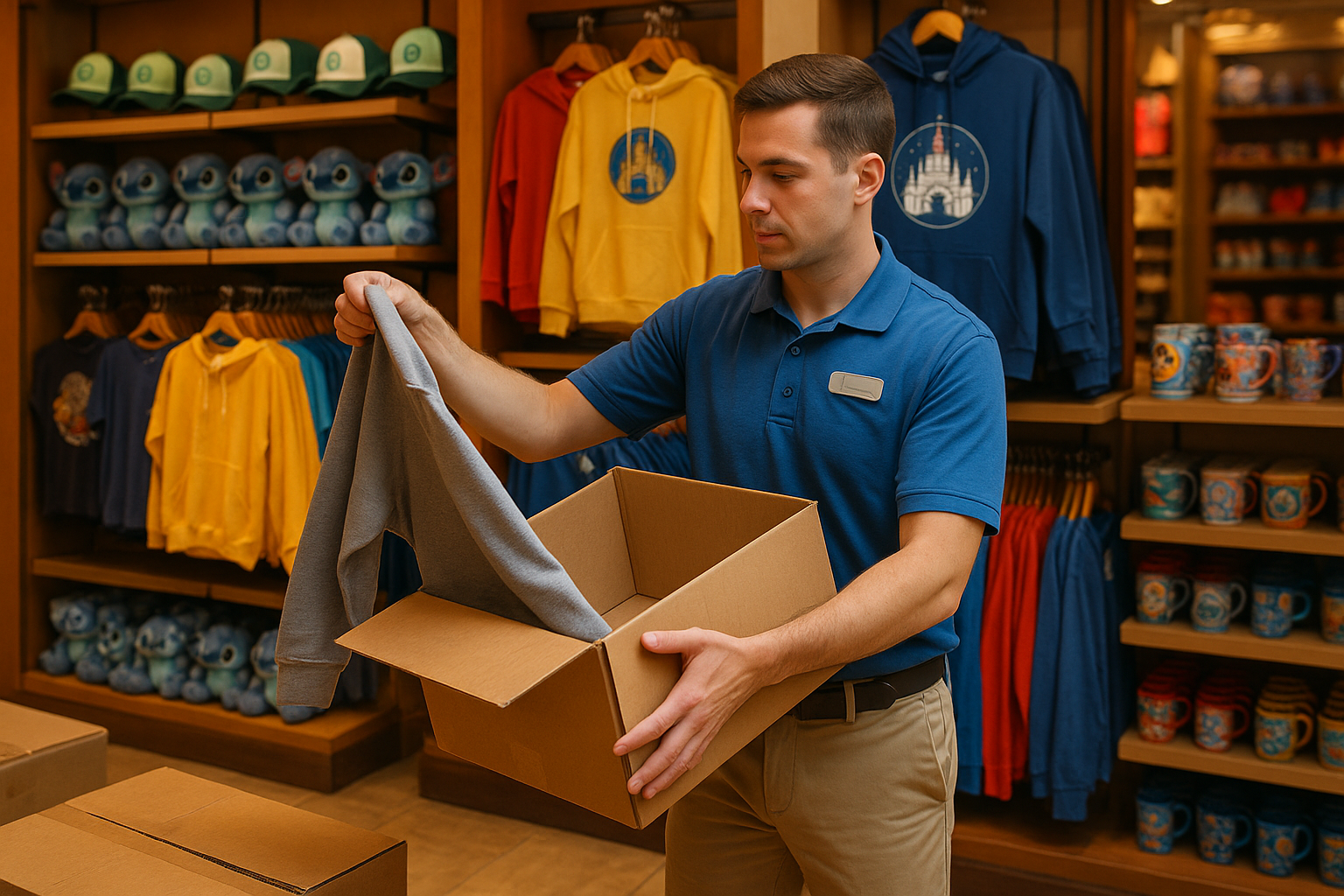
The Stockroom Is Part of the Show: Building Faster, Safer Retail Replenishment
Guests may notice a merchandise display when it is full, organized, and easy to shop. They are less likely to notice the work that keeps it that way. Behind many busy retail locations is a stockroom team tracking inventory, opening cartons, locating sizes, moving product, and helping sales-floor employees respond to demand.
During a crowded operating day, retail replenishment can become a constant balancing act. A popular souvenir may sell out repeatedly. A display may need to stay full during a rush. Employees may be pulled between helping guests, processing purchases, answering product questions, and searching for items in the back. Without a clear process, the stockroom can quickly become a bottleneck.
Strong replenishment is not simply “bringing more merchandise out.” It is an operational skill that affects sales, guest experience, employee safety, and the appearance of the entire location.
Why Retail Replenishment Requires More Than Speed
The fastest employee is not always the most effective one. Moving quickly without a system can create misplaced product, blocked walkways, damaged merchandise, inaccurate inventory counts, and more work for the next person.
A reliable replenishment process helps the team answer several questions:
- Which products need attention first?
- Where is the merchandise located?
- How much should be brought to the sales floor?
- What needs to remain in the stockroom for later?
- Does the product need to be checked for damage, size, color, or packaging condition?
- What should be communicated to the rest of the team?
These decisions become especially important during peak attendance, special events, product launches, and seasonal merchandise periods. A well-organized process allows employees to respond to demand without turning every stock request into a search mission.
Start With a Clear Priority System
When several employees request merchandise at once, it is easy to treat every request as equally urgent. In practice, priorities usually need to be sorted.
Address Immediate Sales-Floor Needs First
Begin with items that are visibly missing from high-traffic displays or products guests are actively asking for. If several guests are waiting for the same sweatshirt size or a popular souvenir is absent from a featured table, that request may deserve attention before a routine shelf adjustment.
Consider Timing and Location
A store near an attraction exit may experience a sudden rush after a show, parade, or major attraction release. A resort shop may see different demand in the morning than it does late at night. Employees who learn these patterns can prepare before the rush instead of reacting after the display is empty.
Separate Replenishment From Recovery
Restocking product and recovering the sales floor are related but different tasks. If employees try to do both at once without a plan, they may leave cartons open, overlook misplaced merchandise, or repeatedly travel between the stockroom and the floor.
When possible, group tasks by location. Bring out the products needed for one display or section, complete the replenishment, then recover that area before moving elsewhere.
Build a Stockroom Layout That Supports the Team
A stockroom does not need to be large to be functional, but it does need to be understandable. Employees should be able to locate common products without depending on one experienced person who happens to know every shelf.
Useful practices include:
- Keeping frequently requested products easy to reach.
- Separating different product categories clearly.
- Keeping similar-looking items organized by size, style, or color.
- Leaving access to emergency equipment, exits, and required pathways.
- Removing empty cartons and packaging materials regularly.
- Returning misplaced products to their correct locations.
- Using labels or location markers that make sense to the entire team.
Organization is particularly valuable during busy periods when employees from another area may be asked to help. A stockroom that only makes sense to one team member creates delays and increases the chance of mistakes.
Replenish in Manageable Quantities
Bringing an entire case of merchandise to the sales floor may seem efficient, but it is not always the best choice. Too much product can overcrowd a display, create storage problems, or leave valuable merchandise unattended in a high-traffic area.
Consider the needs of the location and the product. A popular item may require frequent small replenishments, while a slower-moving item may only need attention during a scheduled recovery. The goal is to maintain a full, attractive presentation without creating unnecessary handling.
Employees should also pay attention to product condition. Packaging may become crushed, tags may detach, or items may be opened by guests. Merchandise that is not suitable for the sales floor should be handled according to the location’s process rather than placed back into active inventory without review.
Communicate What the Next Employee Needs to Know
Retail replenishment often involves information that cannot be seen from the sales floor. If a product is nearly out of stock, a case is damaged, or a particular size is unavailable, the team should know before the next guest asks.
A useful update is specific and action-oriented:
- “The blue hoodies are fully replenished, but only two adult medium sizes remain in the stockroom.”
- “The display was recovered, but the next shipment has not arrived.”
- “Several mugs were removed from sale because the packaging was damaged.”
- “The product is available in the stockroom, but the location needs a team member to bring it out during the next rush.”
Clear communication prevents multiple employees from searching for the same product and helps sales-floor teams set accurate expectations with guests.
Protect Safety During Fast-Paced Replenishment
Stockroom work can become physically demanding, especially when employees are moving cartons, reaching for product, or working in tight spaces. Speed should never replace safe movement and proper handling.
Pay attention to the condition of the floor, the placement of boxes, and the amount of space available before moving a load. Do not leave merchandise where it blocks pathways or creates a tripping hazard. If an item is too heavy, awkward, or high to move safely, ask for assistance and follow the location’s established procedures.
Good stockroom habits also protect merchandise. Tossing, dragging, or stacking products carelessly can create damage that affects both inventory and presentation quality.
Turn Replenishment Into a Professional Skill
Employees who become strong at retail replenishment develop skills that apply well beyond a merchandise location. They learn to prioritize under pressure, recognize patterns, communicate clearly, organize physical space, and make practical decisions with limited time.
Those skills can support future opportunities in retail leadership, inventory control, visual merchandising, operations, purchasing, warehouse coordination, and other departments that depend on accuracy and timing.
If you want to improve, ask an experienced team member to explain how they decide what to restock first. Pay attention to which products move fastest and when demand changes. Keep track of recurring issues, such as a display that empties before the usual rush or a product that is consistently difficult to locate.
The strongest retail employees do not simply react when shelves are empty. They learn to see what the operation will need next.
Keep the Back of House Connected to the Guest Experience
A stockroom may be hidden from guests, but its work is visible in every full display, completed purchase, and successful product search. When replenishment is organized, sales-floor employees spend less time looking for merchandise and more time helping guests. Leaders receive better information. The location feels calmer, even when business is heavy.
ThemeParkConnections.com gives people working throughout the theme park and attractions industry a place to connect with other professionals, share experiences, learn about different departments, discover career opportunities, and expand their professional networks. For retail employees, it can also be a useful place to compare operational ideas, learn how other teams work, and build connections across the attractions industry.
The stockroom is not separate from the guest experience. It is one of the places where that experience is prepared.