The Small Signs That Prevent Big Theme Park Maintenance Problems
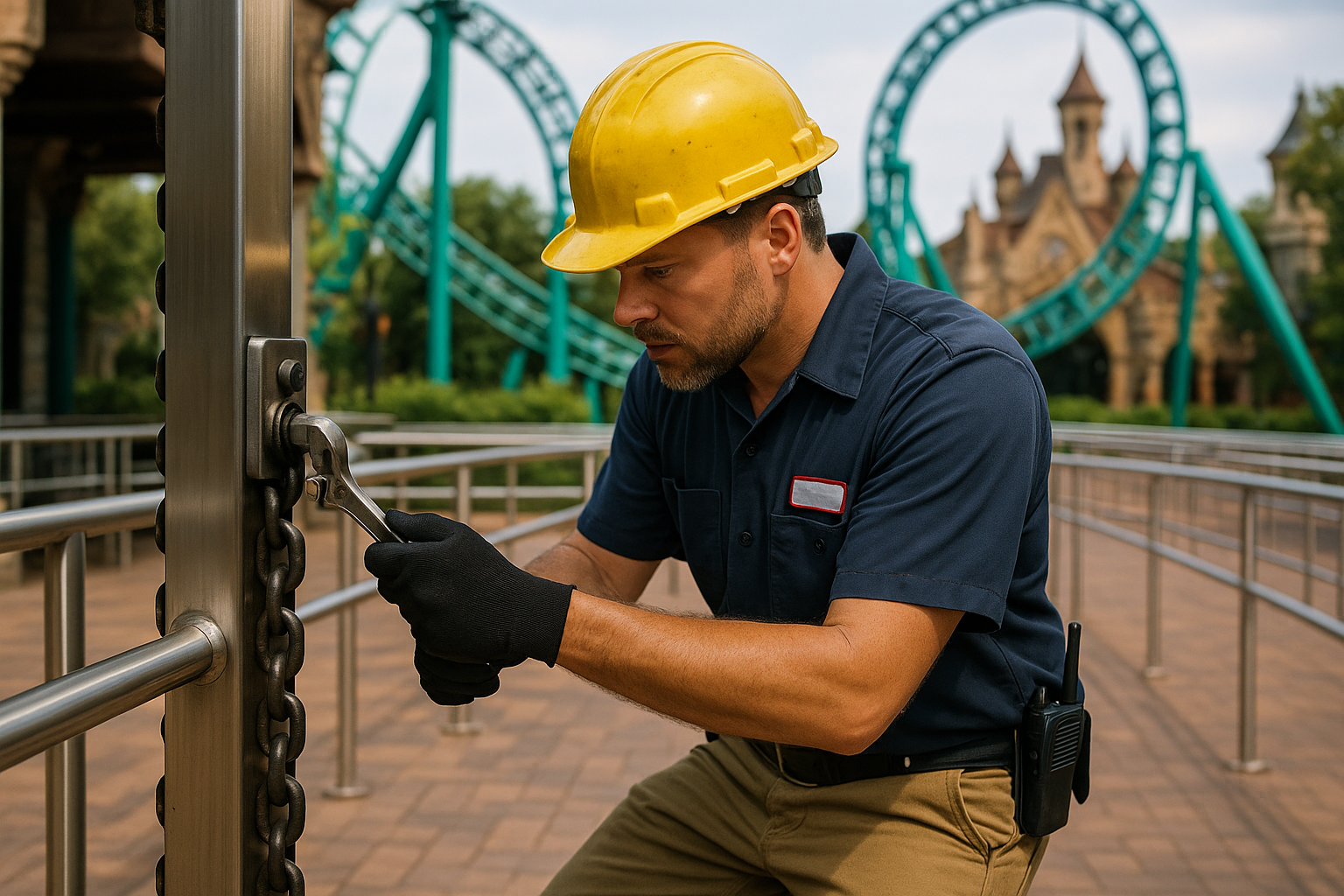
Guests may never notice a facilities team replacing a worn door closer, clearing a blocked drain, or tightening a loose handrail. That is usually the point. Much of theme park maintenance happens before a minor issue becomes a visible problem, a guest complaint, an operational delay, or a safety concern.
Preventive maintenance in a theme park is not limited to major ride components. It also includes the public spaces, backstage areas, utilities, equipment, and building systems that support the entire operation. Employees who learn to recognize early warning signs can help their departments respond sooner and keep the guest experience running smoothly.
Why Preventive Maintenance Matters in a Theme Park
A theme park is a demanding environment for buildings and equipment. Thousands of people may walk across the same surfaces, open the same gates, use the same restrooms, and interact with the same fixtures throughout the day. Outdoor areas are exposed to heat, rain, wind, humidity, and seasonal changes. Food locations generate grease, moisture, and heavy cleaning demands. Entertainment venues may have frequent equipment moves and rapid event changeovers.
Under those conditions, small defects can develop quickly. A damaged floor tile may become a trip hazard. A slow drain may turn into standing water during a busy operating day. A loose sign bracket may become dangerous in strong wind. A door that no longer closes properly can affect security, climate control, or guest flow.
Preventive maintenance helps teams address these conditions while they are still manageable. It also protects more than equipment. It supports:
- Guest and employee safety
- Reliable daily operations
- Cleanliness and presentation standards
- Accessibility throughout the park
- Efficient use of labor and materials
- Longer equipment and facility life
What Maintenance Employees Learn to Notice
Experienced maintenance professionals develop an eye for changes. They do not only look for something that has completely failed. They look for evidence that a system, surface, or fixture is beginning to behave differently.
Changes in sound
A new rattle, vibration, squeak, hum, or grinding noise can be an early indication of wear. A mechanical room may sound different when a fan bearing is beginning to deteriorate. A door may squeal because a hinge is dry or misaligned. A pump may produce an unusual vibration before a larger failure occurs.
Employees should not attempt repairs outside their training or authorization. However, recognizing an unusual sound and reporting it accurately can help the appropriate team investigate before the issue worsens.
Changes in movement
Doors, gates, drawers, cabinets, railings, and other moving components often communicate problems through resistance or looseness. A door that drags against the floor, a gate that does not latch consistently, or a handrail that shifts slightly may require attention.
These details are especially important in guest-facing areas. Employees who work in attractions, food service, retail, or guest services may notice them during normal operations before a maintenance technician sees them during a scheduled inspection.
Changes in appearance
Discoloration, bubbling paint, rust, cracking, water marks, or damaged sealant can indicate more than a cosmetic issue. They may point to moisture intrusion, corrosion, movement in a structure, or a failed protective surface.
A wall stain beneath a pipe, for example, may be evidence of a leak rather than a simple cleaning concern. Reporting the location, size, and timing of the change gives maintenance teams better information than simply describing it as “something looks wrong.”
Changes in performance
Equipment that still works may nevertheless be operating poorly. An air-conditioning unit may take longer to cool an area. A restroom fixture may flush inconsistently. A freezer may struggle to maintain temperature. A lighting circuit may flicker or take longer to activate.
These issues can be easy to dismiss because the equipment has not stopped working completely. In a high-volume operation, however, reduced performance often comes before a full failure.
Why Frontline Employees Are Part of the Maintenance Process
Maintenance teams cannot be everywhere at once. Frontline employees spend hours in the same spaces and often notice changes during real operating conditions. A quick observation from a food-and-beverage employee, attraction operator, custodial worker, or retail associate can provide valuable information.
That does not mean every employee is responsible for diagnosing a problem. The useful contribution is usually observation and communication.
A strong report answers basic questions such as:
- What exactly appears different?
- Where is the issue located?
- When was it first noticed?
- Does it happen continuously or only under certain conditions?
- Has anyone already taken a temporary action?
- Could the issue affect guests, employees, accessibility, or operations?
“The door is broken” gives a maintenance team very little to work with. “The stockroom door is scraping the floor and requires extra force to close” is more specific and easier to assess.
Making Better Maintenance Reports
Clear reporting saves time. It helps supervisors prioritize work and allows technicians to arrive with a better understanding of the problem.
Use precise locations
Describe the area using landmarks, room names, queue sections, equipment identifiers, or other approved location references. “Near the restrooms” may not be enough in a large park. “The hand dryer closest to the entrance in the east-side restroom” is much more useful.
Describe facts instead of guesses
Employees do not need to identify the root cause. Report what was observed rather than making an uncertain diagnosis.
Instead of saying, “The pipe is going to burst,” explain that water is collecting beneath a valve and the floor is becoming wet. Instead of saying, “The refrigeration system is failing,” note that the display temperature has fluctuated and the unit is making an unfamiliar noise.
Include patterns
Timing can be important. Does the problem appear after heavy rain? Only when a nearby attraction is operating? During peak meal periods? At the end of a long shift? Patterns may help technicians identify the source more efficiently.
Temporary Fixes Are Not Permanent Solutions
In a busy park, employees often need to protect guests and keep an area functional while waiting for a full repair. That may involve redirecting traffic, placing approved signage, removing an item from service, or notifying a supervisor.
Temporary controls should never be treated as a substitute for proper follow-up. A caution sign can alert guests to a condition, but it does not repair the damaged surface. Moving a trash can over a leak may hide the problem while allowing water damage to continue. Covering a damaged fixture without reporting it can create confusion for the next shift.
Good operational communication ensures that temporary actions are documented and handed off. The next employee should know what was observed, what action was taken, and whether additional assistance is still needed.
Skills That Build a Strong Maintenance Career
Preventive maintenance work rewards more than technical ability. Strong employees also develop observation, documentation, prioritization, and communication skills.
Those skills can support career growth into roles such as facilities technician, maintenance planner, engineering coordinator, building systems specialist, or supervisor. Even employees outside maintenance benefit from learning how facility issues affect guest flow, accessibility, cleanliness, and operational reliability.
A useful habit is to ask, “What changed?” A space may still look acceptable, but something may be louder, slower, looser, warmer, wetter, or more difficult to operate than it was previously. Recognizing that change early is one of the most valuable contributions an employee can make.
Build Your Industry Knowledge Through Shared Experience
Theme park work is highly collaborative. The people who understand facilities, operations, food service, entertainment, hospitality, and guest services often learn from one another’s observations. A maintenance employee may gain insight from an attraction operator who notices a recurring issue, while a frontline team member may better understand a problem after learning how building systems are maintained.
ThemeParkConnections.com gives professionals throughout the theme park and attractions industry a place to connect with other industry employees, expand their professional network, share experiences, learn about different departments, discover career opportunities, and build connections across the attractions industry.
The next time you notice a small change in a guest area or backstage space, do not assume someone else has already reported it. A clear observation, communicated through the proper channel, may help prevent a much larger maintenance problem later.