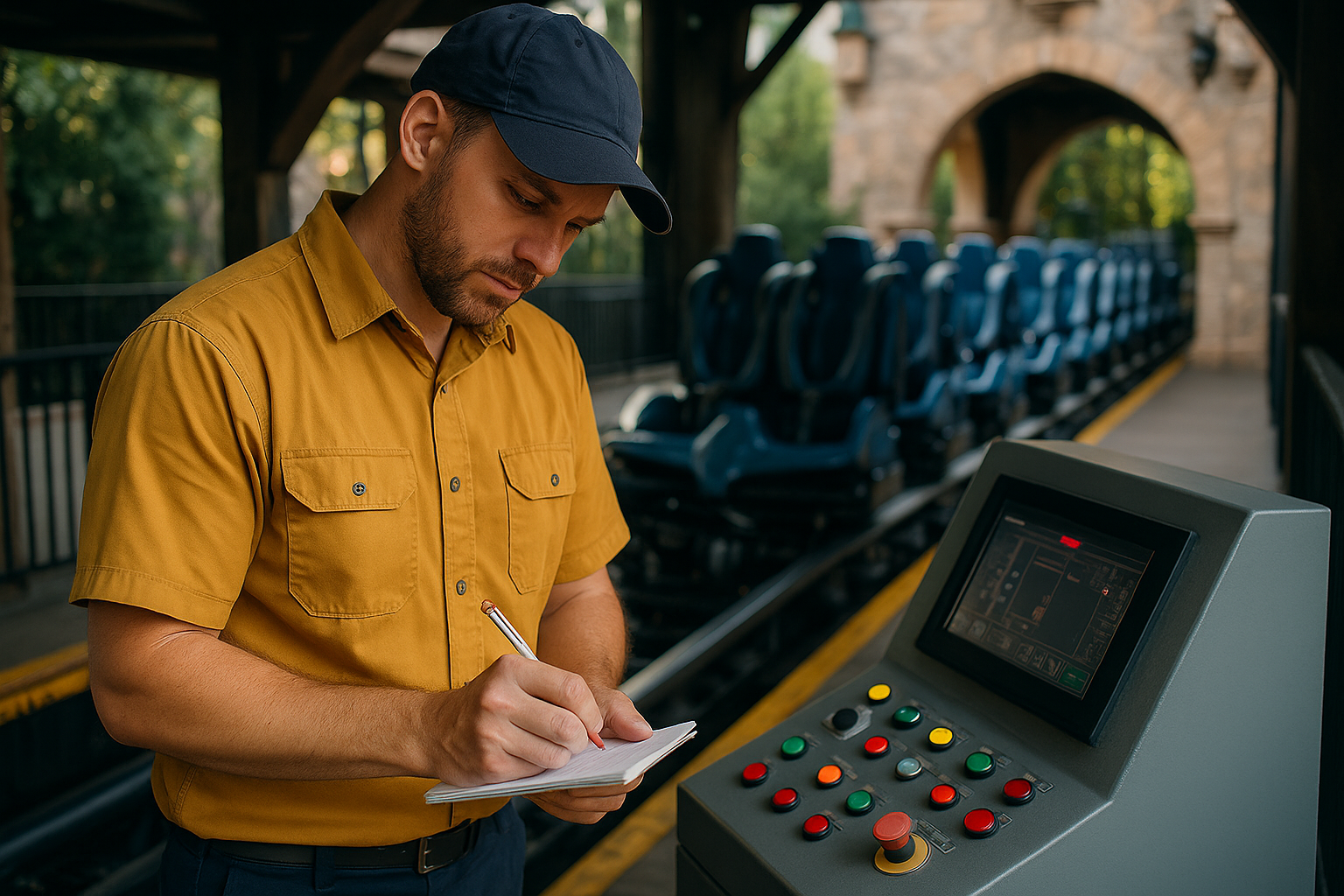
The Notes That Keep a Ride Problem from Returning on the Next Shift
In theme park maintenance, not every issue ends with a dramatic repair, a replaced component, or a clear failure. Some problems are intermittent: a sensor drops out once, a panel vibrates under certain conditions, a gate takes slightly longer than usual to latch, or a control screen produces an alert that disappears before anyone can reproduce it.
These issues are easy to underestimate. The attraction may return to service, the immediate concern may be resolved, and the shift may move on. But if the next team does not understand what happened, the same problem can return without warning. In the worst cases, valuable troubleshooting time is lost because employees have to start the investigation from the beginning.
Strong maintenance documentation helps prevent that cycle. It gives the next technician useful context, supports better communication with operations, and creates a more complete picture of equipment behavior over time.
Why Intermittent Problems Are Difficult to Track
A consistent failure usually leaves evidence. A motor will not start, a circuit will not reset, or a component will show a repeatable fault. Intermittent issues are different. They may only appear under specific conditions, such as temperature changes, vibration, moisture, extended operating time, or a particular position in the ride cycle.
That makes the first report especially important. A vague note such as “sensor issue—checked and cleared” does not give the next shift enough information to continue the investigation. It records the outcome without recording the circumstances.
A useful handoff should help answer several questions:
- What exactly happened?
- When and where did it happen?
- What was the equipment doing at the time?
- What checks or corrective actions were completed?
- Was the issue reproduced?
- What still needs to be monitored?
The goal is not to create unnecessary paperwork. The goal is to leave behind information that another qualified employee can use.
What a Useful Maintenance Handoff Includes
Describe the symptom, not just the conclusion
Begin with what was observed. Avoid relying only on technical shorthand or a final diagnosis that has not been confirmed.
For example, “brake fault” is less useful than “brake status briefly changed to fault during the third cycle after a 20-minute operating period.” The second description gives the next technician a pattern to watch for.
Include details such as:
- The affected area, vehicle, position, or equipment identifier
- The approximate time or operating period
- Whether the issue occurred once or multiple times
- Any unusual sound, smell, vibration, delay, or visual indication
- Whether the attraction was operating, cycling, testing, or closed
Small details can become significant when combined with reports from other shifts.
Separate confirmed facts from assumptions
Maintenance teams often make educated guesses during troubleshooting. That is part of the work, but a handoff should clearly distinguish between what was verified and what remains possible.
Instead of writing, “Loose wiring caused the fault,” document the observable action: “Connections were inspected and one terminal was tightened. The fault did not reappear during five test cycles.” This provides useful information without overstating the result.
Clear language might include:
- “Observed” for something directly seen or recorded
- “Inspected” for an area that was checked
- “Adjusted” or “replaced” for a completed action
- “Not reproduced” when the original issue did not happen again
- “Monitor” when additional observation is still needed
- “Suspected” when a possible cause has not been confirmed
This distinction protects the quality of the record and helps the next shift decide what to do next.
Document What Was Tested
One of the most valuable parts of a maintenance note is the testing history. A future technician needs to know not only what was repaired, but also what conditions were used to verify the equipment.
A statement such as “tested and good” leaves too many questions. How many cycles? Under what conditions? Was the equipment tested cold, warm, loaded, unloaded, or at normal operating speed?
When appropriate, record:
- The number of test cycles completed
- Whether the equipment was tested in normal operating conditions
- Any readings, alerts, or fault codes observed
- Whether the issue appeared during testing
- What conditions were not tested
For example, an intermittent vibration may not appear during a short empty test. If the issue was reported only after extended operation or with a full operating load, that limitation belongs in the handoff.
Documentation should never replace required inspections, approvals, or established safety processes. It should support them by making the work easier to understand and continue.
Make the Next Action Obvious
A good handoff does not force the next shift to interpret what the previous shift meant. If monitoring is needed, say what should be monitored and why.
Compare these two notes:
- “Keep an eye on gate.”
- “Observe the unload-side gate during the first several cycles after opening and again after the attraction has been operating for at least 30 minutes. Report any delayed latch indication or unusual resistance.”
The second note gives the next employee a practical plan. It also makes it more likely that reports from different shifts will be consistent.
If additional work is recommended, identify the reason without assigning tasks beyond the employee’s training or authority. A note might indicate that a component requires follow-up inspection, that a recurring alert should be escalated, or that a supervisor or specialist should review the history.
Use Handoffs to Build a Pattern
One report may not reveal much. Several accurate reports can show a trend.
An issue that appears unrelated at first may eventually connect to:
- A particular time in the operating day
- Temperature or weather conditions
- Extended run time
- A specific vehicle, position, or cycle stage
- A recent adjustment or component replacement
- Interaction between mechanical, electrical, and control systems
This is why consistent terminology matters. If one employee records “gate hesitation,” another writes “slow close,” and a third writes “latch delay,” the reports may be harder to compare. Employees do not need to use identical writing styles, but they should describe equipment and symptoms precisely enough for patterns to emerge.
Communication Matters as Much as the Written Record
Documentation should be supported by a direct handoff whenever possible. A brief conversation can clarify details that do not fit neatly into a log, especially when the issue is unusual or remains unresolved.
When speaking with the next shift, focus on the facts:
- What happened
- What has already been checked
- What was not confirmed
- What needs attention next
- Who else has been notified, if applicable
Avoid presenting an unconfirmed theory as a certainty. Doing so can cause the next technician to focus narrowly on one suspected cause and overlook other possibilities.
Professional handoffs also build trust between shifts. When employees know that their work is being documented accurately, they are more likely to share unusual observations rather than dismiss them as minor or inconvenient.
Documentation Is a Career Skill
Clear maintenance records demonstrate more than technical knowledge. They show judgment, organization, attention to detail, and respect for the employees who will work after you. Those qualities matter for technicians, leads, trainers, supervisors, and anyone who hopes to take on greater responsibility.
Employees who consistently create useful handoffs become valuable during complex troubleshooting because they help the team preserve knowledge. Their notes can shorten downtime, reduce repeated work, and improve collaboration between maintenance, operations, and leadership.
The best maintenance documentation is not the longest. It is the information that allows the next qualified person to understand the situation, verify what has been done, and make a safe, informed decision about what comes next.
Connect with Other Attractions Professionals
Many of the strongest maintenance practices are learned through experience and shared with people in other departments and organizations. ThemeParkConnections.com gives professionals throughout the theme park and attractions industry a place to connect with other industry employees, expand their professional networks, share experiences, learn about different departments, discover career opportunities, and build lasting connections across the attractions industry.
Whether you work in maintenance, operations, engineering, or another area of the park, the lessons you learn on one shift may help someone else solve a problem on theirs.