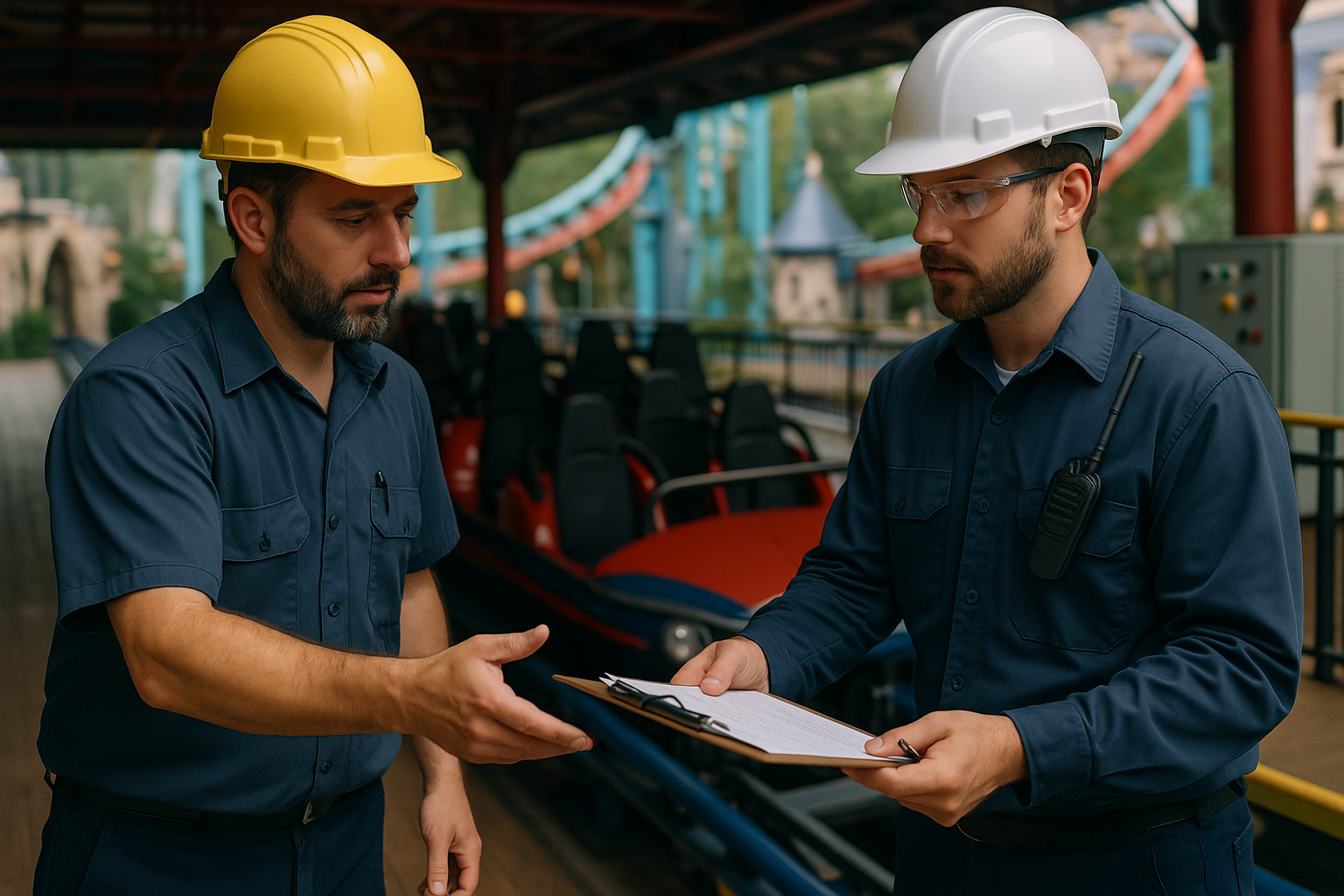
The Shift Handoff Is a Safety Skill: What Theme Park Maintenance Teams Need to Communicate
In a theme park, a maintenance shift rarely ends with a simple “see you tomorrow.” Equipment may be operating, awaiting inspection, temporarily out of service, or scheduled for follow-up work. A technician leaving the job may have hours of useful context that never appears on a work order or checklist.
That is why the shift handoff matters. A clear handoff helps the next team understand what happened, what changed, what remains unresolved, and what requires immediate attention. For maintenance and engineering employees, strong handoff communication is not just an organizational habit. It is a practical safety skill that supports reliable operations across rides, facilities, resorts, food and beverage locations, and backstage areas.
Why Maintenance Handoffs Matter in Theme Parks
Theme park equipment is often supported around the clock or across multiple operating periods. One team may respond to an issue during the morning opening process, another may monitor the equipment during peak attendance, and a third may complete repairs or inspections after the park closes.
Without a dependable handoff, the next technician may have to reconstruct the situation from scattered notes, incomplete messages, or memory. That can lead to duplicated work, delayed repairs, unnecessary troubleshooting, or confusion about whether equipment is ready to return to service.
A quality handoff helps answer several basic questions:
- What problem was reported?
- What was observed firsthand?
- What work has already been completed?
- What temporary conditions or restrictions remain?
- What parts, tools, or approvals are still needed?
- Who has been notified?
- What should the next team check first?
The goal is not to create a long report for its own sake. The goal is to transfer the information someone else needs to make a safe and informed decision.
The Difference Between a Note and a Handoff
A maintenance note may record that a component was inspected or a fault was reset. A handoff adds context. It explains what led to the action, what the technician found, and what should happen next.
For example, “reset completed” provides very little information. A stronger handoff might explain that an equipment fault appeared during a normal cycle, that the area was checked for visible damage, that the reset was performed according to approved procedures, and that the fault did or did not return during observation.
Employees should avoid making assumptions in their handoffs. A component that appears normal may still require additional inspection. A system that operated correctly for several cycles may still be under observation. Clear language helps distinguish between:
- Work completed: What action was taken.
- Condition observed: What the technician actually saw, heard, measured, or tested.
- Work remaining: What has not yet been completed.
- Recommended follow-up: What the next person should verify or investigate.
Information Every Handoff Should Include
Identify the equipment and location
Use the clearest available equipment name, asset identifier, work order number, or location description. Theme parks can contain multiple similar systems, vehicles, buildings, show spaces, or guest areas. “Main control panel” may be obvious to one team and ambiguous to another.
Include the specific attraction, facility, zone, room, or component involved whenever possible. If the issue affects more than one area, identify each area separately.
Describe the original condition
Explain how the issue was discovered. Did an operator report an unusual sound? Did a routine inspection identify wear? Did a system generate an alert? Did the equipment fail to complete a normal sequence?
The source of the report can help the next technician understand what to look for. An intermittent noise reported during operation may require a different approach than a visible leak discovered during a pre-opening inspection.
Record what was actually done
List inspections, adjustments, replacements, tests, resets, cleaning, lubrication, or other approved work that was completed. Be specific enough that another qualified employee can understand what changed without guessing.
Do not describe work as complete if only part of the task was finished. If a component was removed but not replaced, or if a test was started but not completed, say so directly.
Explain the current status
The status of equipment should be easy to understand. Depending on the situation, it may be:
- Operating normally after inspection
- Operating with continued monitoring
- Unavailable pending repair
- Waiting for parts or additional support
- Awaiting inspection, testing, or approval
- Returned to service after a completed corrective action
Use the terminology required by your workplace, but do not rely on a status label alone. A brief explanation gives the next team useful context.
Handoffs During Ride Downtime and Guest-Visible Issues
Some maintenance situations happen while guests are present or while an attraction is experiencing downtime. In those moments, communication can become fragmented. Operations employees may need updates for guest messaging, leadership may need a status estimate, and maintenance may still be diagnosing the cause.
Technicians should avoid offering guesses as though they are confirmed timelines. If the cause is still under investigation, communicate that the team is diagnosing the issue. If a component has been identified but repair time is unknown, separate those facts clearly.
A useful update might include:
- The general nature of the issue
- Whether the area is safe for employees to access
- Whether troubleshooting is in progress
- Whether parts or specialized support are needed
- When the next update is expected
This approach supports both safety and guest-service teams without pressuring technicians to make promises before the facts are known.
Common Handoff Mistakes to Avoid
Relying entirely on memory
A busy shift can involve multiple calls, inspections, and interruptions. Waiting until the end of the shift to remember every detail increases the chance of missing important information. Make brief, accurate notes as work progresses, then organize them into the formal handoff.
Using vague language
Words such as “fixed,” “fine,” or “checked” may not explain enough. Describe what was checked and what result was observed. Precision makes communication easier for people who were not present.
Leaving out incomplete work
Unfinished tasks are often the most important part of the handoff. If a repair still requires testing, a replacement part, a second inspection, or a follow-up conversation, state that clearly.
Assuming the next team knows the history
Even experienced employees may not know what happened earlier in the day, especially when teams rotate between areas. A concise summary is more reliable than assuming someone will find the missing context elsewhere.
Building Better Handoff Habits
Strong handoffs improve when teams agree on the information they expect to receive. Supervisors and leads can help by establishing consistent expectations for work orders, verbal briefings, radio updates, and shift logs without encouraging unnecessary paperwork.
Employees can also improve their own handoffs by asking one question before leaving an assignment: “What would I need to know if I were taking over this job right now?”
That question often reveals missing details about equipment status, pending work, unusual conditions, or required follow-up. It also encourages technicians to communicate in a way that supports the entire operation rather than documenting only what they personally completed.
Over time, reliable handoffs build professional trust. Operations teams know where they stand. Maintenance teams spend less time retracing steps. Leaders receive clearer information. Most importantly, decisions are made with better awareness of the equipment’s actual condition.
Connections That Strengthen Theme Park Careers
Maintenance work may happen behind the scenes, but it affects nearly every department in a theme park. Learning to communicate clearly with operations, leadership, guest services, entertainment, hospitality, and other technical teams can expand an employee’s effectiveness and career opportunities.
Theme Park Connections gives people working throughout the theme park and attractions industry a place to connect with other professionals, share experiences, learn about different departments, discover career opportunities, and build relationships across the industry. For maintenance employees especially, those connections can provide insight into technical career paths and the many roles that support a successful guest experience.