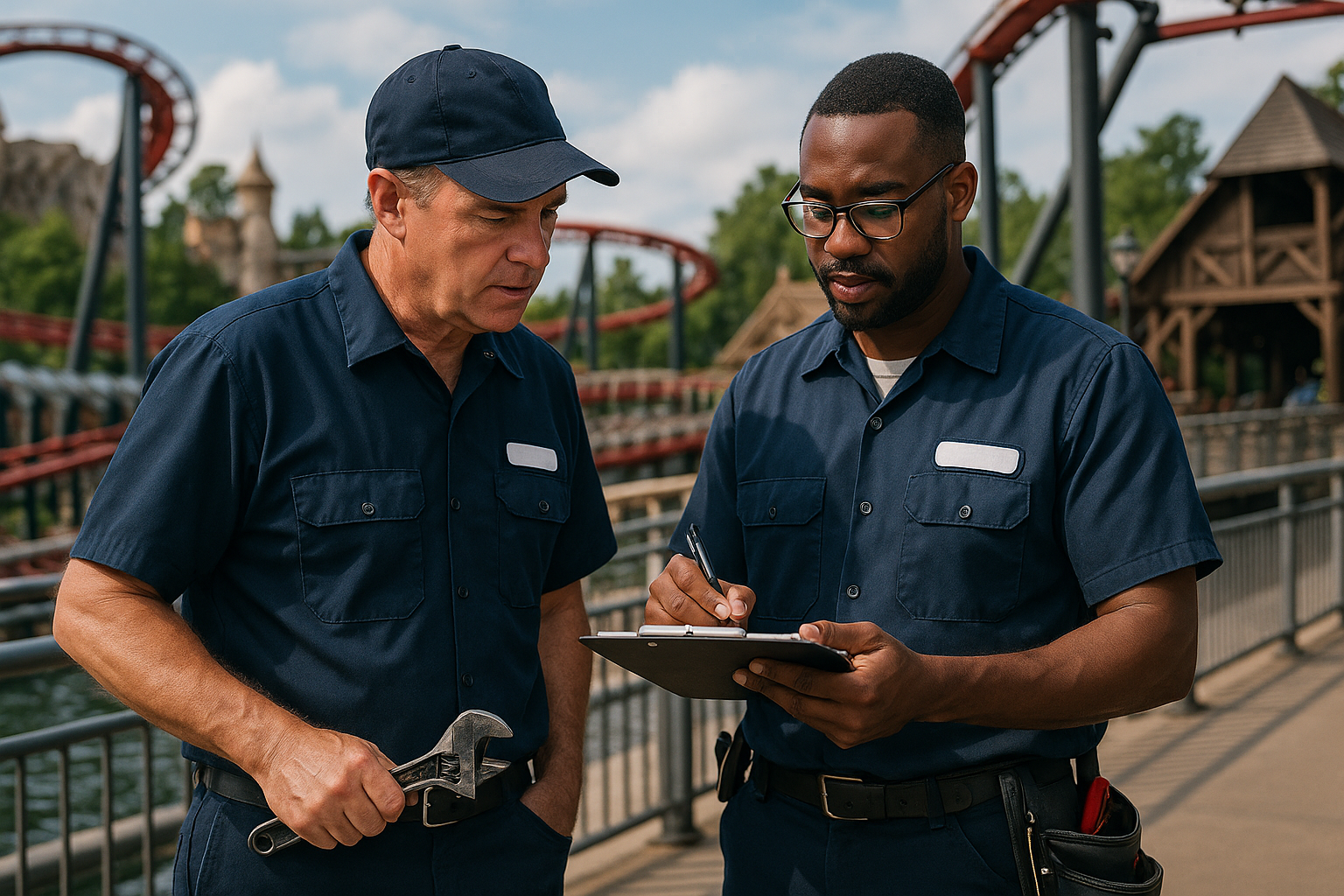
The Handoff That Prevents Tomorrow’s Downtime: Better Communication for Theme Park Maintenance Teams
A maintenance issue does not always announce itself with a broken part, an alarm, or a ride that stops operating. Sometimes it appears as a vibration that comes and goes, a door that needs an extra push, a panel that feels warmer than usual, or a sound that only occurs under specific conditions.
These intermittent problems can be among the most difficult issues to resolve in a theme park. One technician notices the symptom, another team member investigates it later, and the next shift may receive only a quick verbal update. Without clear communication, valuable details can disappear between shifts—and the same issue may continue until it becomes a larger operational concern.
A strong maintenance handoff helps preserve those details. It gives the incoming team a practical starting point, reduces duplicated troubleshooting, and supports safer, more efficient decision-making across maintenance and operations.
Why Maintenance Handoffs Matter in Theme Parks
Theme park maintenance work often takes place across multiple shifts, locations, and specialties. A ride technician may identify a concern near the end of a shift, while a facilities technician, electrician, supervisor, or operations partner may need to provide additional information before the issue can be fully understood.
The person receiving the handoff may not have witnessed the original problem. They need enough context to know what happened, what has already been checked, and what still requires attention.
A useful handoff can help the next shift:
- Understand the exact symptom instead of relying on a vague description.
- Avoid repeating inspections that have already been completed.
- Recognize patterns that only appear during certain operating conditions.
- Prioritize open issues appropriately.
- Know which departments or leaders may need follow-up.
- Document observations that could support future troubleshooting.
This is not simply an administrative task. In a high-volume attractions environment, clear communication is part of operational reliability.
Describe the Symptom, Not Just the Suspected Cause
One of the most common handoff problems is recording a conclusion before the issue has been confirmed. For example, “hydraulic problem” or “sensor is bad” may sound helpful, but those statements can send the next technician in the wrong direction if they are based only on an initial assumption.
A stronger handoff separates what was observed from what is suspected.
Weak description
“The lift motor is failing.”
More useful description
“During the final operating cycle, the lift produced a louder-than-usual humming sound for approximately three seconds. The sound was not present during earlier cycles. No visible damage was observed, and the equipment operated through the cycle.”
The second description gives the incoming team something specific to investigate without presenting an unverified diagnosis as fact. It also preserves details that may help identify whether the issue is mechanical, electrical, environmental, or related to operating conditions.
The Five Details Every Handoff Should Capture
Communication systems and documentation requirements vary by employer, but the most useful handoffs generally answer five basic questions.
1. What happened?
Describe the symptom in plain, specific language. Include unusual sounds, movement, temperatures, visual conditions, warning indicators, or changes in performance.
2. When did it happen?
Record the approximate time, shift, operating condition, and whether the issue occurred once or repeatedly. An issue that appears only after extended operation may require a different investigation from one that occurs immediately after startup.
3. Where did it happen?
Identify the attraction, zone, component area, vehicle, show space, kitchen, hotel system, or facility location as precisely as possible. “Near the station” may not be enough if several pieces of equipment are located there.
4. What has already been checked?
Include inspections, resets, measurements, visual checks, or other approved troubleshooting steps that have been completed. This prevents the next person from assuming nothing has been done or repeating work without purpose.
5. What remains open?
Explain what needs to happen next. That might include monitoring the issue, inspecting a specific component, contacting another department, waiting for a particular operating condition, or escalating the concern according to local expectations.
Intermittent Issues Require Better Context
Intermittent problems are especially vulnerable to poor handoffs because the equipment may appear normal when the next shift arrives. A technician who receives only “noise reported” may not be able to reproduce the concern.
When documenting an intermittent issue, include the conditions surrounding it:
- Whether the equipment was cold, warm, recently restarted, or operating for an extended period.
- Whether the attraction was empty, lightly loaded, or operating under normal guest conditions.
- Whether weather, moisture, temperature, or nearby activity may have been relevant.
- Whether the issue occurred during startup, braking, loading, unloading, movement, or shutdown.
- Whether anyone else witnessed the condition.
These details can turn a vague report into a useful troubleshooting lead. They may also reveal that the issue is connected to a specific phase of operation rather than occurring randomly.
Use Handoffs to Connect Maintenance and Operations
Maintenance teams do not work in isolation. Ride operators, attendants, custodial employees, entertainment teams, food and beverage employees, and hotel staff may notice early warning signs before a technical problem becomes obvious.
An operations employee may notice that a gate takes longer to close, a sound has changed, or a display behaves differently. They may not know the technical name for the issue, but their observation can still be valuable.
Maintenance professionals can improve cross-department communication by asking practical follow-up questions:
- What did you notice first?
- Did it happen every time or only once?
- Did the issue occur with guests present or during testing?
- Was anything different about the operating cycle?
- Did the condition change after a reset or restart?
The goal is not to turn every employee into a technician. The goal is to collect accurate observations from the people closest to the operation.
Common Handoff Mistakes to Avoid
Relying only on memory
A busy shift can include inspections, calls, corrective work, and unexpected downtime. Waiting until the end of the shift to reconstruct every detail increases the chance of missing important information. Make brief notes as events occur, using the approved documentation process.
Using unclear abbreviations
Abbreviations that seem obvious to one team may confuse another. Use terminology that the incoming employee, supervisor, or partner department can understand.
Leaving out negative findings
It is useful to document what was not found. For example, noting that no visible damage, unusual heat, or fluid leakage was observed helps define the scope of the initial inspection.
Failing to close the communication loop
If an issue was reported by operations, the reporting employee or department may need to know that the concern was received and what will happen next. A brief update can prevent repeated calls and reassure the team that the observation was not ignored.
Build a Reputation for Reliable Information
Employees who consistently provide clear handoffs become trusted sources of operational information. That reputation can support future opportunities to train others, coordinate work, lead a shift, or collaborate across departments.
Good documentation also demonstrates professional judgment. It shows that you can distinguish facts from assumptions, prioritize important details, and communicate under pressure—skills that are valuable well beyond maintenance.
Before ending a shift, take a moment to ask: Could someone who did not see this issue understand what happened and what to do next? If the answer is no, the handoff probably needs more detail.
Keep Learning Across the Attractions Industry
Maintenance communication is one example of how different departments contribute to safe, dependable theme park operations. Employees can learn a great deal by comparing experiences with professionals in attractions, entertainment, hospitality, food and beverage, retail, guest services, and engineering.
ThemeParkConnections.com gives people working throughout the theme park and attractions industry a place to connect with other professionals, expand their networks, share experiences, learn about different departments, discover career opportunities, and build relationships across the industry.
A strong handoff may last only a few minutes, but its value can continue across shifts, departments, and operating days. Clear information helps the next person start with the facts—and that can make all the difference when a small warning sign needs to be understood before it becomes a major problem.