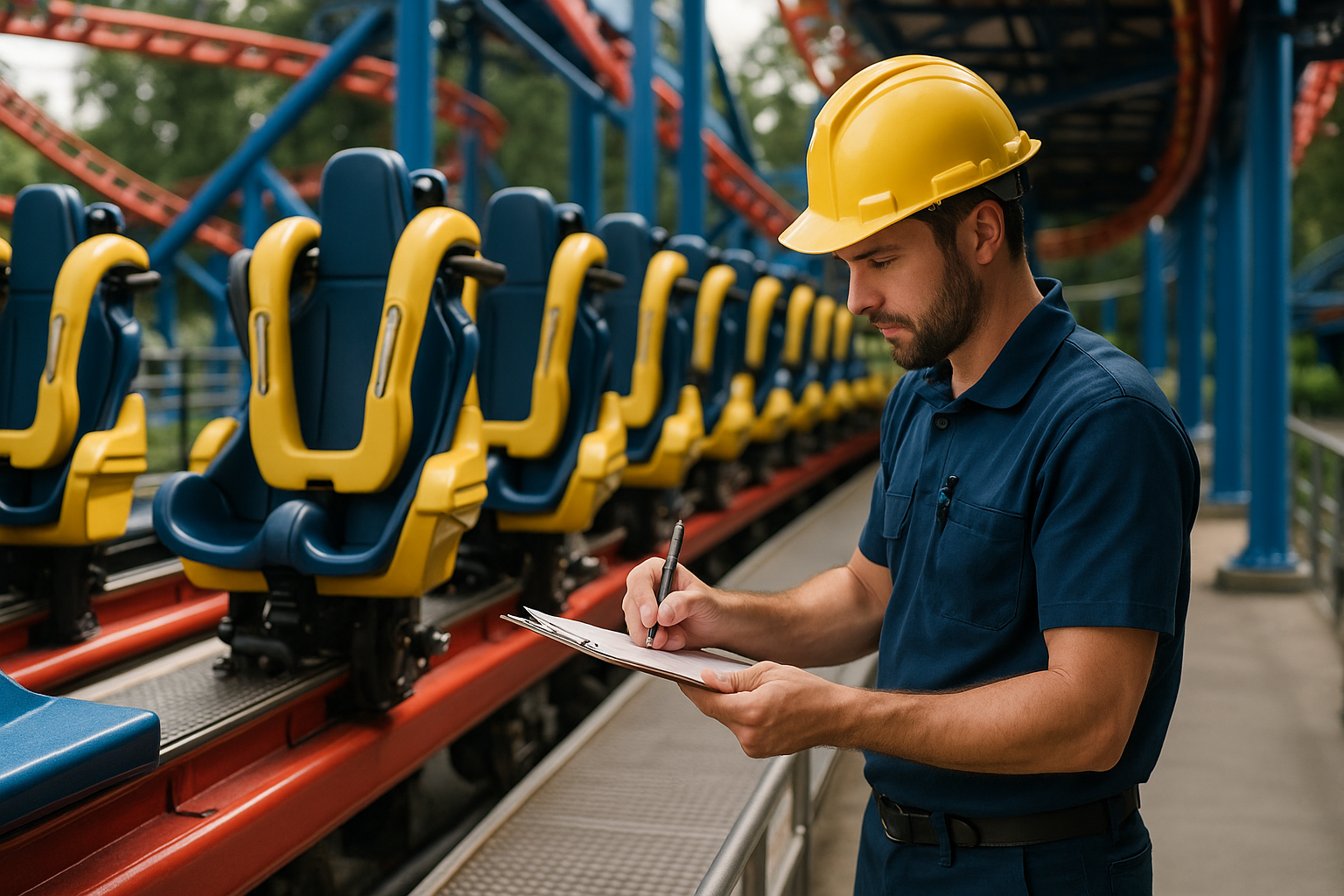
The Handoff That Keeps a Theme Park Running: Building Better Maintenance Work Orders
A ride may be the most visible part of a theme park operation, but the information behind it is just as important as the equipment itself. When an attraction, restaurant, resort building, or backstage facility needs attention, maintenance teams often rely on one essential tool: the work order.
A well-written work order helps technicians understand what happened, where it happened, and what needs to happen next. A vague one can create delays, duplicate work, unnecessary downtime, or confusion between operations and maintenance. For employees across the attractions industry, learning how to communicate maintenance needs clearly is a practical skill that improves daily operations and builds professional credibility.
Why Maintenance Work Orders Matter
In a busy theme park, maintenance teams rarely receive only one request at a time. A technician may be responding to an attraction issue while also tracking preventive maintenance, checking a facility concern, and preparing equipment for the next operating period.
The work order becomes the shared record connecting the employee who noticed the problem, the supervisor who prioritized it, the technician who investigated it, and the team responsible for following up.
Good documentation can help answer several important questions:
- What problem was observed?
- Where is the problem located?
- When was it first noticed?
- Does it affect safety, operations, appearance, or guest comfort?
- Has anything already been done to address it?
- Does the issue require immediate attention or further monitoring?
Clear information does not replace a technician’s inspection, but it gives that technician a more useful starting point.
Describe the Condition, Not Just the Conclusion
One of the most common documentation mistakes is writing a diagnosis instead of describing an observation. An employee may submit a request stating that a piece of equipment is “broken” or that a pump “needs to be replaced.” In many cases, the employee has identified a symptom rather than the root cause.
A more useful description focuses on what was actually seen, heard, smelled, or experienced.
Weak description
“The light is broken.”
Stronger description
“The light fixture above the east queue entrance is not illuminated. The neighboring fixtures are operating normally. The issue was noticed during the opening walkthrough.”
The second version gives the maintenance team a location, a comparison, and a timeframe without pretending to provide a technical diagnosis. This distinction matters because inaccurate assumptions can send a technician toward the wrong solution.
Include Precise Location Details
“Main entrance” may sound specific to the person submitting a request, but a large park can have several entrances, gates, queues, service doors, or guest areas that fit that description. Maintenance employees need enough detail to find the issue quickly, especially when the request involves a large attraction or resort property.
Useful location details may include:
- Attraction, restaurant, resort, or facility name
- Specific area or room
- Nearby sign, landmark, or operational position
- Floor, side, row, or zone
- Equipment identification number, if visible
- Whether the issue is guest-facing or backstage
For example, “water on the floor” is not as helpful as “approximately three feet of water near the beverage station on the west side of the quick-service location.” The exact wording will vary by workplace, but the goal is the same: reduce the time spent searching.
Explain the Operational Impact
Not every maintenance issue has the same level of urgency. A damaged decorative element, a malfunctioning piece of back-of-house equipment, and an issue affecting an attraction’s operation may require different responses.
Employees submitting work orders should explain how the condition is affecting the operation without exaggerating it. Consider including information such as:
- Whether the area is open or closed
- Whether employees can safely continue working
- Whether guests are being affected
- Whether the issue is slowing service or reducing capacity
- Whether a temporary workaround is in use
- Whether the condition is getting worse
For instance, “The freezer is broken” does not tell a technician whether the entire kitchen is unable to operate. “The freezer is still holding temperature, but the door is not sealing completely and condensation is collecting along the lower edge” provides a more accurate operational picture.
If there is an immediate safety concern, employees should follow their department’s established communication process rather than relying only on a routine work order. Documentation is important, but urgent conditions may require direct notification through the appropriate supervisor, control center, or maintenance contact.
Record What Has Already Been Tried
Maintenance teams lose valuable time when they have to repeat steps that another employee has already completed. A work order should briefly document any reasonable actions taken before the request was submitted.
Examples might include:
- Resetting equipment through an approved process
- Checking whether the issue affects one station or the entire area
- Moving guests or employees away from a problem area
- Placing an approved temporary sign or barrier
- Notifying a supervisor or operations lead
- Confirming that a replacement item is available
Keep the description factual. Avoid writing that a reset “fixed” the problem if the issue returned ten minutes later. Instead, note that the equipment resumed operation temporarily and identify when the problem returned.
Use Time and Frequency to Add Context
A maintenance issue that occurs once may require a different investigation from one that happens repeatedly. Including timing and frequency can help technicians identify patterns.
Useful details include:
- When the issue began
- Whether it occurs during startup, peak operation, or shutdown
- How often it happens
- How long the condition lasts
- Whether weather, guest volume, or another activity seems to affect it
Instead of writing “the register keeps freezing,” an employee might write, “The register has stopped responding three times since opening. Each occurrence happened during a transaction, and the system recovered after approximately one minute.” That information may help the technician determine whether the problem is isolated or recurring.
Maintenance Communication Is a Team Skill
Writing effective work orders is not only a maintenance responsibility. Attraction operators, food and beverage employees, custodians, retail associates, hotel teams, entertainment staff, and leaders all notice conditions that maintenance teams may not see during routine inspections.
Employees who consistently provide useful information become easier to work with. They demonstrate observation skills, operational awareness, and respect for other departments’ time. Those qualities can support future opportunities as a trainer, coordinator, lead, supervisor, or cross-functional team member.
A Quick Work Order Check Before Submitting
Before sending a routine maintenance request, review it with five questions:
- Where is it? Could someone unfamiliar with the area find it?
- What happened? Did I describe the condition rather than guess at the cause?
- When did it happen? Did I include timing or frequency if relevant?
- What is the impact? Is the operation, guest experience, or employee safety affected?
- What has already been done? Did I document approved troubleshooting or temporary actions?
A few extra seconds of careful documentation can prevent repeated questions and help the right team respond more efficiently.
Build Connections Across the Attractions Industry
Strong maintenance communication is one example of how theme park work depends on collaboration between departments. Employees who understand how operations, facilities, engineering, food service, entertainment, hospitality, and guest services connect are better prepared to solve problems and grow within the industry.
ThemeParkConnections.com gives professionals throughout the theme park and attractions industry a place to connect with other industry employees, expand their professional networks, share experiences, learn about different departments, discover career opportunities, and build relationships across the attractions community.