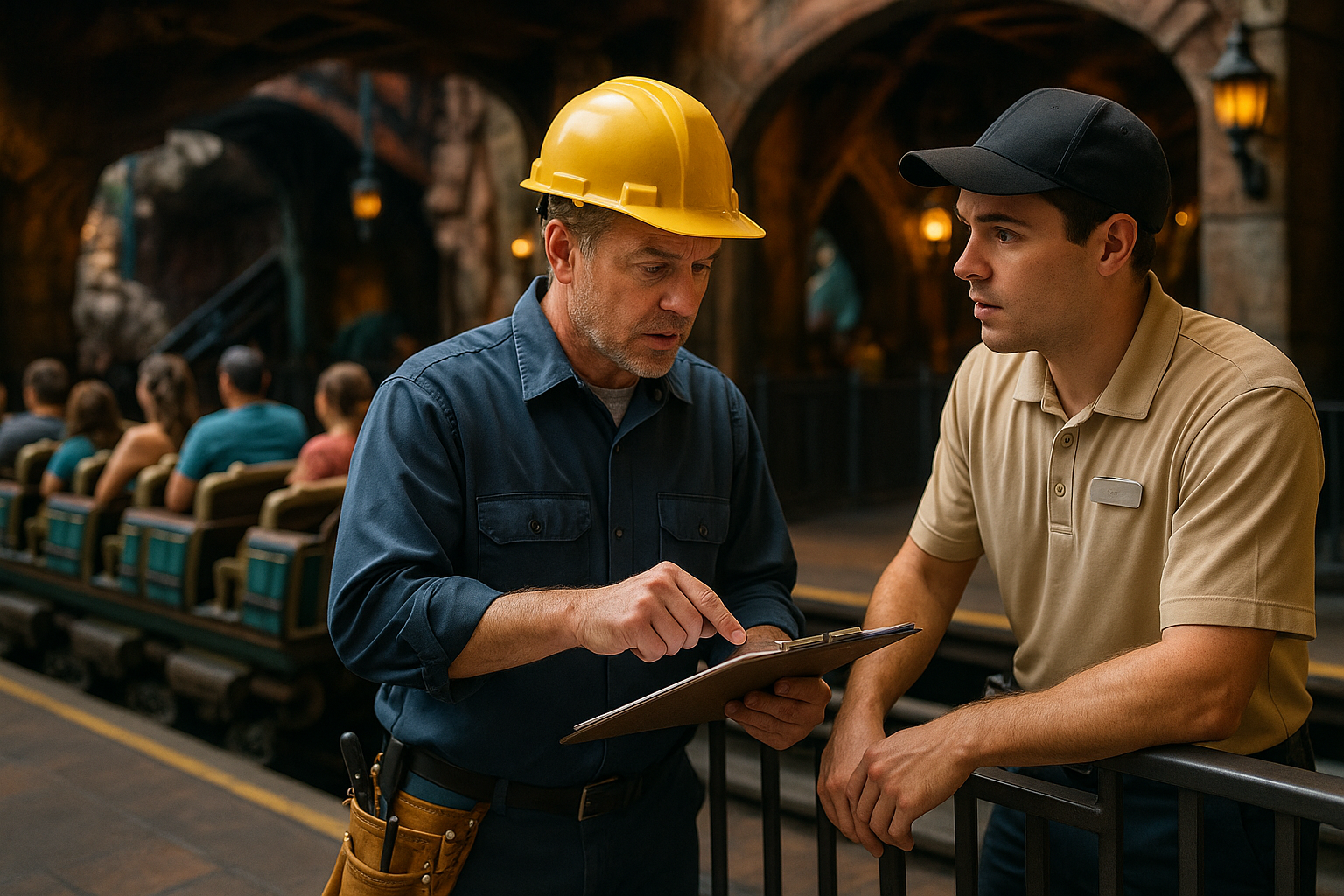
When a Work Order Becomes a Guest Experience Issue
A maintenance issue does not always stay in the maintenance department. A sticking door, a damaged queue rail, a flickering light, or a malfunctioning restroom fixture can quickly become a guest service problem if the right people are not informed.
In a theme park, the quality of communication between maintenance, operations, custodial, guest services, and leadership often determines whether a small facilities concern is handled quietly or becomes a visible disruption. Technical work matters, but so does making sure the rest of the operation understands what the issue means for guests and employees.
The Hidden Impact of a Small Maintenance Issue
Some problems appear minor when described in a work order. “Replace light fixture” or “repair queue gate” may sound straightforward. However, the location and timing can make the issue far more significant.
A broken light near a walkway may affect how guests move through an area after dark. A damaged handrail may create an accessibility concern. A leaking sink in a busy quick-service restaurant may slow the operation, affect sanitation, or create a slip hazard. A door that does not close properly may affect security, climate control, or backstage separation.
The maintenance request is only one part of the situation. The operational impact may include:
- Guests being redirected or delayed
- Employees needing to monitor an area
- Temporary barriers or signage being installed
- Changes to an attraction, restaurant, retail location, or resort’s normal workflow
- Additional cleaning or inspections
- Questions from guests who do not know why something is unavailable
Recognizing these effects helps maintenance employees communicate in a way that supports the entire venue rather than focusing only on the repair itself.
What Makes a Useful Work Order?
A strong work order gives the receiving team enough information to understand the problem, locate it quickly, and determine how urgent it is. “Broken fixture in building” creates unnecessary delays. A more useful report identifies the exact location, the observed condition, and any immediate guest or employee impact.
Include the details another employee needs
- Exact location: Identify the building, area, room, queue, counter, backstage zone, or nearby landmark.
- Observed condition: Describe what is happening rather than guessing at the cause.
- Operational impact: Explain whether the issue affects guest flow, employee access, accessibility, food service, cleanliness, or safety.
- Temporary action: Note whether the area has been blocked, marked, cleaned, monitored, or taken out of service.
- Timing: Include when the problem was first noticed and whether it is getting worse.
For example, “Water on floor near restaurant beverage station; area cleaned and temporarily blocked; source appears to be beneath the sink; restaurant is operating but employees are using the adjacent station” gives far more practical information than “sink leaking.”
Employees should avoid diagnosing equipment beyond their training. A clear description of what was observed is usually more valuable than an incorrect technical conclusion.
Translate Technical Language Into Operational Language
Maintenance teams often use terms that make perfect sense within their department but are less useful to front-line employees. A repair may involve a valve, sensor, actuator, breaker, or control panel. Operations employees generally need to know something different: What can guests use? What is temporarily unavailable? How long might the disruption last? What should employees say if someone asks?
This does not mean removing technical information from maintenance records. It means adding a practical summary for the departments affected by the work.
A helpful update might include:
- “The entrance door is being repaired. Guests should use the adjacent entrance until further notice.”
- “One restroom stall is unavailable while a plumbing issue is addressed. The remaining stalls are open.”
- “The attraction’s lighting issue is under investigation. Operations should continue using the approved alternate lighting plan.”
- “The restaurant’s rear delivery door is closed for repair. Deliveries should check in through the designated secondary access point.”
These updates give employees something actionable without asking them to interpret a technical report during a busy shift.
Build Better Communication During Active Repairs
Some maintenance work takes place in areas guests can see. Even when the repair itself is routine, tools, ladders, noise, barriers, or employees working in unusual locations can attract attention.
Before beginning work in a guest-facing area, maintenance and operations should clarify:
- Whether the work can take place while the area remains open
- Which paths or service points need to remain clear
- Whether guests require an alternate route
- Who will provide updates if the repair takes longer than expected
- What signage, barriers, or visual screening may be appropriate
- How the area will be checked after the work is complete
The goal is not to hide every repair. Theme parks are complex working environments, and guests understand that things occasionally need attention. The goal is to make the work appear controlled, purposeful, and respectful of the guest experience.
Closing the Loop After the Repair
A completed repair is not always the end of the issue. The employees who reported the problem may need to know that the area is ready to return to normal operation. If temporary barriers remain in place, guests may continue to believe the area is unavailable. If a workaround was being used, employees may continue following it unnecessarily.
A useful closeout message should confirm:
- What was repaired or inspected
- Whether the area is available for normal use
- Whether any restrictions remain
- Whether follow-up work is required
- Who should be contacted if the problem returns
For example: “The damaged queue rail has been secured and inspected. The queue is open for normal use. The temporary stanchions can be removed, but please report any movement or looseness immediately.”
This type of update prevents confusion and gives front-line employees confidence when returning guests to the area.
Why This Skill Helps Your Career
Employees who communicate maintenance concerns clearly become valuable partners across the operation. A technician who understands guest flow can plan work more effectively. An attractions employee who provides precise observations helps maintenance respond faster. A supervisor who connects the repair team with guest services can reduce inconsistent information.
These habits demonstrate skills that apply to lead, trainer, coordinator, facilities, and management roles:
- Prioritizing issues based on operational impact
- Explaining technical information clearly
- Coordinating between departments
- Documenting problems accurately
- Following through after a temporary solution
- Understanding how behind-the-scenes work affects guests
The strongest theme park professionals do not view maintenance, operations, and guest service as separate worlds. They understand that every department contributes to the same experience, often from a different angle.
Make the Repair Part of the Guest Experience Strategy
A work order may begin with a broken fixture or equipment issue, but its success is measured by more than whether a part was replaced. The real measure is whether the issue was controlled, communicated, and resolved without creating unnecessary confusion for guests or employees.
Clear documentation, practical updates, and a reliable closeout process turn maintenance communication into a form of guest service. They also help departments trust one another, respond more efficiently, and keep small problems from becoming larger operational disruptions.
Theme Park Connections gives professionals across attractions, maintenance, operations, hospitality, entertainment, food and beverage, retail, and guest services a place to connect with other industry employees, share experiences, learn about different departments, and discover career opportunities. Building those connections can make it easier to understand how each team contributes to the larger operation—and where your own skills may take you next.