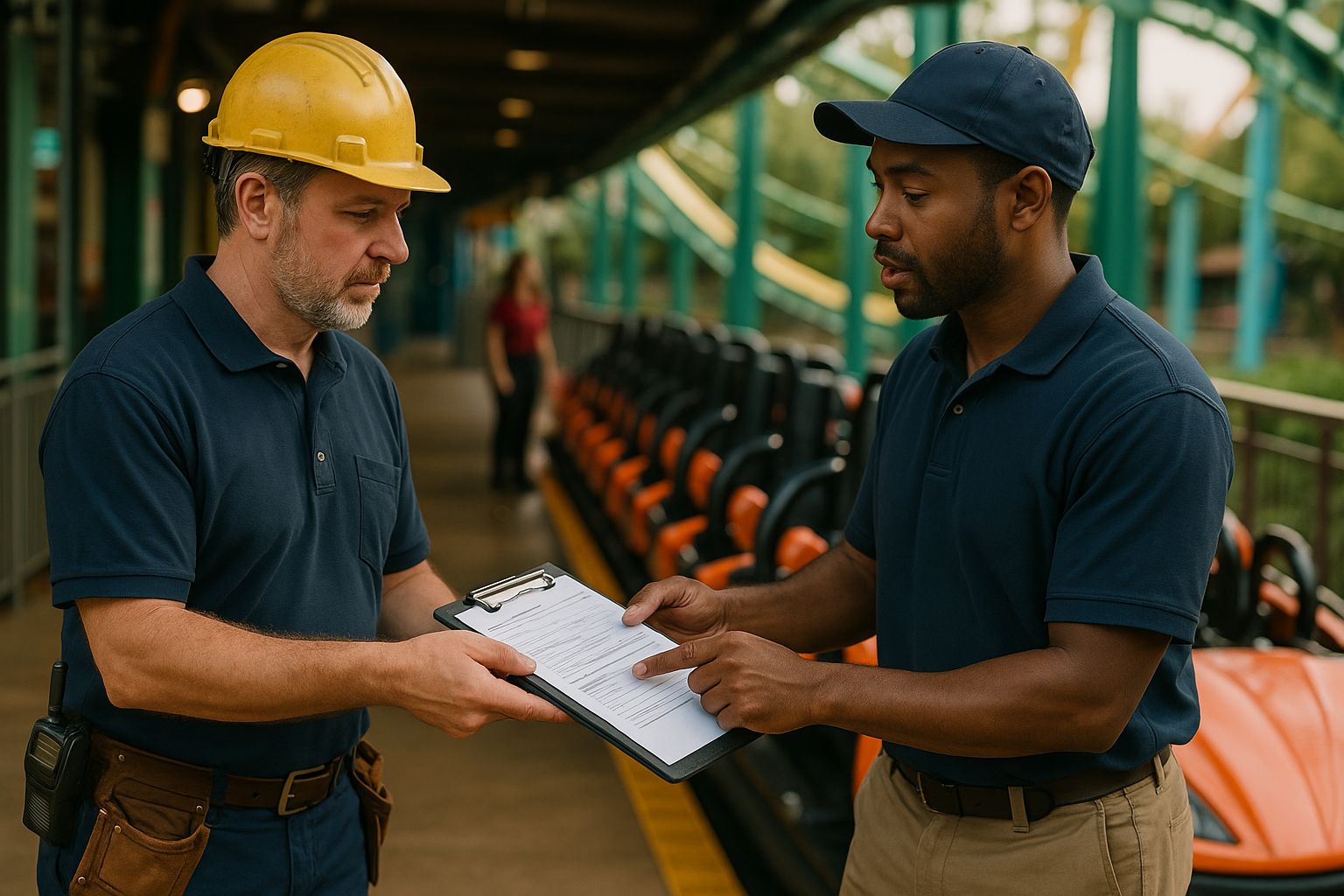
The Shift Handoff: Turning Maintenance Notes Into Better Park Operations
A maintenance shift rarely ends when the work order is closed or the tools are put away. In a theme park, the next technician, supervisor, or operations team may need to understand what happened, what remains unresolved, and what should be watched during the next operating period.
That is why a strong shift handoff matters. A vague note such as “checked ride, seems fine” may technically document an interaction, but it does not give the next person enough information to make a good decision. A useful handoff creates continuity between shifts and helps prevent small observations from becoming larger operational problems.
Although shift handoffs are especially important in maintenance and engineering, the same principle applies to attractions, food and beverage, entertainment, custodial, hospitality, and guest services teams. Every department benefits when important information moves clearly from one employee or shift to the next.
Why Shift Handoffs Matter in Theme Park Operations
Theme parks operate across long hours, multiple shifts, changing weather conditions, and constantly moving teams. The person who notices an issue at opening may not be working when the issue becomes more noticeable later in the day.
A good handoff helps the next team understand:
- What was observed
- What action was taken
- What still needs attention
- What conditions may affect the issue
- Who has already been notified
- What should be checked next
This information supports safer decisions, reduces duplicated work, and helps supervisors identify patterns. For example, a door that sticks occasionally may not appear serious during a single inspection. If three shifts report the same problem under different weather conditions, however, the repeated notes may reveal a developing facilities issue.
The Difference Between a Note and a Handoff
A note records an event. A handoff provides context.
Consider the difference between these two examples:
Basic note: “Queue gate adjusted.”
Useful handoff: “Queue gate near the final merge point was catching on the lower hinge during repeated guest flow. Hinge was adjusted and tested several times. It operated normally afterward, but the hinge should be inspected again during the next opening check because the issue appeared after extended use.”
The second version gives the next employee a starting point. It identifies the location, the condition, the action taken, and the reason for continued attention.
A strong handoff does not need to be long. It needs to be specific enough that another trained employee can understand the situation without guessing.
What Every Effective Handoff Should Include
1. The exact location or asset
Avoid descriptions that depend on memory. “Near the entrance” may mean different things to different employees. Use the attraction name, equipment identifier, room, station, kitchen area, stockroom section, or other approved location reference.
For operational teams, this might mean identifying the specific position, gate, vehicle, theater entrance, or queue section involved. Clear locations save time and reduce unnecessary searching.
2. What was observed
Describe the condition rather than making an unsupported judgment. Instead of writing “machine is bad,” explain what happened: “The beverage dispenser required two attempts before dispensing product,” or “The lighting fixture flickered when the area became damp.”
Observable details are more useful than conclusions because they allow the next employee to evaluate whether the condition has changed.
3. What action was taken
Explain whether the issue was inspected, adjusted, cleaned, reset, isolated, reported, or escalated. If a temporary measure was used, identify it clearly. A temporary correction should never be presented as a permanent repair.
This also prevents duplicated work. The next shift will know what has already been tried and can avoid repeating the same unsuccessful step without new information.
4. What remains unresolved
Many handoffs fail because they describe what happened but do not explain what still needs to happen. Make the next step clear.
- Monitor during the next operating period
- Inspect again after the equipment reaches normal operating conditions
- Follow up with a supervisor or department partner
- Order or install a replacement part
- Verify that a guest-facing area remains clear and functional
- Review the issue during the next scheduled inspection
If no additional action is required, say that as well. Clear closure is just as useful as an open task.
Handoffs Across Different Departments
Shift handoffs are not limited to maintenance logs. Every park department has information that can affect another team.
Attractions
An attractions team may need to communicate a recurring guest behavior, a change in queue conditions, a closure-related question, or an operational concern that requires maintenance follow-up. The handoff should focus on observable facts and the appropriate next contact rather than speculation.
Food and Beverage
A restaurant team may need to pass along information about equipment performance, delivery timing, stock levels, a spill-prone area, or a recurring point of confusion for guests. A useful handoff identifies what is available, what is delayed, and what the next shift should verify before the busiest period.
Entertainment
Entertainment teams often work with changing show schedules, performance spaces, costumes, props, technical equipment, and backstage areas. A handoff should identify changes that affect the next cast or crew, particularly when a temporary adjustment has been made.
Hospitality and Guest Services
Hotel, resort, and guest services employees may need to communicate unresolved guest requests, room or facility concerns, accessibility needs, or follow-up commitments. The next employee should understand what has already been promised and what still requires attention.
Common Shift Handoff Mistakes
Several habits make handoffs less effective:
- Using vague language: Words such as “fine,” “fixed,” or “weird” do not provide enough context.
- Leaving out timing: An issue that occurred once at opening may mean something different from one that appeared repeatedly during peak attendance.
- Failing to mention temporary solutions: The next shift may assume a permanent repair was completed.
- Assuming everyone knows the background: Information that seems obvious to one team may be new to another.
- Waiting until the last minute: Rushed handoffs often omit details or fail to reach the right person.
- Documenting without speaking up: A written record is valuable, but urgent or safety-related concerns should be communicated through the appropriate immediate channel.
Building the Skill of Professional Communication
Writing effective handoffs is a career skill. Employees who consistently communicate clearly become easier to trust with complex assignments because leaders can see that they understand both the immediate task and the broader operation.
To improve, practice answering three questions:
- What does the next person need to know?
- What could they misunderstand if I leave out a detail?
- What action should happen after they read or hear this information?
It is also helpful to separate facts from assumptions. State what you observed, explain what you did, and identify what still needs verification. This approach is professional, objective, and easier for another team member to act on.
Small Details Create Operational Continuity
Theme park operations depend on thousands of details being handled across different people and shifts. A clear handoff may seem like a small part of the day, but it connects the work already completed with the work that still needs to happen.
When employees document accurately, communicate before leaving, and identify unresolved items, they help protect safety, improve efficiency, and reduce frustration for the next team. They also demonstrate a level of operational awareness that can support future opportunities as a trainer, lead, supervisor, or department specialist.
Theme Park Connections gives professionals throughout the attractions industry a place to connect with other industry employees, expand their professional network, share experiences, learn about different departments, discover career opportunities, and build relationships across the field. Sometimes, the most valuable career connections begin with a simple conversation about how another team handles the work.