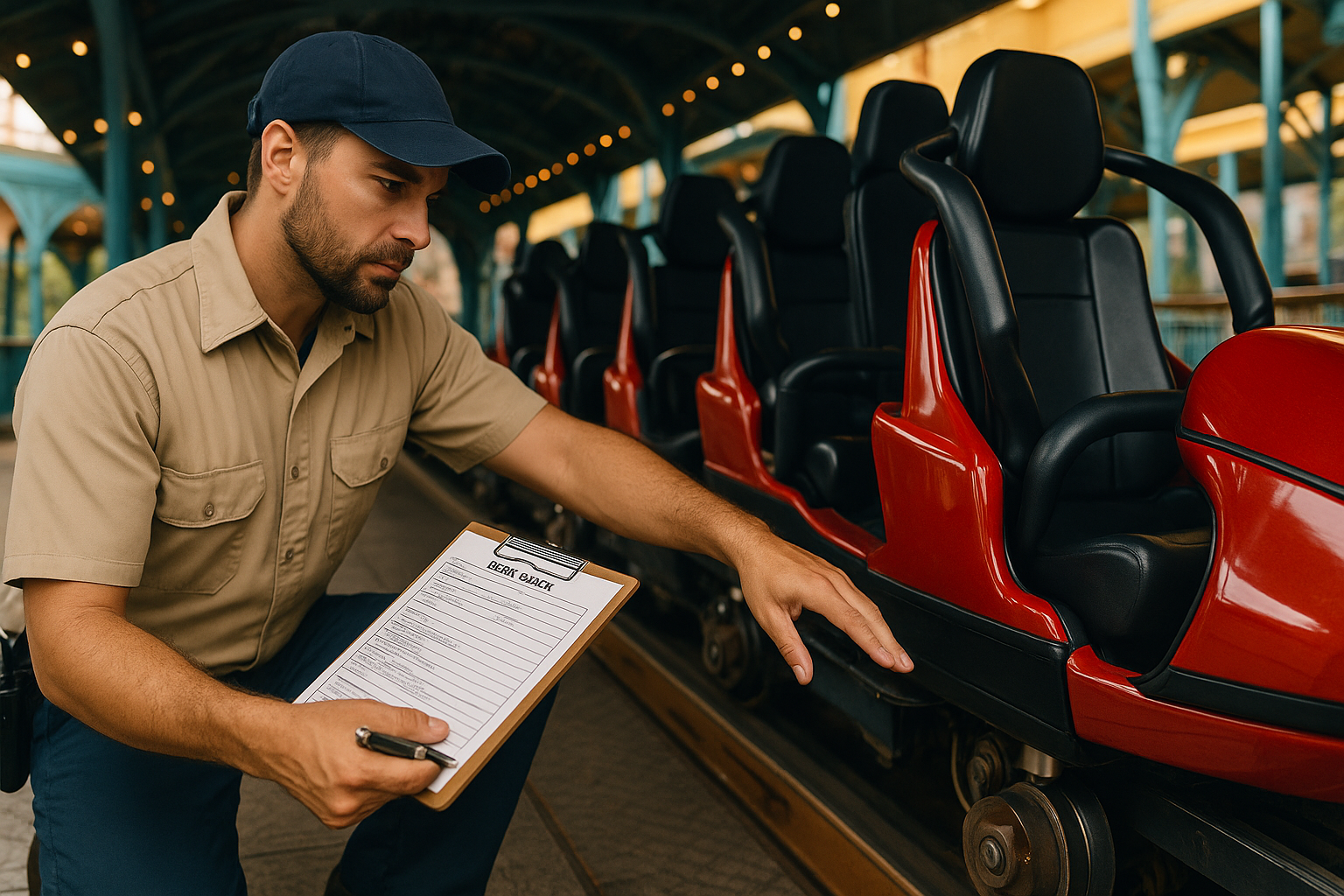
The Handoff Is Part of the Fix: Writing Better Maintenance Work Orders in Theme Parks
A maintenance issue rarely begins when a technician receives a work order. It usually begins earlier, when an operator, custodial team member, front desk associate, or supervisor notices something that does not seem right and reports it.
The quality of that first report can influence everything that follows: how quickly the issue is understood, which technician is assigned, what parts or tools are needed, and whether the problem is actually resolved instead of temporarily reset. In a theme park, where buildings, attractions, restaurants, resorts, and guest areas operate continuously, a clear maintenance handoff is more than good paperwork. It is part of the operation.
Why Maintenance Reports Matter
Employees outside of maintenance are often the first people to notice changing conditions. A restroom fixture may begin leaking. A door may stop closing smoothly. A lighting fixture may flicker. A piece of equipment may make an unfamiliar sound. A guest-facing team member may notice a recurring problem long before it becomes a visible failure.
That first observation can provide valuable information, but only if it is communicated clearly.
A vague report such as “the sink is broken” leaves several unanswered questions:
- Which sink is affected?
- Is it leaking, clogged, loose, or not dispensing water?
- Is the issue constant or intermittent?
- Is the problem creating a safety concern?
- Can the area remain open while the issue is addressed?
In a large park or resort, technicians may be responsible for multiple locations spread across a wide property. Precise information helps them spend less time searching and more time diagnosing.
What a Useful Work Order Should Include
Identify the exact location
Location is one of the most important details in any maintenance request. Use the most specific description available, including the building, area, room, guest-facing landmark, equipment number, or nearby reference point.
“Restroom near the entrance” may not be enough in a large venue. A stronger description might identify the specific restroom, the side of the building, and the affected fixture or stall. If equipment has an asset tag, room number, panel label, or other identifier, include it.
Clear location details are especially helpful during busy operating periods, when a technician may be responding to several requests at once.
Describe the symptom, not the diagnosis
Employees often try to be helpful by identifying what they think is wrong. However, reporting a symptom is usually more useful than guessing at the cause.
For example, write:
- “The door closes halfway and then stops.”
- “The light is flickering approximately every few seconds.”
- “The refrigeration unit is making a loud clicking sound.”
- “The attraction vehicle stopped short of the normal unload position.”
These descriptions give a technician observable information without assuming which component has failed. A guessed diagnosis can send the investigation in the wrong direction, while a detailed symptom helps maintenance staff begin with accurate conditions.
Include timing and frequency
Many problems are intermittent. A door may stick only after repeated use. A point-of-sale device may lose connection during a rush. A pump may sound normal in the morning but become noisy after extended operation.
Include information such as:
- When the issue was first noticed
- Whether it happens continuously or occasionally
- How often it has occurred
- Whether it appears during a particular operating condition
- Whether anything changed before the problem began
“The equipment failed once” provides limited context. “The unit has shut down three times during the afternoon, each time after several minutes of operation” gives the technician a pattern to investigate.
Separate Safety Concerns From Routine Repairs
Not every maintenance request has the same urgency. A cosmetic issue and a condition that could injure someone should not be communicated in the same way.
If a problem creates an immediate hazard, follow the appropriate reporting and escalation process for your workplace. Clearly explain what makes the issue unsafe. That might include a trip hazard, exposed wiring, leaking fluid, excessive heat, unstable equipment, a blocked exit, or a malfunction affecting guest or employee movement.
Do not assume that submitting a work order alone is enough for an urgent condition. Depending on the situation, the appropriate response may also include notifying a supervisor, controlling access to the area, placing an approved warning sign, or contacting the relevant operations or safety team.
The key is to communicate facts without exaggeration. Calling every repair an emergency can make it harder to identify truly urgent issues. Failing to identify a serious hazard can delay the response.
Photos and Examples Can Improve the Handoff
When workplace procedures allow it, a photo can help clarify a maintenance request. A picture may show the location of damage, the position of a component, a display message, or the condition of a fixture before the area changes.
Photos should never replace required verbal communication for urgent concerns, and employees should follow all rules regarding devices, guest privacy, restricted areas, and confidential information. When used appropriately, visual details can save time and reduce misunderstandings.
It can also help to describe what “normal” looks like compared with the current condition. For example, a team member might explain that a gate normally latches automatically but now requires manual pressure, or that a display usually remains illuminated but is now dark on one side.
Closing the Loop After the Repair
The maintenance process does not always end when a technician arrives. The employee who reported the issue may be able to provide useful follow-up information.
After a repair, consider whether:
- The original symptom is no longer present
- The equipment is operating normally under regular conditions
- The issue returns after repeated use
- Additional damage or related concerns are visible
- The area is ready to reopen according to local procedures
This does not mean employees should test equipment beyond their training or authorization. It means they should communicate relevant observations through the proper channel. A problem that appears fixed for five minutes but returns during normal operation may require additional investigation.
Common Reporting Mistakes to Avoid
Several habits can make maintenance work more difficult:
- Using broad locations: “Backstage” or “near the restaurant” may cover a large area.
- Leaving out changes: Renovations, deliveries, weather, cleaning, or equipment moves may provide useful context.
- Reporting only the result: “It does not work” does not explain what the equipment is doing.
- Assuming someone else reported it: If the condition is important, confirm that it has been communicated.
- Closing a request too quickly: A temporary reset may not resolve the underlying problem.
Strong reporting is a professional skill that improves with practice. It also demonstrates operational awareness. Employees who consistently provide accurate information become valuable partners to maintenance, engineering, facilities, and operations teams.
Better Work Orders Build Better Cross-Department Relationships
Maintenance teams depend on frontline employees for observations, while frontline teams depend on maintenance professionals to keep the environment safe, functional, and guest-ready. A clear handoff respects both sides of that relationship.
When employees report conditions with specific locations, observable symptoms, timing, and urgency, technicians can respond more effectively. When technicians share appropriate updates or ask focused questions, frontline teams gain a better understanding of the repair process.
That kind of communication can also help employees discover interests they may not have considered. Someone working in attractions may become interested in ride systems. A food and beverage employee may develop an interest in refrigeration or kitchen equipment. A resort team member may discover a passion for facilities operations.
ThemeParkConnections.com gives people working throughout the theme park and attractions industry a place to connect with other professionals, share experiences, learn about different departments, expand their networks, and discover career opportunities. Conversations about everyday operational work, including maintenance coordination and problem-solving, can lead to a better understanding of the many careers that keep attractions running.