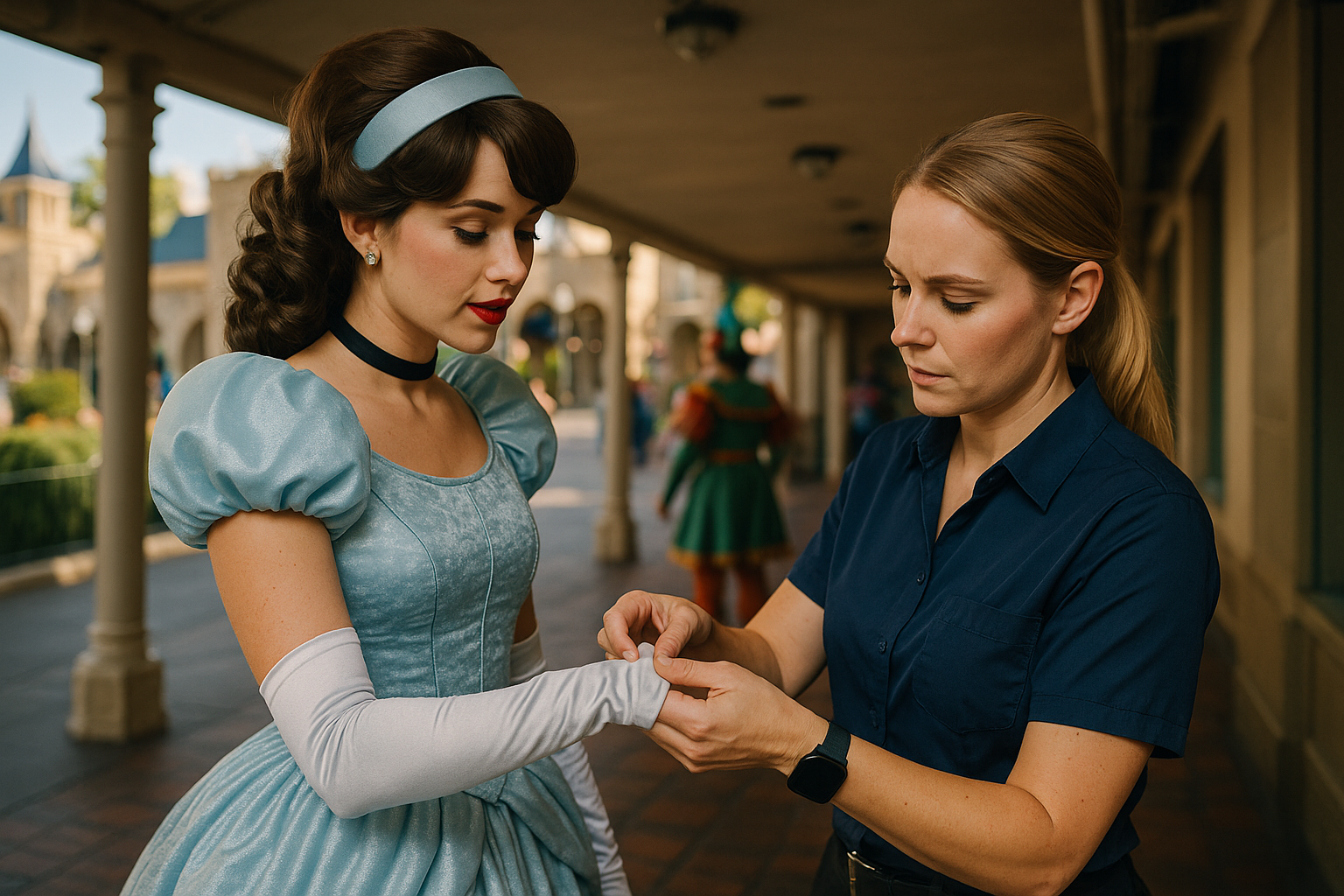
The Small Details That Protect a Character Performer’s Costume Continuity
In theme park entertainment, a character performer’s work does not begin when they step into the spotlight. Before a greeting, stage appearance, or scheduled set, performers and entertainment support teams must make sure the costume, accessories, makeup, and overall presentation are consistent with the character guests expect to see.
That consistency is known as costume continuity. It may sound like a visual detail, but it affects much more than appearance. A missing accessory can interrupt a performance. An incorrect costume piece can create confusion between sets. A poorly managed handoff can leave the next performer scrambling during a busy operating day.
For performers, wardrobe teams, entertainment coordinators, and leaders, learning to notice and communicate small costume issues is a valuable professional skill.
What Costume Continuity Means in Entertainment Operations
Costume continuity is the practice of keeping a character or performance look consistent from one appearance to the next. Depending on the role, that may include:
- The correct costume pieces and layers
- Required accessories, props, or footwear
- Hair and makeup consistency
- Proper placement of pins, buttons, belts, gloves, or other details
- Clean, presentable, and serviceable garments
- Accurate changes between different versions of a costume
Guests may not know the official name of a costume piece, but they notice when something feels different. A character wearing an incorrect accessory, a performer missing a recognizable detail, or a damaged garment can make an otherwise polished appearance feel unfinished.
Continuity also supports the performers themselves. When everyone knows what belongs with a costume and where each piece should be stored, dressing rooms run more smoothly and employees spend less time searching for missing items.
Why Small Costume Details Matter
They protect the character experience
Theme park entertainment depends on creating a believable world. Guests may meet the same character more than once during a visit, see that character in photos, or compare the experience with what they have seen in films, shows, or promotional materials.
Consistency helps preserve that connection. A recognizable silhouette, signature accessory, or specific color combination can be just as important to the character as the performer’s voice and body language.
They support performer confidence
Performers are more comfortable going into a set when they know their costume is complete and secure. A loose piece, uncomfortable shoe, broken closure, or missing prop can become a distraction during a guest interaction.
That does not mean every imperfection requires a full costume replacement. It does mean employees should know which concerns must be addressed before going onstage or into a greeting and which can be documented for later follow-up.
They help teams work safely
Costume issues can also create practical concerns. A damaged fastener, loose trim, poor visibility, ill-fitting piece, or unsecured accessory may affect movement or comfort. Employees should follow their location’s established reporting and escalation process rather than attempting an unapproved repair.
Safety and appearance often overlap. A costume that looks acceptable from a distance may still need attention if it restricts movement or creates a problem during a performance.
Common Continuity Problems During a Busy Day
Costume continuity becomes more difficult when the operation is moving quickly. Several situations appear regularly across entertainment environments.
- Multiple performers share one character costume. Each person may have slightly different preferences or fit needs, making accurate storage and communication essential.
- Costume pieces are moved between locations. A garment or accessory may be sent for cleaning, repair, or laundering and not return before the next scheduled set.
- Quick changes create pressure. Performers may have limited time to change between appearances, especially during parades, shows, or special events.
- Accessories become separated. Small pieces such as gloves, hats, jewelry, belts, or props are easier to misplace than larger costume items.
- Weather affects outdoor costumes. Heat, humidity, rain, wind, and long outdoor sets can change how a costume looks and feels throughout the day.
- Late adjustments are not communicated. One employee may fix or replace a piece without clearly updating the next performer or coordinator.
These problems are rarely caused by one careless person. They usually result from a fast-moving operation in which several departments and employees are handling the same materials.
A Practical Pre-Set Continuity Check
Before reporting to a performance or greeting location, performers can develop a short personal check that does not replace official wardrobe or entertainment procedures.
Start with the overall look
Stand in front of a mirror, use an approved reference image, or ask a teammate to confirm that the complete appearance looks correct. Check the major visual elements first: silhouette, colors, layers, headwear, and footwear.
Check the details guests are likely to notice
Look at signature pieces and high-visibility areas. These may include the front of a costume, sleeves, gloves, face area, belt, hat, or any prop used during the interaction.
Check function, not just appearance
Make sure closures are secure, movement is comfortable, and required items are accessible. If something feels wrong, report it before entering the performance environment.
Confirm the handoff
If a costume issue has already been reported, ask what the current plan is. Is a replacement piece coming? Should the performer use an alternate item? Does a leader need to approve the adjustment?
A clear question is usually more helpful than silently hoping someone else has noticed the problem.
How to Communicate a Costume Issue Professionally
Entertainment employees often work under time pressure, so communication should be brief, specific, and solution-focused.
Instead of saying, “The costume is messed up,” describe the issue:
- “The left glove is missing from the assigned bag.”
- “The front closure is not staying secured during movement.”
- “The accessory returned from cleaning, but the attachment piece is damaged.”
- “The replacement garment is a different shade from the matching piece.”
Then explain the timing and impact. For example: “The next set begins in 15 minutes, and the performer will need this piece before leaving the dressing area.” This gives the coordinator or wardrobe team useful information without assigning blame.
When documenting an issue, include what was observed, when it was noticed, and what action was taken. Avoid guessing about the cause unless you personally know what happened.
Building a Strong Continuity Habit
Employees who consistently notice costume details become valuable members of an entertainment team. They help prevent last-minute surprises and make it easier for leaders to identify recurring problems.
Useful habits include:
- Returning every item to its assigned location after use
- Keeping shared costume areas organized
- Reporting damage as soon as it is discovered
- Using approved reference materials instead of relying only on memory
- Communicating changes to the next performer or responsible team member
- Respecting costume pieces as operational equipment, not personal property
- Asking before making alterations or temporary repairs
These habits develop transferable skills in organization, observation, documentation, teamwork, and problem-solving. Those skills can support future opportunities in entertainment leadership, wardrobe, character operations, performance support, or event production.
Costume Continuity Is a Team Responsibility
A polished entertainment experience depends on more than the performer in front of the guest. Performers, wardrobe employees, coordinators, technicians, leaders, and support teams all contribute to keeping the operation consistent.
The best teams do not wait until a guest points out a missing detail. They create reliable habits that catch problems early, communicate changes clearly, and give employees enough information to do their jobs confidently.
For people building a career in theme park entertainment, learning to protect costume continuity is a practical way to demonstrate professionalism. It shows that you understand both sides of the role: the creative experience guests see and the operational discipline required to deliver it repeatedly.
Connect With Other Theme Park Entertainment Professionals
Costume continuity is only one part of the behind-the-scenes work that keeps entertainment operations running. Employees across performance, wardrobe, character operations, technical production, and event support face similar challenges in different forms.
ThemeParkConnections.com gives people working throughout the theme park and attractions industry a place to connect with other professionals, share experiences, learn about different departments, discover career opportunities, and expand their networks. For anyone interested in entertainment careers or the operational work behind guest-facing performances, those connections can provide useful perspective long after a single shift ends.