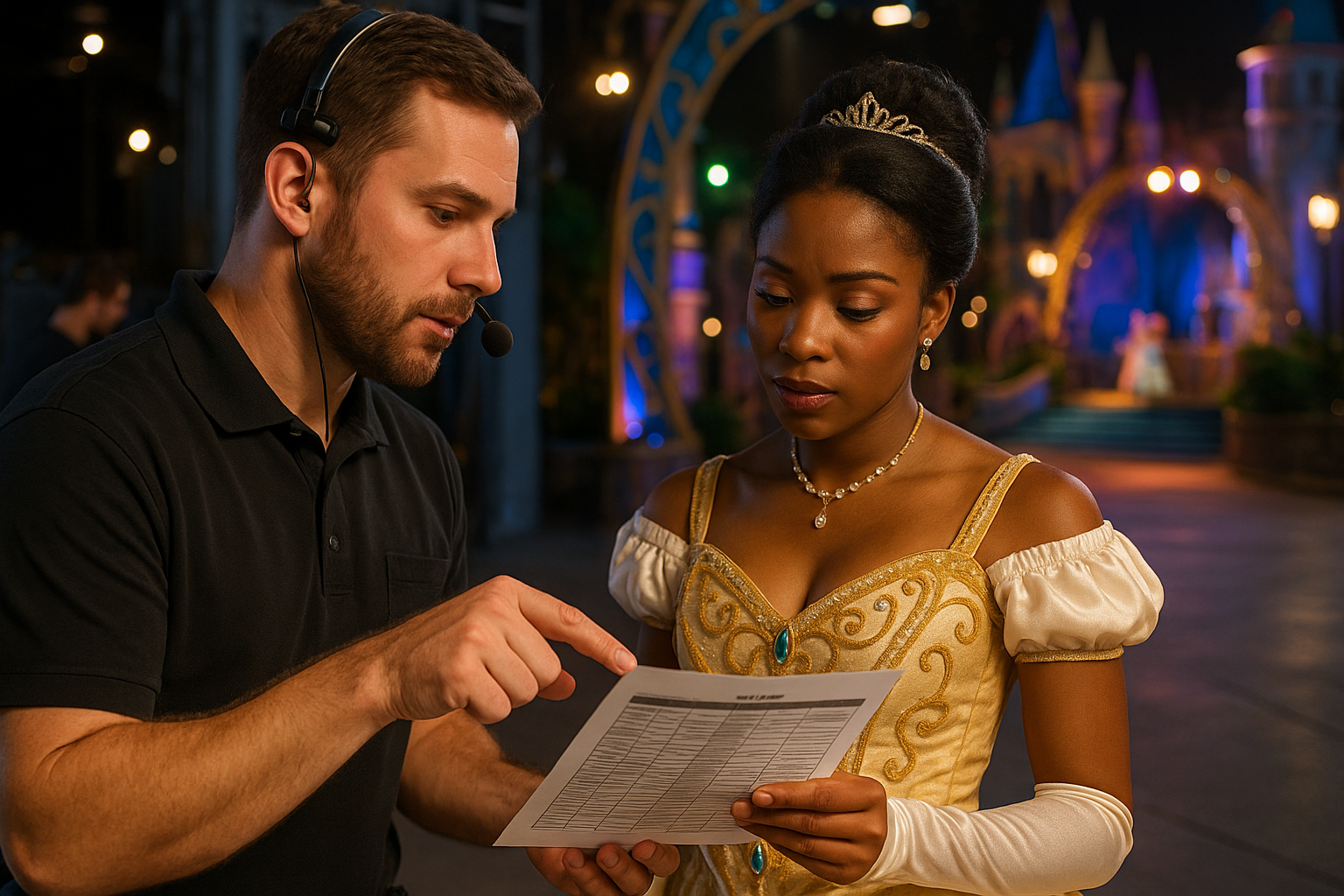
The Call Sheet Is Only the Beginning: What Theme Park Entertainment Employees Need to Know Before a Parade or Show
For guests, a parade or live show begins when the music starts, performers step into place, and the first float or scene enters view. For the entertainment team, the work begins much earlier.
Before a performance reaches the audience, cast members, technicians, wardrobe teams, production staff, supervisors, and operations partners have already coordinated timing, locations, costumes, equipment, weather concerns, guest movement, and last-minute changes. Much of that work happens away from the spotlight, but it directly shapes the quality and safety of the final experience.
For anyone working in theme park entertainment, learning to read and respond to a call sheet is one of the most useful professional skills you can develop. It helps you arrive prepared, understand your responsibilities, and contribute to a performance that feels effortless to the guest.
What a Theme Park Entertainment Call Sheet Really Does
A call sheet is more than a schedule. It is a shared operating document that gives the entertainment team a common understanding of the day’s plan.
Depending on the production and employer, it may include information such as:
- Cast and crew call times
- Rehearsal, warm-up, or makeup locations
- Performance times and route details
- Costume or prop requirements
- Technical rehearsals or sound checks
- Weather updates or alternate plans
- Special event notes
- Changes to staging, entrances, exits, or spacing
- Supervisor and department contact information
The exact format varies, but the purpose is consistent: to make sure everyone knows where to be, when to be there, and what has changed since the last performance.
Reading the document carefully can also reveal how your role connects to the larger production. A performer may need to know when wardrobe opens. A stage technician may need to confirm a prop handoff. A character attendant may need to understand an adjusted meet-and-greet location. Small details can affect several departments at once.
Read for Changes, Not Just Times
Many employees look first for their call time and performance time. Those details matter, but they are only the beginning.
Experienced entertainment employees also scan for differences from the previous performance. A change in route, costume, staging, or technical support may be more important than the regular schedule.
Look for these common change points
- Location changes: A rehearsal room, quick-change area, holding location, or audience entrance may be different.
- Timing adjustments: A performance may begin earlier, run later, or require additional spacing between scenes.
- Cast substitutions: A replacement performer may need extra information about spacing, cues, or partner interactions.
- Prop or costume updates: A missing accessory, altered costume piece, or substituted prop can affect movement and continuity.
- Technical notes: Audio, lighting, special effects, or backstage traffic may require changes to normal habits.
- Special event conditions: A holiday event, media opportunity, private gathering, or operating change may alter the usual routine.
If something is unclear, ask the appropriate supervisor or department contact before the performance begins. Guessing may feel faster in the moment, but it can create confusion once the team is in position.
Build a Personal Pre-Call Routine
A reliable pre-call routine helps reduce avoidable mistakes. It also gives you time to notice problems while there are still options for solving them.
Your routine might include:
- Reviewing the call sheet before arriving.
- Checking for updates or revised instructions.
- Confirming transportation and arrival time.
- Preparing required shoes, underlayers, makeup, props, or equipment.
- Allowing enough time for costume, warm-up, and department check-ins.
- Reviewing any material you have not performed recently.
- Arriving ready to work rather than arriving just in time to start.
Preparation is especially important for employees working multiple shows, split shifts, or long entertainment days. Fatigue can make familiar tasks feel less familiar. A checklist can help prevent forgotten items when the day includes several costume changes or locations.
Understand the Difference Between “Ready” and “Present”
Being physically present at a call does not necessarily mean you are ready for performance. Entertainment teams often have several readiness points before guests see the final product.
You may need to be:
- Checked in with your department
- In the correct costume or makeup look
- Warm and physically prepared
- Carrying the correct prop or equipment
- In the correct holding location
- Clear on the day’s changes
- Available for a final briefing or adjustment
Arriving at the building on time but still needing to find costume pieces, review changes, or complete a required preparation step can place pressure on everyone else. Professional reliability means planning backward from the moment you must be fully ready.
When the Plan Changes During the Day
Live entertainment rarely follows a perfect script from start to finish. A performer may become unavailable. A technical issue may affect a scene. A route may need to change. Weather or guest traffic may require an operational adjustment.
Your responsibility is not to solve every problem independently. Your responsibility is to receive information accurately, follow the current direction, and communicate questions through the correct channel.
Responding professionally to last-minute changes
- Pause long enough to understand what has changed.
- Repeat back critical details when appropriate.
- Ask who is responsible for communicating the change to other departments.
- Avoid spreading unconfirmed information to cast members or guests.
- Focus on the new plan rather than comparing it repeatedly with the old one.
- Let a supervisor know promptly if the change creates a safety, costume, accessibility, or performance concern.
A calm response is valuable during a rushed adjustment. Complaining about the change may be understandable, but it does not help the team execute the revised plan. The employees who can stay focused while conditions shift often become trusted resources for leads and production teams.
Respect the Work Outside the Audience View
Backstage areas are working environments, not shortcuts or social spaces. Entertainment employees may be moving quickly with costumes, props, equipment, or safety-sensitive materials. A hallway that appears empty may still be part of a timed transition.
Good backstage etiquette includes:
- Keeping walkways and access points clear
- Using designated entrances and exits
- Keeping voices controlled near performance areas
- Handling props and costume pieces carefully
- Following department boundaries and instructions
- Reporting damaged equipment or unsafe conditions promptly
- Respecting performers’ preparation time
These habits demonstrate awareness beyond your individual role. They also help build trust with departments that may not work directly with you every day.
Turn Production Habits Into Career Skills
Entertainment work develops skills that apply throughout the attractions industry. Reading a call sheet strengthens attention to detail. Meeting a precise call time demonstrates reliability. Adjusting to a cast change builds adaptability. Communicating through the correct channel develops operational judgment.
Those skills can support future opportunities in areas such as:
- Entertainment leadership
- Production coordination
- Stage management
- Training and onboarding
- Costume operations
- Technical theater
- Guest-facing entertainment supervision
- Special events and seasonal production
If you want to advance, pay attention not only to your performance but also to how the entire production works. Learn which departments support the show, what information they need, and how decisions move from planning to execution.
Build Your Industry Perspective Through Other Professionals
One of the best ways to understand theme park entertainment is to learn from people in different roles. A performer may see the show from the stage. A technician sees the timing from backstage. A wardrobe employee understands the preparation required before a cast member enters position. A production coordinator sees how all of those pieces fit together.
ThemeParkConnections.com gives people working throughout the theme park and attractions industry a place to connect with other professionals, expand their networks, share experiences, learn about different departments, and discover career opportunities. Conversations with people in entertainment, operations, hospitality, food and beverage, retail, maintenance, and leadership can reveal career paths you may not encounter in your everyday assignment.
The audience may only see the finished performance, but entertainment employees know that a strong show depends on preparation, communication, and respect for the work happening behind the scenes. Learning to read the call sheet, respond to changes, and support the full production can make you more reliable today—and better prepared for your next opportunity in the industry.