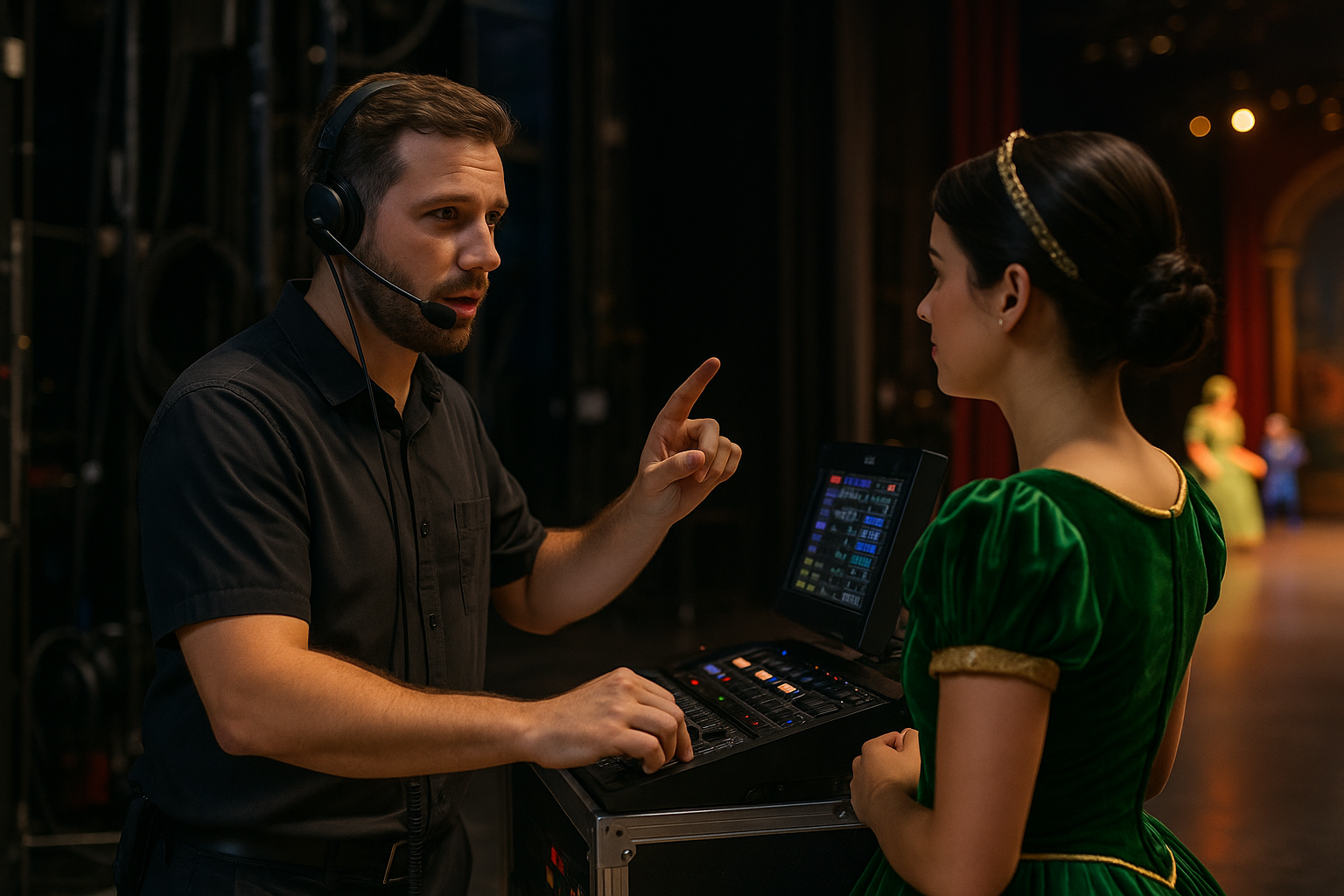
Backstage Calls Are a Team Sport: What Every Theme Park Performer Should Know
In live entertainment, the audience sees the performance, but they rarely see the dozens of backstage decisions that make it possible. A stage technician is tracking entrances, props, lighting cues, sound changes, costume needs, safety conditions, and timing—all while the show continues moving forward.
For performers, learning how to work effectively with the backstage team can make a major difference. It helps shows run more smoothly, reduces avoidable delays, and builds the kind of professional reputation that follows you from one production to the next.
Why Backstage Communication Matters
A theme park show may operate several times a day, often in changing conditions. Performers may be working around weather, guest traffic, parade schedules, technical limitations, and tight turnaround times between performances.
Backstage calls give the team a shared timeline. A call might confirm that a performer should be standing by, that a prop is in position, that a costume change area is clear, or that a technical cue is approaching. These calls are not casual reminders. They are part of the operating structure of the production.
When someone misses a call, the impact can travel quickly through the show. A delayed entrance may affect choreography. A missing prop may require a last-minute adjustment. A performer who is not ready for a costume change can create pressure for wardrobe and stage management.
Reliable communication protects the performance and the people supporting it.
Know the Difference Between a Cue and a Courtesy Call
Not every backstage message carries the same level of urgency. Understanding the difference helps performers respond appropriately.
Courtesy calls
A courtesy call gives the team advance notice. Examples might include a reminder that a performance is approaching, a notice that a green room will soon need to be quiet, or an update that a particular entrance is being prepared.
These calls may not require an immediate response, but they should still prompt action. If you hear that you are called to places in ten minutes, that is the time to finish your personal preparations—not the time to begin them.
Standby calls
A standby call means you should be ready to perform the assigned action when the cue is given. You may not move immediately, but you should be in position, focused, and prepared.
During a standby, avoid unnecessary conversation, phone use, or movement that could make it difficult to hear the next call. If you are unsure whether you are on standby, ask through the approved communication method rather than guessing.
Go calls
A go call signals that the action should happen. Depending on the production, that could mean entering the stage, beginning a scene change, moving a prop, starting a music track, or initiating a costume transition.
Responding to a go call requires confidence and consistency. If you cannot complete the action safely or correctly, communicate immediately. Silence can create more confusion than a brief, clear update.
Practical Habits That Make Backstage Work Easier
Arrive ready before the first call
Being physically present is not the same as being ready. Before the production team begins calling the show, take care of the basics:
- Check your costume, hair, makeup, and required accessories.
- Confirm that personal items are stored away from work areas.
- Review any changes to entrances, exits, blocking, or performance notes.
- Make sure you know where you need to be for each major transition.
- Ask questions before the show is in motion whenever possible.
Preparation reduces the number of decisions you need to make during a busy performance.
Use precise language
Backstage communication should be brief and specific. Instead of saying, “I’m having a problem with my costume,” explain what is happening: “The fastening on my left sleeve is loose, but I can perform the opening scene.” That gives the team useful information and helps them determine the appropriate response.
When reporting a location, use the terms established by your production. Saying “I’m by the back door” may be unclear in a large venue with several backstage access points. A designated entrance, wing, room, or holding area provides a more reliable reference.
Close the communication loop
If a stage manager or technician gives you an instruction, acknowledge it when appropriate. A simple confirmation can prevent uncertainty, especially when several people are receiving information at once.
If you were asked to move a prop, check a costume piece, or report to a location, let the appropriate person know when the task is complete. This does not mean filling the radio or headset channel with unnecessary updates. It means making sure important information does not disappear into silence.
What to Do When You Miss a Call
Missing a call happens. The professional response is to correct the situation quickly rather than hide it.
First, determine whether the missed call affects your immediate position. If you are already late for an entrance or transition, communicate your status using the approved channel. Keep the message concise and avoid lengthy explanations while the show is active.
After the performance, speak with the appropriate supervisor or stage management representative. Identify what caused the missed call and decide what adjustment will prevent it from happening again. The solution might involve changing where you wait, reviewing the call sequence, using a visual reminder, or addressing an equipment issue.
Repeatedly missing calls without taking corrective action can affect the entire team. One mistake is a learning opportunity. A pattern suggests that the process needs to change.
Respect the Technical Team’s Work Areas
Backstage spaces are often smaller and busier than they appear from the audience side. Cables, equipment, props, scenery, and access routes may all serve a specific purpose. Moving something without permission can create a safety concern or make it difficult for a technician to complete a transition.
Performers should also avoid blocking equipment panels, emergency access routes, entrances, or areas needed for a scene change. If you need to wait somewhere unusual, confirm that the location works for the backstage team.
Good backstage etiquette includes:
- Keeping walkways and work areas clear.
- Returning shared props and accessories to their assigned locations.
- Not touching technical equipment unless authorized.
- Keeping noise low near active performance spaces.
- Alerting the team when a condition has changed.
These habits show respect for the people whose work makes the performance possible.
Build Trust Through Consistency
Technical teams remember performers who are dependable. That does not mean never making a mistake. It means arriving prepared, communicating honestly, following established procedures, and responding professionally when plans change.
Trust also grows when performers understand the production beyond their own role. Learning basic information about lighting, sound, wardrobe, props, and stage operations can help you anticipate challenges and communicate more effectively. You do not need to become a technician, but understanding how your actions affect other departments makes you a stronger member of the company.
Those skills transfer well into lead performer, trainer, entertainment operations, and supervisory roles. People who can perform confidently while supporting the larger operation are often better prepared for increased responsibility.
Every Great Performance Includes Invisible Teamwork
A successful show depends on more than talent under the lights. It depends on accurate calls, clear responses, safe movement, organized backstage areas, and professionals who understand that their individual actions affect the entire production.
When performers treat backstage communication as part of the performance—not as an interruption to it—the result is a more reliable and respectful working environment. The audience may never hear a single call from the wings, but they will experience the confidence and polish that those calls help create.
For people building careers in theme parks and live entertainment, ThemeParkConnections.com offers a place to connect with other industry professionals, share experiences, learn about different departments, and discover career opportunities throughout the attractions industry. The relationships built across performance, technical, operations, and production teams can become an important part of long-term professional growth.