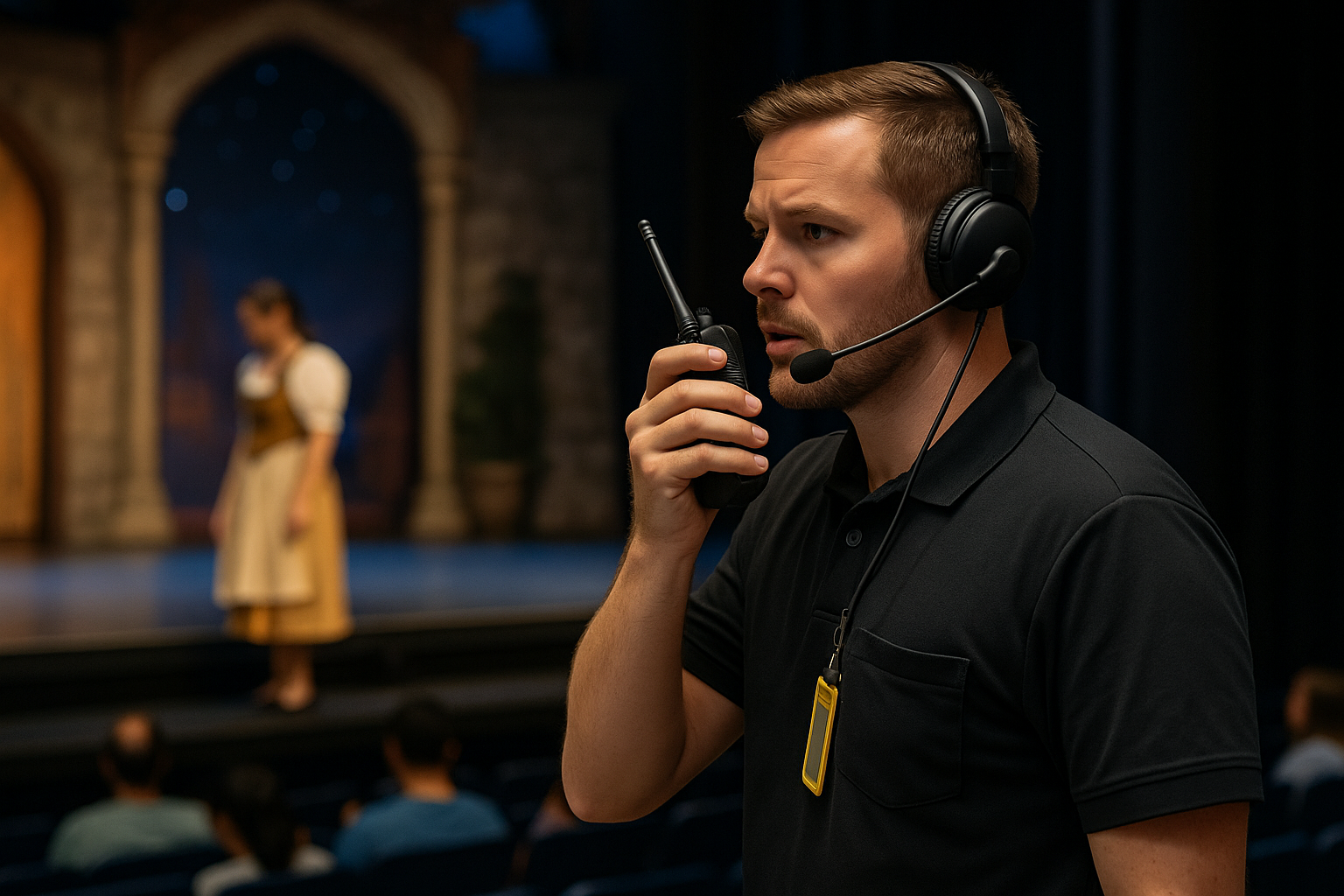
When a Show Stops: Communicating Through a Technical Interruption
A technical interruption during a theme park show can change the atmosphere in seconds. Music cuts out, a performer exits unexpectedly, a lighting cue fails, or a scenic element does not move as planned. Guests may not know what happened, but employees immediately feel the pressure to respond.
For performers, technicians, ushers, supervisors, and guest services teams, the quality of communication during that moment matters as much as the technical solution itself. Clear information helps protect safety, reduce confusion, and create a smoother recovery for both guests and employees.
Why Communication Matters During a Show Interruption
Technical problems are not always dramatic. A performance may pause because of a minor equipment issue, a weather concern, a performer needing assistance, or a precautionary decision by the show team. From the audience’s perspective, however, silence can quickly become uncertainty.
Employees need enough information to answer basic questions without guessing:
- Has the performance been paused or canceled?
- Are guests expected to remain in their seats?
- Is the venue being cleared?
- Will the show resume?
- Are there accessibility or crowd-flow concerns?
Sharing inaccurate information can create new problems. A well-meaning employee who promises that a show will restart in five minutes may unintentionally frustrate guests if the interruption lasts much longer. A team member who assumes a performer is safe may also communicate something that has not been confirmed.
The goal is not to provide every detail. The goal is to provide accurate, useful information at the right time.
The First Priority: Share Facts, Not Theories
During a technical interruption, employees may hear incomplete information from several sources. One person may know that a microphone failed. Another may know that a performer left the stage. A supervisor may be waiting for a decision from the technical team.
Until the situation is confirmed, avoid turning observations into explanations.
For example, saying, “The show is having a brief technical pause” may be appropriate if that information has been confirmed. Saying, “The sound system is broken and the performance will be canceled” is very different. It may be incorrect, and guests may repeat it to others as fact.
Useful communication is specific and limited
A strong update often includes three pieces of information:
- What is happening: The performance is temporarily paused.
- What guests should do: Please remain in your seats while the team evaluates the situation.
- What happens next: An update will be provided when more information is available.
This structure works because it addresses the guest’s immediate concerns without requiring employees to speculate about the cause or outcome.
Different Teams Need Different Information
Not every department needs the same level of detail. A stage technician, performer, usher, and guest services representative may all be supporting the same interruption, but their responsibilities are different.
Performers and backstage teams
Performers need clear direction about whether to hold, exit, reset, or remain in a designated location. Backstage employees may need to confirm that performers are accounted for and that no one is moving through an unsafe area.
In these situations, concise communication is especially valuable. Use established communication channels and avoid sending multiple conflicting updates through informal conversations.
Ushers and venue teams
Ushers are often the employees guests approach first. They may not know the technical cause of the interruption, but they can still help manage the guest experience by providing a calm, consistent message.
If the audience is waiting, ushers can:
- Direct guests to remain seated or follow venue instructions.
- Watch for guests who may need additional assistance.
- Report crowd concerns to a lead or supervisor.
- Discourage guests from entering restricted areas.
- Repeat only information that has been approved for guest communication.
Guest services and leadership teams
Guest services employees may need to handle questions about alternate showtimes, accessibility accommodations, refunds, or other recovery options. Leaders should make sure those teams receive updates before guests are directed to them.
A handoff such as “The show is canceled” is not enough if the guest services team does not know what options are available. Even when no final decision has been made, communicating that the situation is still under review can help prevent employees from giving conflicting answers.
Radio Communication During a Technical Problem
Radio traffic can become crowded quickly during an interruption. Multiple departments may try to report what they see, ask for updates, or request assistance at the same time.
Employees can help by keeping transmissions brief and organized. Identify the location, state the issue or observation, and explain what assistance is needed. Avoid broadcasting guesses, emotional reactions, or unnecessary play-by-play commentary.
For example, a useful message might communicate that a guest in a particular section needs assistance leaving the venue. A less useful transmission might simply announce that “everything has stopped” without identifying where help is needed.
Employees should also listen before transmitting. Someone may already be providing the update you were about to repeat. If the issue is urgent or safety-related, follow the applicable venue communication process rather than waiting for a quiet moment on the radio.
Managing Guests Without Overpromising
Guests generally understand that live entertainment can experience unexpected interruptions. What often creates frustration is uncertainty, inconsistent messaging, or feeling ignored.
A professional response can acknowledge the inconvenience without making promises:
- “The performance is currently paused while the team evaluates the situation.”
- “We do not have a confirmed restart time yet.”
- “We will share an update as soon as one is available.”
- “I understand that waiting is frustrating. Let me direct you to the team handling the next steps.”
Avoid blaming a specific department or employee. Guests do not need an internal argument about whether the issue belongs to audio, lighting, wardrobe, stage management, or another team. They need a clear next step.
Pay attention to guests who need additional support
A prolonged pause can be especially difficult for young children, guests with sensory sensitivities, visitors using mobility devices, or anyone who needs to leave quickly. Venue teams should remain alert to these needs and communicate concerns to the appropriate leader.
Small actions can make a difference, such as identifying an accessible exit, helping a guest reconnect with their party, or explaining where an update will be provided.
After the Interruption: The Debrief Is Part of the Work
Once the show resumes or the venue closes, the team should take time to review what happened. A debrief does not need to become a search for blame. Its purpose is to improve the next response.
Useful questions include:
- What information was confirmed first?
- Which teams received updates quickly?
- Where did conflicting messages appear?
- Did guests know what to do?
- Were accessibility needs addressed?
- What should be communicated differently next time?
Employees can also document recurring communication gaps. If ushers regularly do not know whether to hold guests or begin an orderly exit, that is an operational issue worth raising. If guest services consistently receives updates too late, the handoff process may need attention.
Technical Problems Reveal Professional Strengths
Employees are often evaluated not only by how they perform during normal operations, but also by how they respond when normal operations disappear. Staying calm, protecting confidential information, communicating accurately, and supporting other departments are valuable skills in every part of the attractions industry.
These skills can help employees become trusted trainers, leads, supervisors, production coordinators, or department managers. A person who communicates clearly during an interruption demonstrates judgment that extends well beyond the show environment.
ThemeParkConnections.com gives professionals throughout the theme park and attractions industry a place to connect with other industry employees, expand their networks, share experiences, and learn about departments they may not encounter in their daily roles. It can also help people discover career opportunities and build relationships across the broader attractions industry.
A show interruption may never be completely avoidable. Confusion does not have to be. With accurate updates, thoughtful guest communication, and strong teamwork between departments, employees can turn an unexpected pause into a well-managed part of the live entertainment experience.