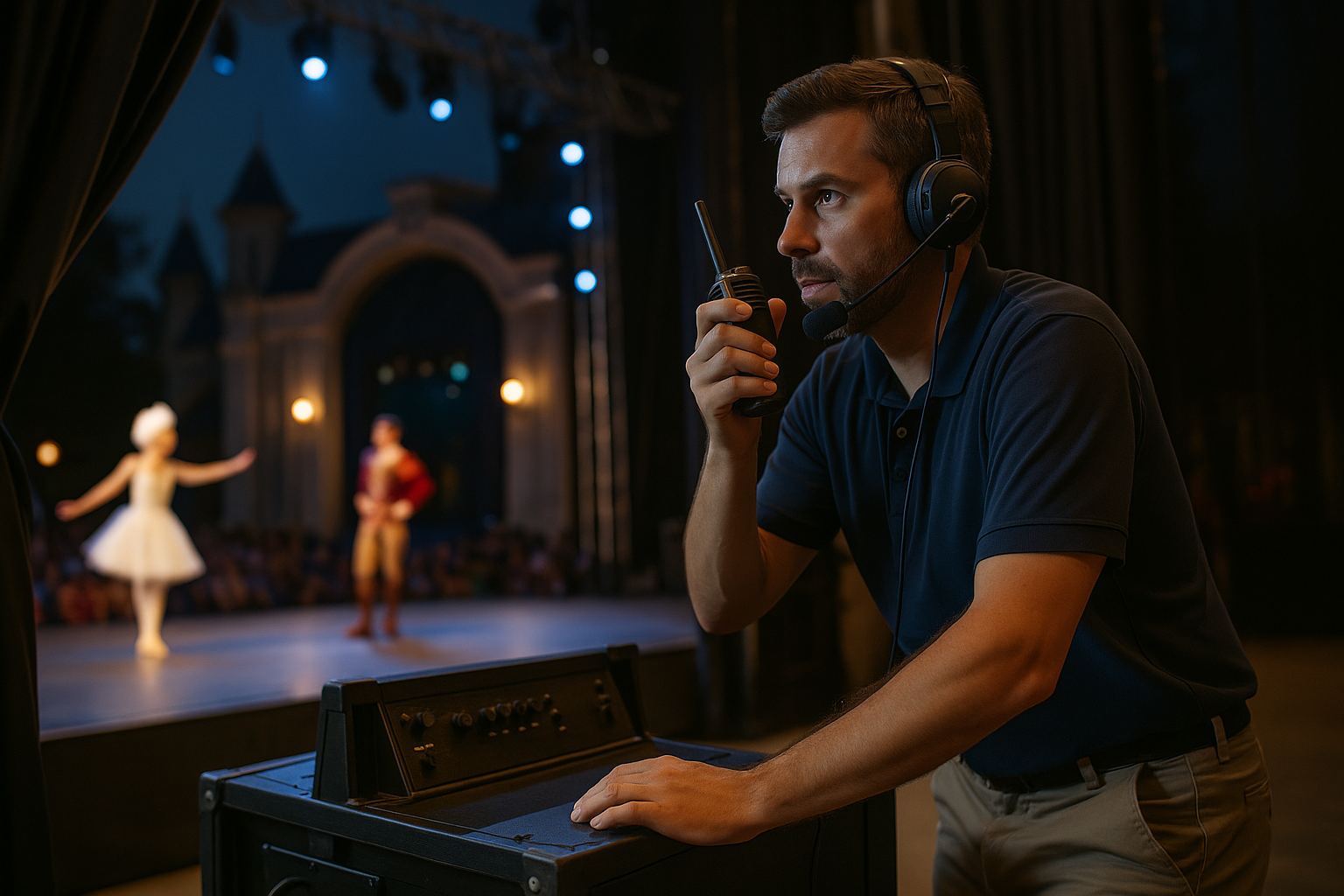
When the Show Changes: Communicating Through an Entertainment Disruption
A live entertainment operation can change in seconds. A performer may be unavailable, a prop may fail, weather may affect an outdoor stage, or a technical issue may make it impossible to continue as planned. In those moments, the audience sees only the final result. Behind the scenes, performers, technicians, leaders, wardrobe teams, custodial employees, and guest-facing colleagues may all be adjusting at once.
Handling a disruption well is not about pretending nothing happened. It is about communicating clearly, protecting the guest experience, and giving the team enough information to make safe, coordinated decisions. Employees who learn to stay calm and useful during unexpected changes become valuable in nearly every entertainment environment.
Why Communication Matters During a Live Entertainment Disruption
Entertainment teams often work with tight timing. A parade unit may have a scheduled movement window. A stage show may depend on lighting, audio, scenery, costume changes, and performer entrances. A character appearance may involve a carefully managed guest area and a team member monitoring the surrounding environment.
When one part of the operation changes, the effects can spread quickly. A delayed performer can affect an entrance. A technical problem can change the length of a scene. A weather concern can require an outdoor performance to pause while other departments manage guest movement nearby.
Clear communication helps the team answer three immediate questions:
- What has changed?
- What is happening right now?
- What does each person need to do next?
Without those answers, employees may make assumptions, duplicate efforts, or share incomplete information with guests and coworkers.
Use Facts Before Explanations
One of the most common communication mistakes during an unexpected event is filling a gap in information with speculation. Employees may hear that a show is delayed and immediately begin discussing possible causes. That can create confusion, especially when different versions of the story reach performers, technical staff, or guests.
Start with what you know. For example:
- The performance has not started at the scheduled time.
- A performer or technician is not currently available.
- A piece of equipment is being checked.
- The audience is waiting in the designated area.
- A supervisor or show caller is evaluating the next step.
There may be a legitimate reason behind the disruption, but not every employee needs the full internal explanation. Sharing only confirmed information keeps communication accurate and reduces unnecessary speculation.
Separate Internal Information From Guest-Facing Information
The message shared with a coworker may be different from the message shared with a guest. A technician may need to know that a specific cue is unavailable. A performer may need to know whether they are holding in a backstage position. A guest may simply need to know that the performance is delayed and that additional information will be provided when available.
Guest-facing communication should be:
- Accurate
- Brief
- Polite
- Appropriate for the employee’s role
Avoid promising a specific restart time unless that time has been confirmed. Saying that a show will resume “in five minutes” may sound helpful, but it can create greater frustration if the situation takes longer. A more reliable message is that the team is working through an interruption and that updates will be shared when confirmed.
Know Your Communication Responsibilities
During a live entertainment disruption, not everyone should be making the same decisions. A strong operation depends on employees understanding their communication role.
Performers
Performers should focus on receiving direction, maintaining awareness of their surroundings, and avoiding off-the-cuff explanations that have not been approved for the situation. If a performance pauses while performers are visible to guests, professionalism still matters. Staying composed can help prevent a minor disruption from becoming a larger guest concern.
Technicians
Technical employees may be managing several priorities at once, including equipment status, cue changes, safety concerns, and communication with show leadership. Their updates should be specific and actionable. Instead of saying that “something is wrong,” a useful update identifies what is affected and whether the issue is still being assessed.
Entertainment Leaders
Leads and supervisors often serve as the connection between the show team and other departments. They may coordinate updates, determine who needs to be notified, and help maintain consistency in guest messaging. Good leaders avoid creating extra radio traffic or sending multiple employees to solve the same problem.
Guest-Facing Employees
Employees near the audience may be responsible for acknowledging the delay, answering basic questions, helping maintain orderly guest flow, or directing guests to another location if instructed. They should not feel pressured to invent information simply because guests are asking for details.
Keep Radio and Backstage Communication Efficient
Disruptions can produce a flood of communication. Several people may begin talking at once, repeating the same update, or asking questions that could wait. This makes it harder for the person coordinating the response to hear important information.
Useful communication habits include:
- Listen before transmitting.
- Identify yourself and the intended recipient when appropriate.
- State the issue clearly without unnecessary background.
- Use plain language instead of emotional or dramatic descriptions.
- Repeat critical information back when confirmation is needed.
- Move detailed discussions to a more appropriate channel or location.
Backstage conversations require similar discipline. A crowded crossover area is not the place for a lengthy debate about what went wrong. Share the information needed to make the next decision, then allow the appropriate leader or technical specialist to handle the larger discussion.
Prepare Before Something Goes Wrong
The best time to improve disruption communication is before the disruption occurs. Teams can build confidence by discussing likely scenarios during training, rehearsals, or pre-show meetings.
Useful questions include:
- Who communicates with the audience if the performance is delayed?
- Who confirms whether the show can continue?
- Where should performers wait if an entrance or scene changes?
- How are replacement cues or revised instructions communicated?
- Which details should remain internal?
- How will the team know when normal operations resume?
The exact answers will vary by venue and production. The important point is that employees should not be discovering their communication responsibilities for the first time during a stressful interruption.
Turn the Experience Into Professional Growth
After the situation is resolved, take time to review what happened. A short debrief can reveal improvements that are difficult to see while the team is reacting in real time.
Consider discussing:
- Which information reached the right people quickly?
- Where did communication slow down?
- Did employees receive conflicting instructions?
- Were guests given clear and consistent updates?
- What could be prepared in advance for a similar situation?
This type of review should focus on learning rather than assigning blame. Entertainment employees who participate thoughtfully in debriefs develop skills in observation, problem-solving, teamwork, and operational communication. Those skills can support future opportunities as trainers, technicians, stage managers, leads, supervisors, or cross-department partners.
Building Connections Across the Attractions Industry
Entertainment disruptions rarely involve only one job title. They can bring performers, technicians, leaders, guest services teams, operations employees, and hospitality partners together around the same challenge. Learning how other departments communicate can make you more effective in your current role and help you understand potential career paths.
ThemeParkConnections.com gives people working throughout the theme park and attractions industry a place to connect with other professionals, share experiences, expand their networks, learn about different departments, discover career opportunities, and build relationships throughout the attractions industry. The next helpful conversation you have about live entertainment operations may introduce you to a skill, department, or opportunity you had not previously considered.