How to Start a Career in Theme Park Show Control and Entertainment Technology
When people picture theme park careers, they often think of performers, ride operators, chefs, or guest service team members. Behind every parade, nighttime spectacular, projection show, and audio-animatronic performance is another group of professionals: show control and entertainment technology specialists.
These behind-the-scenes roles combine technology, live entertainment, problem-solving, and safety awareness. If you enjoy understanding how complex systems work but also want to contribute to memorable guest experiences, a career in theme park show control may be worth exploring.
What Does a Theme Park Show Control Professional Do?
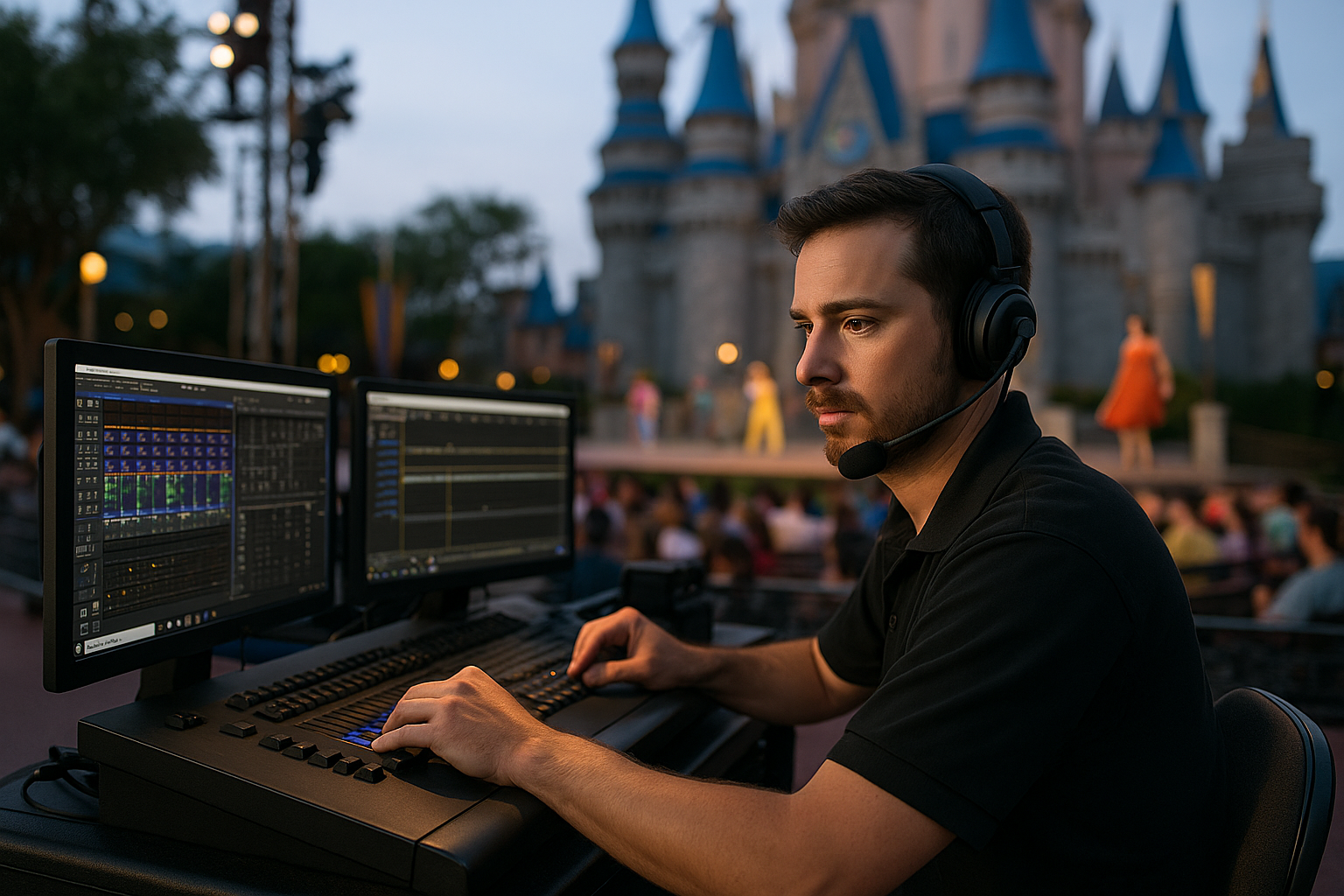
Show control is the technology that coordinates different elements of a live attraction or entertainment presentation. Depending on the production, those elements may include lighting, sound, video, special effects, scenery, fountains, animatronics, pyrotechnics, and automated sequences.
Job titles vary by employer and production, but related roles may include show control technician, entertainment systems technician, automation technician, audio technician, lighting technician, multimedia technician, controls engineer, or technical production specialist.
A typical workday might involve testing equipment before a performance, monitoring a show during operation, troubleshooting an unexpected fault, documenting maintenance, supporting rehearsals, or helping install and commission new entertainment systems.
Why This Is an Appealing Theme Park Career
Show control professionals work where engineering and storytelling meet. Their work may not always be visible to guests, but it directly affects the timing, reliability, and emotional impact of an experience.
The role can also provide exposure to multiple departments. A technician may collaborate with performers, stage managers, electricians, sound designers, software specialists, maintenance teams, safety personnel, and project managers. That variety can create opportunities to develop both technical expertise and a broader understanding of attractions operations.
Because theme park entertainment operates on schedules and must deliver consistent experiences, professionals in this field learn to stay calm, communicate clearly, and diagnose problems methodically.
Skills That Help You Get Started
Technical troubleshooting
You do not need to know every system before applying for an entry-level technical role. However, you should be comfortable learning how equipment works and breaking complex problems into smaller steps.
Experience with computers, electronics, electrical systems, networking, audio, lighting, mechanical equipment, or industrial controls can be useful. School projects, theater work, maker projects, and personal experiments can also demonstrate curiosity and practical ability.
Live production awareness
Entertainment technology is different from ordinary office technology because the system often needs to perform at a specific moment in front of an audience. Understanding cues, rehearsals, show calls, timing, and production communication can make you more effective.
Consider volunteering with a theater, concert venue, school production, community event, or local attraction. Even basic experience running cables, assisting with sound, operating lighting equipment, or supporting backstage operations can help you understand the environment.
Documentation and communication
Technical professionals must record problems accurately, explain issues to coworkers, and follow established procedures. Practice writing clear maintenance notes that identify what happened, what was tested, and what action was taken.
Strong communication also matters when working with people who have different technical backgrounds. You may need to explain a system issue to a performer, supervisor, stage manager, or guest-facing operations leader without relying on jargon.
How to Build Relevant Experience Before Applying
If you are searching for theme park jobs but have no direct attractions experience, look for adjacent opportunities. Community theaters, museums, event production companies, hotels, cruise ships, sports venues, and concert facilities can expose you to live entertainment systems and operational expectations.
- Assist with lighting, sound, projection, or backstage production.
- Learn basic networking, signal flow, electronics, or programmable controls.
- Build small projects that demonstrate automation or technical problem-solving.
- Study equipment manuals and practice creating organized troubleshooting notes.
- Attend public performances and observe how technical elements support the guest experience.
Keep a simple portfolio of projects and experiences. It does not need to be elaborate. Include photos, diagrams, short explanations, or documentation showing what you built, repaired, programmed, or supported. Focus on your process and lessons learned rather than claiming expertise you do not yet have.
How to Network With Entertainment Technology Professionals
Networking can be especially valuable for technical attractions careers because many roles are specialized and may not be obvious to people outside the industry. Start by learning the names of departments and job titles connected to show control, technical production, automation, and entertainment systems.
When connecting with professionals, ask informed questions instead of immediately requesting a referral. For example, you might ask which skills helped them move from live events into theme parks, what types of projects prepared them for technical production, or what they wish they had learned earlier.
Bring specific examples of your interests to the conversation. Saying that you enjoy “technology” is broad. Explaining that you built a small lighting sequence, assisted with theater audio, or studied control-system documentation gives people something concrete to discuss.
What to Look for in Theme Park Job Descriptions
Search beyond the phrase “show control.” Employers may use different terminology for similar work. Explore listings related to entertainment technical services, technical production, automation, audiovisual systems, special effects, electrical maintenance, controls, or attractions technology.
Read the responsibilities carefully. Some positions focus primarily on scheduled maintenance, while others emphasize live show support, installation, programming, or equipment operation. Identify the duties that match your current skills and the requirements you can realistically learn.
Large operators such as Disney, Universal, SeaWorld, and Six Flags may have different department structures and job titles, so avoid limiting your search to one exact phrase. Regional attractions, theaters, museums, and entertainment contractors can also provide valuable experience.
Keep Developing After You’re Hired
Show control careers can lead in several directions. With experience, you may become a lead technician, systems specialist, production supervisor, project coordinator, controls engineer, or technical manager. Some professionals move toward design, installation, commissioning, training, or entertainment project management.
Continue learning how neighboring departments work. A technician who understands stage operations, safety practices, maintenance planning, and guest impact can contribute more effectively than someone who knows only one piece of equipment.
ThemeParkConnections.com can help you meet professionals across attractions, entertainment, technology, and operations. Join the community at ThemeParkConnections.com to expand your network, share your experience, explore lesser-known theme park careers, and build relationships that support your next career step.