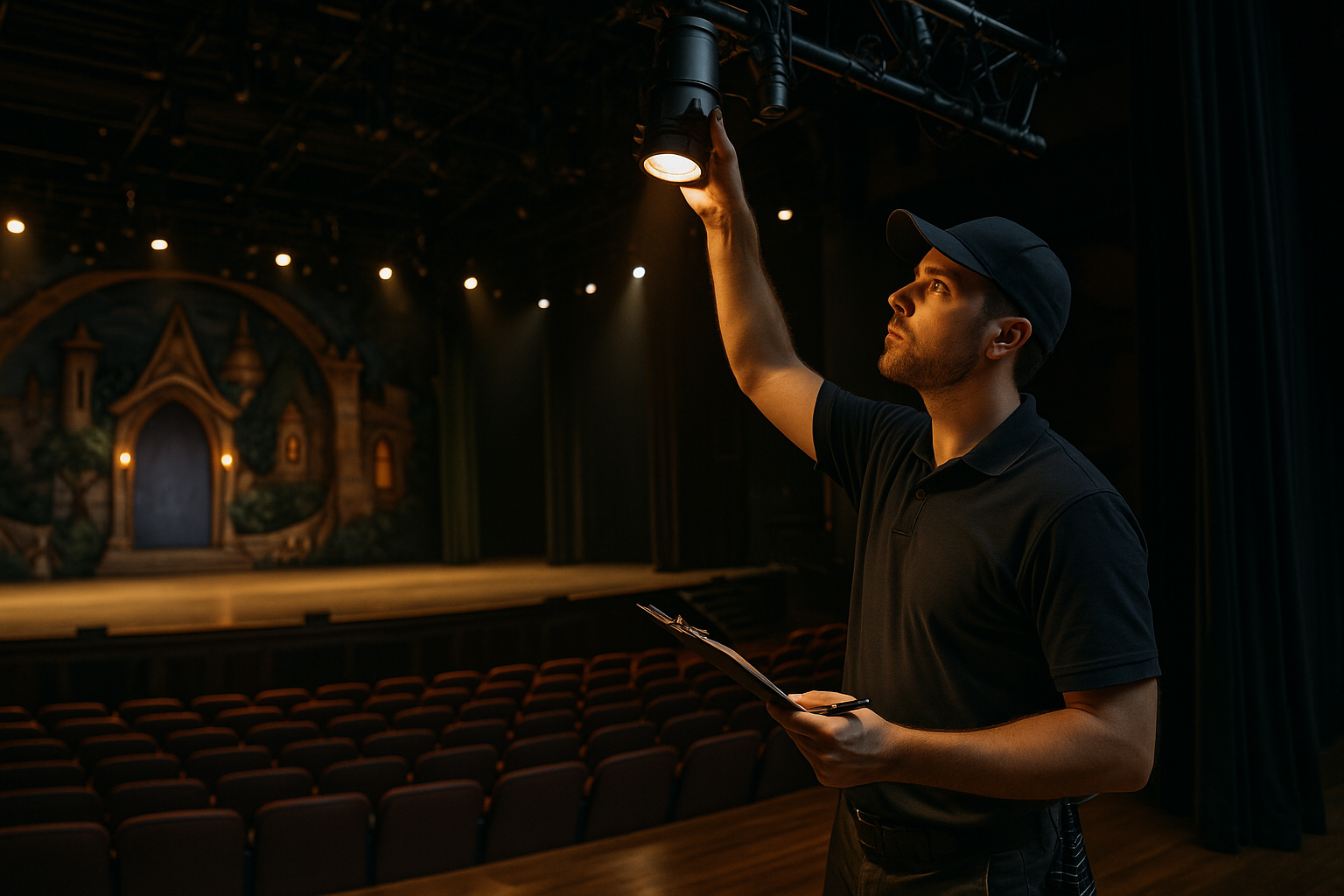
Before the Audience Arrives: What Stage Technicians Look For During a Pre-Show Check
A live entertainment show may last only a few minutes, but the work that makes it possible begins long before the audience takes its seats. Before performers enter, music starts, or scenic elements move into place, stage technicians are checking the space, equipment, communication systems, and backstage conditions that support the performance.
A thorough pre-show check is not about making everything look perfect. It is about identifying problems early enough to address them safely and efficiently. In a theme park environment, that preparation can make the difference between a smooth performance, a delayed start, or an interruption that affects guests, performers, and multiple departments.
While every venue has its own procedures and approval requirements, the habits behind a good pre-show inspection are widely applicable across live entertainment, parades, character venues, seasonal events, and stage productions.
Start With the Space, Not Just the Equipment
Technicians often begin by looking at the performance area as a whole. The goal is to understand whether the space is ready to support the planned show.
Depending on the venue, that may include checking:
- Performance surfaces for debris, moisture, damage, or unexpected obstructions
- Audience pathways and backstage access points
- Scenery, props, furniture, and decorative elements that must be in specific positions
- Emergency exits and access routes
- Equipment or cases that may have been left in areas used by performers or crew
- Changes caused by weather, construction, maintenance, or another event
A small issue can become much more serious once a show is underway. A loose item may become a trip hazard. A misplaced scenic piece may affect a performer’s entrance. A wet surface may require a conversation with operations or leadership before anyone begins rehearsing or performing.
Technicians should avoid treating the space as though it is always the same. A venue can change significantly between performances, especially in a busy park where other teams may use nearby areas throughout the day.
Verify the Show’s Critical Elements
Once the space is reviewed, technicians typically confirm that the elements required for the performance are present and ready. This does not mean testing every piece of equipment in the same way every time. It means focusing attention on the items that could affect safety, timing, communication, or the guest experience.
Examples may include:
- Audio playback and microphones
- Lighting states or control systems
- Show cues and playback files
- Stage monitors or communication equipment
- Moving scenery or automated elements
- Props and handoff items
- Power connections and visible cable paths
- Costume-related equipment or performer support items
A pre-show check should follow the venue’s approved procedures. Employees should never improvise a technical test that could create a safety risk or bypass required authorization. If a system does not respond as expected, the correct action may be to stop, document the issue, contact the appropriate technician or supervisor, and follow the established escalation process.
Look for Changes, Not Just Failures
Experienced technicians do more than ask, “Does it work?” They also ask, “Is anything different from normal?”
A speaker may still produce sound but be positioned differently. A cable may still be connected but routed through a new area. A scenic piece may appear intact but sit slightly out of alignment. A control screen may display a warning that has not yet caused a visible problem.
These details matter because unusual conditions often provide an early warning. Not every difference requires the show to stop, but every unexplained difference deserves attention from the person responsible for evaluating it.
Confirm Communication Before the Show Begins
Live entertainment depends on more than technical equipment. It also depends on people knowing what is happening and who is responsible for each decision.
Before a performance, the crew may need to confirm:
- Who is leading the technical operation
- Which performers, stage managers, or supervisors are present
- Whether any show elements have changed
- How weather or nearby operations may affect the performance
- Whether a performer, technician, or key piece of equipment is unavailable
- Who should be contacted if a problem develops
Clear communication is especially valuable when a show includes multiple entrances, complex cues, moving scenery, special effects, or coordination with park operations. A short pre-show conversation can prevent several people from making different assumptions about the same situation.
Good radio and backstage communication should be concise, specific, and appropriate for the environment. A technician who notices a concern should describe what was observed rather than guessing at the cause. For example, “The stage-left scenic panel is not returning fully to its marked position” gives a team more useful information than “The scenery is acting strange.”
Pay Attention to Performer Needs
Technicians are not responsible for every performer concern, but they are often among the first people to notice conditions that may affect the cast. A blocked entrance, missing prop, poor microphone connection, or unexpected change in stage configuration can create unnecessary stress just before a show.
Strong entertainment teams build a habit of checking whether performers have what they need to begin safely and on time. That may involve confirming that:
- Required props are in their expected locations
- Entrances and exits are clear
- Microphones or communication devices are properly assigned
- Quick-change or backstage areas remain accessible
- Any approved show adjustments have been communicated
- Performers know about changes that affect timing or spacing
This does not mean interrupting performers with unnecessary information. It means sharing relevant details early and avoiding surprises during the performance whenever possible.
When Something Is Not Ready
The most important part of a pre-show check may be what happens after a problem is found. Technicians can feel pressure to fix an issue quickly, particularly when guests are already gathering. However, rushing can create additional risk or make the original problem harder to understand.
A practical response usually includes four steps:
- Pause and assess. Determine what is wrong and whether anyone is at immediate risk.
- Communicate clearly. Notify the appropriate supervisor, stage manager, operations partner, or technical lead.
- Protect the performance area. Keep performers, crew, and guests away from an unsafe or restricted location.
- Follow the approved decision process. The show may proceed with an authorized adjustment, be delayed, or require further technical support.
Employees should not conceal a problem simply because the audience is waiting. A delayed show is visible to guests, but an unsafe condition can have much more serious consequences for the people working in the venue.
Use the Pre-Show Check to Build Technical Judgment
Pre-show inspections are an excellent way for newer entertainment employees to develop professional judgment. The most valuable skill is not memorizing a long list of equipment names. It is learning to recognize what is normal, identify meaningful changes, and communicate concerns before they become urgent.
To improve, pay attention to:
- Which issues appear repeatedly
- What conditions cause a show element to change
- How experienced technicians prioritize competing concerns
- Which details must be escalated immediately
- How technical decisions affect performers, operations, and guests
Keeping accurate notes, asking focused questions, and reviewing approved checklists can help turn routine inspections into stronger operational knowledge. Those habits can support future opportunities in stage management, entertainment leadership, production coordination, technical direction, and venue operations.
A Strong Show Begins Before the First Cue
Guests may remember the music, performers, costumes, or special effects, but a successful performance often depends on work they never notice. A clear stage, working equipment, reliable communication, and a prepared crew allow the audience to experience the show without seeing the coordination behind it.
For stage technicians, the pre-show check is more than a routine task. It is an opportunity to protect safety, support performers, identify problems early, and give the entire entertainment team a dependable starting point.
ThemeParkConnections.com gives people working throughout the theme park and attractions industry a place to connect with other professionals, expand their networks, share experiences, and learn about departments beyond their current role. For entertainment employees, those connections can lead to new perspectives on production, technical work, backstage operations, and career opportunities across the industry.