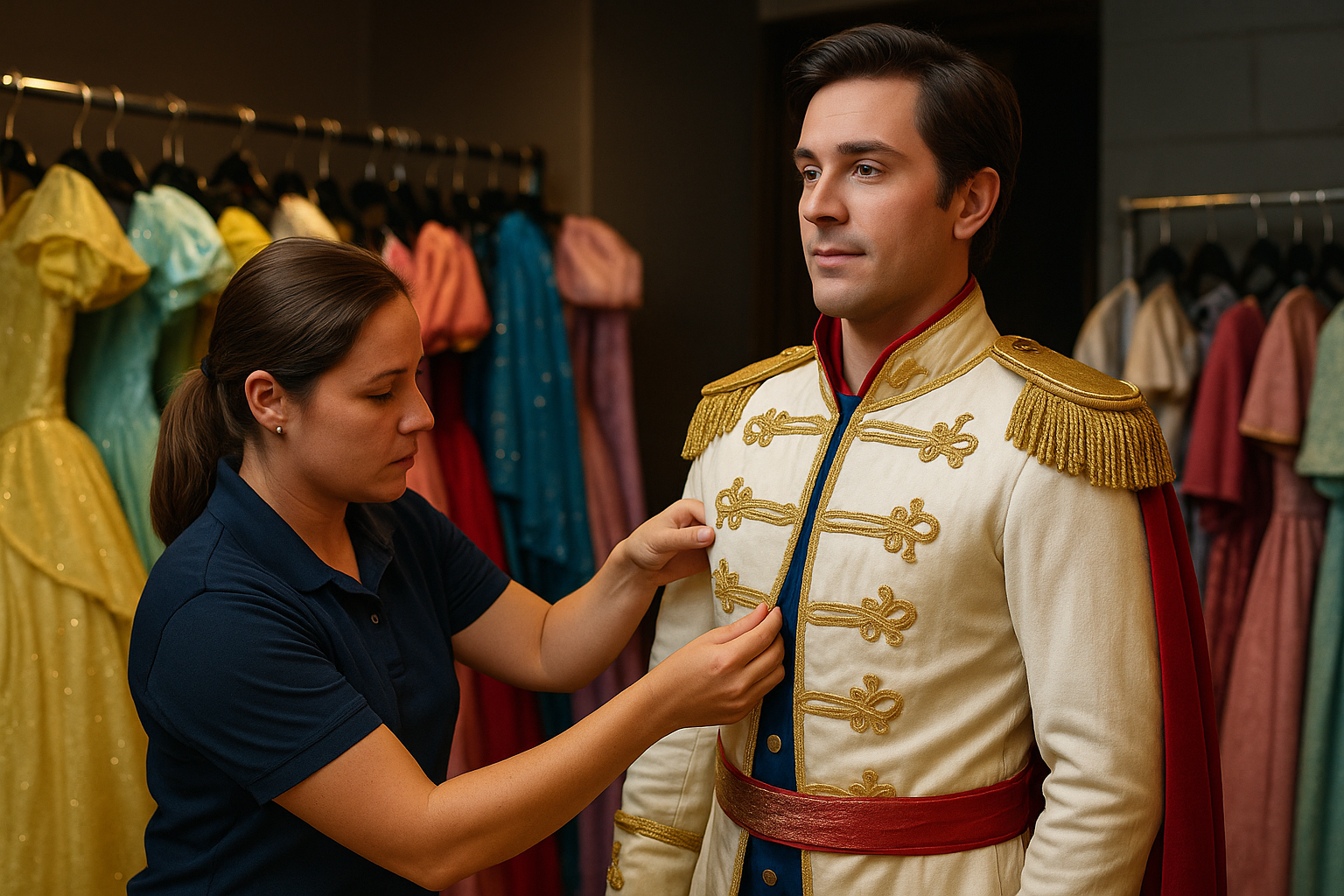
The Backstage Reset: Keeping Costumes Show-Ready Between Performances
For guests, entertainment can feel effortless. A performer appears on time, looks polished, delivers the moment, and disappears backstage before the next audience arrives. Behind that smooth experience is a reset routine that may involve costume checks, quick repairs, wardrobe changes, cleaning, hydration, and communication between performers, wardrobe teams, stage management, and operations.
That reset is more than a personal habit. It protects the show, supports performer safety, and helps the next performance begin with confidence. Whether you work in character entertainment, parade operations, live shows, or wardrobe, learning to reset efficiently is a valuable professional skill.
What a Backstage Reset Really Involves
A reset begins as soon as a performer leaves the guest-facing environment. The goal is to return the performer, costume, and performance area to a ready state without rushing through details that matter.
Depending on the role, a reset may include:
- Checking the costume for damage, stains, loose fasteners, or missing pieces
- Returning props and accessories to their designated locations
- Separating items that need cleaning, airing out, or repair
- Replacing consumable items or approved costume components
- Removing sweat or moisture from pieces that will be worn again
- Communicating costume or performance concerns to the appropriate team
- Preparing for the next entrance, meet-and-greet, rehearsal, or show call
Not every issue requires stopping the entire operation. A minor concern may be logged for later attention, while a damaged closure, uncomfortable shoe, restricted visibility, or missing safety-related item may require immediate escalation. Knowing the difference is part of becoming dependable in entertainment operations.
Start With a Consistent Order of Operations
When reset time is short, employees sometimes handle whatever problem they notice first. That can lead to forgotten accessories, misplaced props, or a costume issue discovered only moments before the next performance.
A consistent sequence reduces those mistakes. Your exact routine will depend on the department, but a practical reset often follows this order:
1. Exit the guest-facing environment safely
Once the performance or appearance ends, move through the approved backstage route and avoid unnecessary stops. A performer who pauses in a corridor, doorway, or shared work area can create congestion for the next person moving through the space.
Backstage etiquette matters. Keep voices controlled, follow traffic patterns, and remember that another performer, technician, or wardrobe employee may be working under the same time pressure.
2. Secure props and accessories first
Small items are easy to overlook. A glove, hat, badge, pouch, or handheld prop can be left in a dressing area or placed on the wrong rack. Returning these items immediately helps prevent last-minute searches and protects the next performer who may need the same inventory.
If something is missing, do not assume someone else will find it. Notify the appropriate team and give a clear description of what is missing, where it was last used, and when it is needed again.
3. Inspect the costume while details are fresh
Costume issues are easiest to report immediately after use. Look for changes that may not have been visible before the performance: a seam beginning to open, a fastener loosening, makeup transfer, damp fabric, damaged trim, or a shoe becoming uncomfortable.
Specific reporting is more useful than saying, “The costume is having problems.” A stronger note might identify the exact garment, location, and symptom: “The left sleeve closure is separating near the cuff after movement.” That gives the wardrobe team a starting point instead of requiring another inspection from scratch.
Do Not Hide Small Problems
Entertainment employees are often proud of being able to finish a performance despite a minor issue. That resilience is valuable, but quietly working around a problem can create a larger one later.
A loose piece of trim can become a visible costume failure. A shoe that feels slightly wrong can become painful after several performances. A damaged prop can affect the next performer’s timing or guest interaction. Reporting concerns early gives the team more options.
Use the department’s established communication method and keep the message factual. Avoid diagnosing a repair if you are not responsible for making that determination. Explain what you observed, what happened during the performance, and whether the item is needed again soon.
Reset the Person, Not Just the Costume
A costume can be ready while the performer is not. Entertainment work may involve heat, repeated movement, heavy layers, vocal demands, bright lighting, or long periods of standing. A reset should include enough time to recover physically and mentally before the next call.
Useful habits may include:
- Drinking water before becoming noticeably thirsty
- Changing damp base layers or approved under-costume items when possible
- Allowing costumes and footwear to air out according to department practice
- Using quiet time to review the next performance requirement
- Reporting discomfort before it affects movement or concentration
- Avoiding unnecessary social or personal distractions during a short turnaround
Professional recovery is not wasted time. A performer who begins the next appearance overheated, uncomfortable, or mentally scattered is more likely to miss a cue, lose focus, or struggle to provide consistent guest interaction.
Protect the Next Performer’s Experience
Many entertainment departments rely on shared costumes, shared spaces, or rotating performers. The way you leave a dressing area affects the person who follows you.
Before leaving, check that:
- Costume pieces are placed on the correct rack or in the correct container
- Items needing attention are clearly separated from ready-to-use pieces
- Props are returned to their assigned locations
- Personal belongings are out of shared work areas
- Any urgent concern has been communicated directly or through the approved system
This standard applies even when you are running late. A rushed reset should be efficient, not careless. If you cannot complete every step, communicate what remains outstanding so the next team is not forced to guess.
Build a Reputation for Reliable Resets
Leaders notice employees who consistently leave their area organized, report issues clearly, and prepare for the next call without needing repeated reminders. Those habits can support opportunities to become a trainer, wardrobe assistant, performer captain, stage management team member, or department lead.
Reliable resets demonstrate several transferable skills:
- Attention to detail: noticing small problems before they affect the show
- Time management: completing essential tasks during a limited turnaround
- Communication: giving accurate information without creating confusion
- Team awareness: considering the employees and performers who come next
- Professional judgment: knowing what can wait and what must be addressed immediately
These skills matter well beyond entertainment. They are useful in attractions operations, hospitality, guest services, retail, food and beverage, and leadership roles throughout the industry.
Make the Reset Part of the Performance
The audience may never see the backstage reset, but they experience its results. A clean costume, a prepared performer, an available prop, and a smooth next entrance all contribute to the sense that the entertainment is effortless.
Treating the reset as part of the job—not an interruption between performances—helps protect show quality and the people who deliver it. Small habits backstage can create a noticeable difference onstage.
Theme Park Connections gives people working throughout the theme park and attractions industry a place to connect with other professionals, share experiences, learn about different departments, discover career opportunities, and build relationships across the field. If you work in entertainment or want to understand more about the department, connecting with people who know the day-to-day realities can be one of the best ways to grow your perspective and your network.