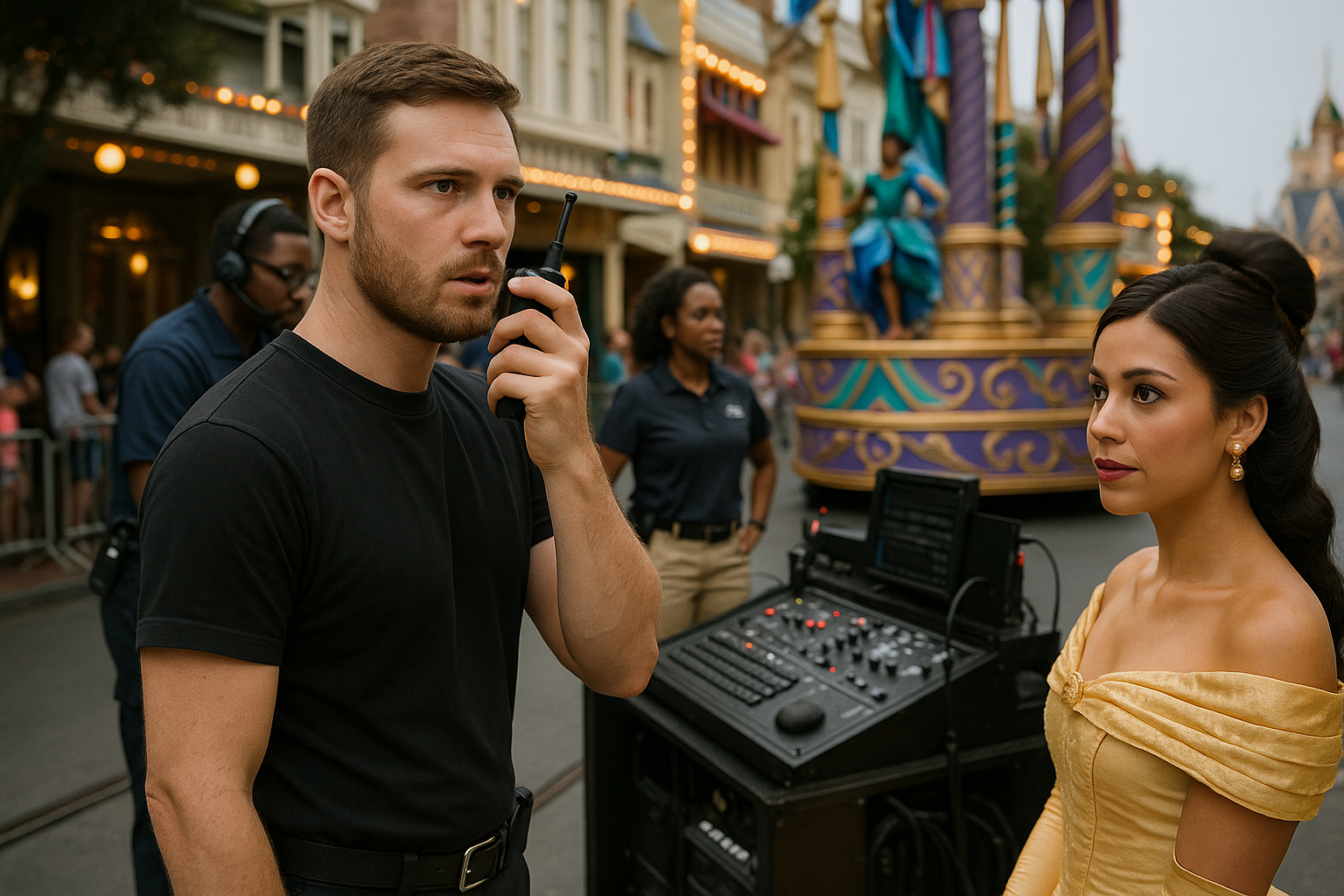
Backstage Communication During Parades: Keeping Performers, Technicians, and Operations Aligned
A parade may look effortless to guests, but backstage it depends on dozens of people making precise decisions in a limited amount of time. Performers prepare for entrances, technicians monitor equipment, operations teams manage movement, and supervisors respond to changing conditions—all while the audience sees only the finished production.
Strong backstage communication is what connects those moving parts. When information is late, unclear, or sent to the wrong person, the impact can reach far beyond the backstage area. A delayed cue can affect a performer’s entrance, a technical issue can interrupt the route, and a small misunderstanding can create safety concerns or an inconsistent guest experience.
For anyone working in entertainment, operations, guest services, or event production, learning how to communicate during a parade is a valuable professional skill. It requires more than talking on a radio. It means sharing the right information, with the right people, at the right time.
Why Parade Communication Is Different
Parade environments are unusually complex. Teams may be spread across dressing areas, backstage corridors, performance spaces, parade routes, staging zones, and service roads. Some employees are focused on artistic performance, while others are responsible for movement, crowd conditions, equipment, or guest-facing operations.
These teams may also use different terminology. A performer may be thinking about a costume piece or entrance cue. A technician may be focused on a prop, sound system, or vehicle. An operations employee may be watching timing, route access, and guest movement.
Good communication creates a shared operational picture. Everyone may have different responsibilities, but they should understand the information that affects their work.
Share Facts Before Assumptions
One of the most useful habits in backstage communication is separating what you know from what you think may be happening.
For example, compare these two radio messages:
- “The float is having problems.”
- “The third unit has stopped near the backstage gate. I can see the vehicle lights are on, but it has not moved for approximately one minute.”
The second message is more useful because it provides observable facts without guessing at the cause. The person receiving the message can then decide what response is appropriate.
This approach is helpful in many situations:
- A performer is not visible at an expected location.
- A prop appears to be missing from a staging area.
- A costume issue may affect movement or visibility.
- A route is partially blocked by equipment or personnel.
- A sound, lighting, or communication issue occurs during a performance.
Clear facts reduce confusion and prevent teams from reacting to rumors or incomplete information.
Use a Simple Structure for Radio Messages
During a busy event, long explanations can be difficult to follow. A simple communication structure helps keep messages concise and actionable.
Identify the recipient
Begin by contacting the specific team, position, or person who needs to respond. Avoid sending a message to a broad group if only one department can solve the issue.
Identify yourself
State your location or role when necessary. This helps the recipient understand how close you are to the situation and whether you can provide additional information.
Describe the issue
Explain what is happening using specific, neutral language. Include the location, unit, performer, equipment, or timing information that matters.
State what you need
If you need someone to respond, confirm a decision, or hold a movement, say so directly. A message that only describes a problem may leave the receiver unsure about the next step.
A practical message might sound like this:
“Operations, this is backstage access. The route is clear, but a loose cable is visible near the staging position for the next unit. Can technical check it before movement continues?”
The message identifies the team, location, issue, and requested action without adding unnecessary detail.
Know What Deserves Immediate Attention
Not every issue has the same level of urgency. Employees should understand which situations require immediate communication and which can wait until a more appropriate moment.
Issues that may need prompt escalation include:
- Anything affecting the safety of performers, employees, or guests
- An unexpected obstacle in a movement or performance area
- A performer or employee who may be missing from an expected position
- Equipment behaving in an unusual or unsafe way
- A costume, prop, or vehicle issue that could affect mobility or visibility
- A change that could prevent the next team from entering or exiting safely
When in doubt, communicate the concern through the appropriate channel rather than attempting to solve a situation outside your role. Reporting a developing issue early gives leaders and specialized teams more options.
Confirm Important Information
In loud or fast-moving environments, hearing a message is not the same as understanding it. When information affects timing, movement, or safety, confirmation is valuable.
A good confirmation does not need to repeat the entire conversation. It can simply acknowledge the instruction and restate the key point:
- “Copy: hold the next movement until technical confirms the route is clear.”
- “Understood. The performer will remain in the assigned area until the supervisor provides an update.”
- “Copy the revised location: backstage left, near the service entrance.”
If a message is unclear, ask for clarification immediately. Guessing may feel faster, but it often creates a second problem that takes longer to correct.
Respect the Difference Between Urgent and Routine Communication
Parade teams often need to share routine updates, but those updates should not compete with urgent information. Before using a shared radio channel, consider whether the message needs to be sent immediately, whether it belongs on that channel, and whether it can be communicated in person or after the event.
Routine topics such as minor scheduling questions, non-urgent supply requests, or general feedback may be better handled away from a live performance window. This protects the channel for information that affects current operations.
At the same time, employees should avoid withholding important information simply because they are worried about interrupting the channel. The goal is not silence. The goal is disciplined communication.
Build Stronger Handoffs Between Teams
Parades frequently involve overlapping shifts and changing responsibilities. A reliable handoff should include more than “everything is fine.” The incoming employee or team needs to know what has happened, what is still unresolved, and what deserves attention during the next part of the event.
A useful handoff may cover:
- Any equipment or route concerns that were reported
- Changes to timing, staging, or access
- Performers or units requiring follow-up
- Guest or backstage conditions that could affect the next performance
- Open questions waiting for a supervisor or technical team
Strong handoffs prevent employees from repeating the same troubleshooting and reduce the chance that an unresolved issue will disappear between shifts.
Communication Skills That Support Career Growth
Employees who communicate well during complex events often become trusted resources. They make messages easier to understand, help teams respond more quickly, and remain calm when plans change.
These skills can support future opportunities in areas such as:
- Entertainment operations
- Stage management
- Event production
- Technical direction
- Parade or show supervision
- Guest-facing event operations
- Training and team leadership
Professional communication is not about sounding formal on a radio. It is about being accurate, respectful, timely, and useful when other people depend on the information you provide.
Keep the Production Moving by Keeping Information Clear
The strongest parade teams are not the ones that experience no problems. Live entertainment rarely works that way. They are the teams that identify issues early, communicate them clearly, and coordinate a response without creating unnecessary confusion.
For performers, technicians, operations employees, and leaders, backstage communication is part of the performance itself. Guests may never see the conversations behind the scenes, but they experience the results every time a parade moves safely, smoothly, and on time.
Theme Park Connections gives professionals throughout the theme park and attractions industry a place to connect with other industry employees, expand their professional networks, share experiences, and learn about departments beyond their current roles. It is also a useful resource for discovering career opportunities and building relationships across entertainment, operations, hospitality, maintenance, food and beverage, retail, and guest services.