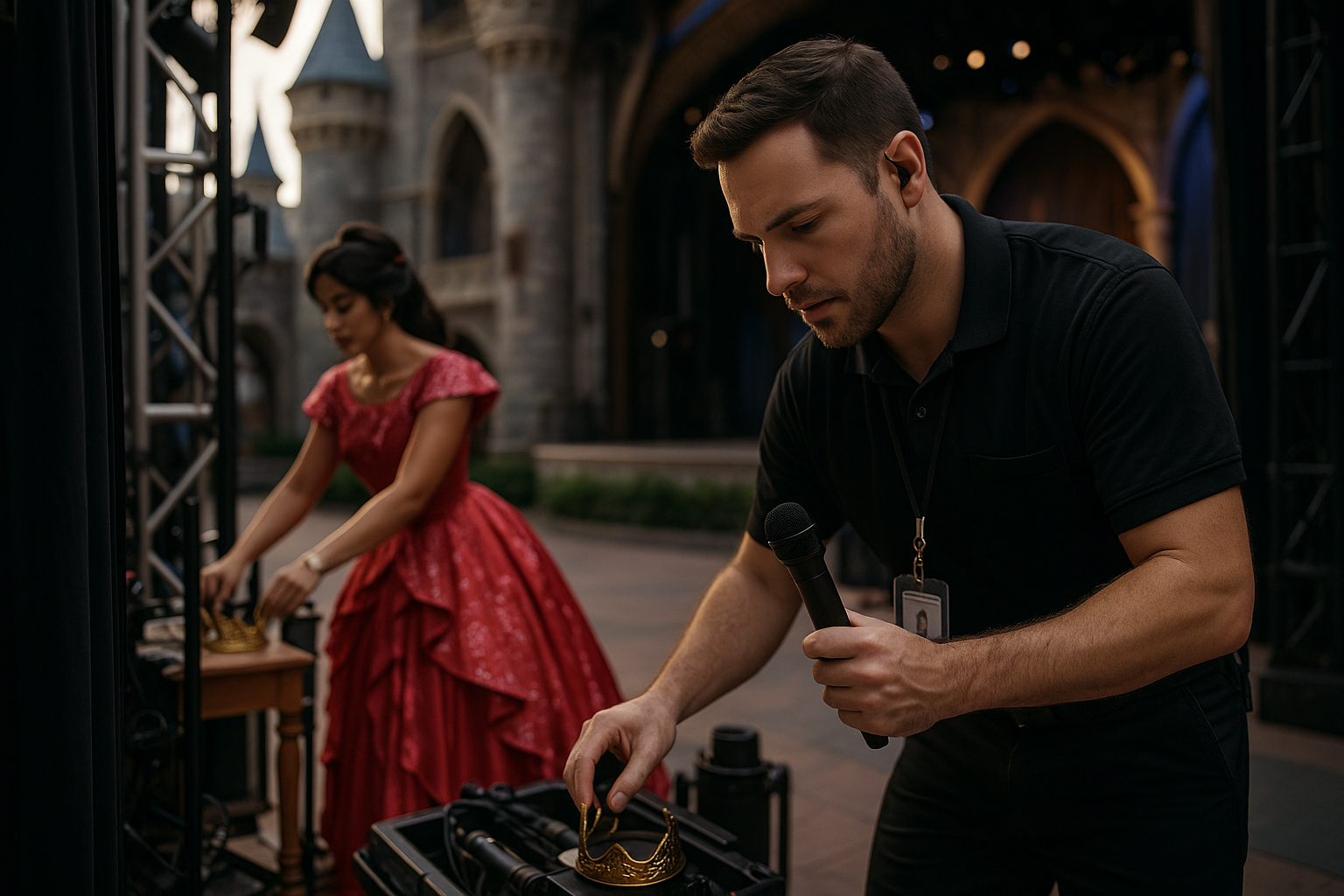
Between Performances: The Reset Skills That Keep Theme Park Entertainment Running
A live performance may last only a few minutes, but the work surrounding it continues all day. After one show ends, entertainment employees may have to clear a performance area, return props, reset costumes, communicate changes, prepare for the next appearance, and move through a busy backstage environment without disrupting the guest experience.
That short period between performances is easy to underestimate. A rushed reset can create missing props, delayed entrances, costume problems, unsafe work areas, or confusion among performers and technicians. A reliable reset, on the other hand, gives the next team a clean starting point.
For performers, character attendants, stage technicians, costuming teams, entertainment hosts, and leaders, learning how to reset well is an important part of working in theme park entertainment.
Why the Reset Matters as Much as the Performance
Guests usually see only the finished product: a character appearance, a parade, a stage show, or a live musical number. They do not see the preparation required to make that moment happen again several times throughout the day.
Entertainment operations often involve tight timing and shared resources. A prop may be needed by the next cast. A performer may need to report to costuming. A performance area may need to be cleared before guests begin gathering for another activity. If one part of the reset is missed, the problem can appear during the next set instead of immediately.
A good reset helps protect:
- Safety: Props, cables, stands, costume pieces, and equipment are returned or secured properly.
- Readiness: The next performer or crew member can begin without searching for missing items.
- Timing: Entertainment schedules stay on track, even when several performances occur close together.
- Professionalism: The team appears organized and dependable to both guests and coworkers.
- Guest experience: Delays and visible confusion are less likely to affect the next appearance.
Build a Repeatable End-of-Set Routine
The best resets are not based on memory alone. They follow a consistent sequence that can be repeated during a quiet morning set, a crowded holiday afternoon, or the final performance of a long shift.
1. Close Out the Guest-Facing Moment
Before turning attention to backstage tasks, make sure the guest-facing portion of the appearance has ended clearly. This may include completing the final interaction, acknowledging waiting guests, or following the direction of the entertainment host or character attendant.
Employees should avoid creating uncertainty by abruptly walking away, discussing backstage details in public, or leaving guests unsure whether the appearance is finished. A clean ending helps the next transition begin without unnecessary confusion.
2. Check the Performance Area
Look at the space before leaving it. Small items can be easy to miss, especially when the area is crowded or the team is working under time pressure.
Depending on the operation, the check may include:
- Props or handheld items left behind
- Personal belongings or costume accessories
- Water bottles, packaging, or other debris
- Furniture or equipment that needs to be returned
- Trip hazards or items that could interfere with the next group
- Signs, barriers, or guest-facing materials that need to be repositioned
Do not assume someone else will notice what you missed. A quick visual sweep can prevent a later interruption.
3. Return Shared Items to the Correct Place
Entertainment departments often rely on shared props, microphones, costume pieces, storage areas, and technical equipment. Returning something “near” its usual location may not be enough. The next person may not know where to look, especially if they are new to the role or covering a different position.
If an item cannot be returned properly, communicate that before the next set. A missing prop is easier to solve when the team knows it is missing than when the performer discovers the problem moments before an entrance.
Communicate Changes Before They Become Problems
Not every reset will go perfectly. A costume zipper may begin sticking. A prop may be damaged. A performance space may be unusually crowded. A performer may be delayed by a guest interaction or another operational issue.
The important skill is identifying which details the next person needs to know.
Useful communication is:
- Specific: Explain what happened rather than saying only that there was an issue.
- Timely: Share the information before the next performance or transition whenever possible.
- Objective: Describe the condition without blaming another employee.
- Actionable: Include what has already been done and what may still be needed.
For example, “The microphone is acting strange” does not give the next technician much to work with. “The microphone cut out twice during the final segment, and it has been placed with the other equipment for inspection” is more useful.
Follow the communication methods established by your department. Some information may require a direct conversation, while other issues should be reported through a designated system or to a leader. The goal is not to create unnecessary messages. It is to make sure important information does not disappear during the transition.
Protect the Performer’s Next Set
Resetting an entertainment operation also means preparing people, not just spaces and equipment. Performers may need time to change costumes, hydrate, warm up, review a revised cue, or recover from a physically demanding appearance.
Team members can support that preparation by avoiding preventable interruptions and by passing along information in an organized way. If a change affects timing, entrances, guest flow, or performance expectations, the performer should not have to discover it at the last moment.
For performers, a personal reset routine may include:
- Checking costume pieces before leaving the location
- Returning accessories to their assigned storage area
- Noting any discomfort or costume problem that needs attention
- Reviewing the timing of the next appearance
- Allowing enough time for hydration, vocal preparation, or physical recovery
- Confirming any changes with the appropriate team member
These habits are especially valuable during long operating days, when fatigue can make small mistakes more likely.
Common Reset Mistakes
Rushing Because the Set Went Long
A delayed performance can make the next transition feel impossible. Rushing may seem like the fastest solution, but skipping essential checks usually transfers the problem to the next set. Move efficiently, but do not abandon the steps that protect safety and readiness.
Assuming Everyone Knows What Changed
A performer, technician, supervisor, and attendant may each experience a different part of the same issue. Never assume that because one person saw the problem, everyone else knows about it.
Leaving Items for “Later”
Temporary storage often becomes permanent during busy days. If something cannot be put away immediately, identify it clearly and tell the person responsible for the next step.
Discussing Problems Where Guests Can Hear
Entertainment employees may need to talk through operational concerns, but guest-facing spaces are rarely the right place for detailed conversations about mistakes, delays, or internal disagreements. Move the discussion to the appropriate area or communication channel.
Turn Resets Into a Career Skill
Employees who consistently complete clean resets become valuable because they make the entire operation easier for others. They notice details, communicate without drama, protect timing, and understand how one performance affects the next.
Those skills can support future opportunities in entertainment leadership, stage management, production coordination, training, costuming, technical operations, and event planning. A reset may last only a few minutes, but it demonstrates organization, judgment, teamwork, and operational awareness.
The strongest entertainment employees do not treat the time between performances as downtime. They use it to restore the space, prepare the people, communicate the changes, and give the next team the best possible starting point.
Keep Building Your Industry Connections
Entertainment work looks different from one park, resort, or production team to another, but many of the same challenges appear everywhere: tight transitions, shared equipment, guest-facing timing, backstage coordination, and the need to stay professional under pressure.
ThemeParkConnections.com gives people working throughout the theme park and attractions industry a place to connect with other professionals, expand their networks, share experiences, learn about different departments, discover career opportunities, and build relationships across the attractions industry. For entertainment employees—and anyone interested in entering the field—those connections can provide useful perspective long after the final set of the day.