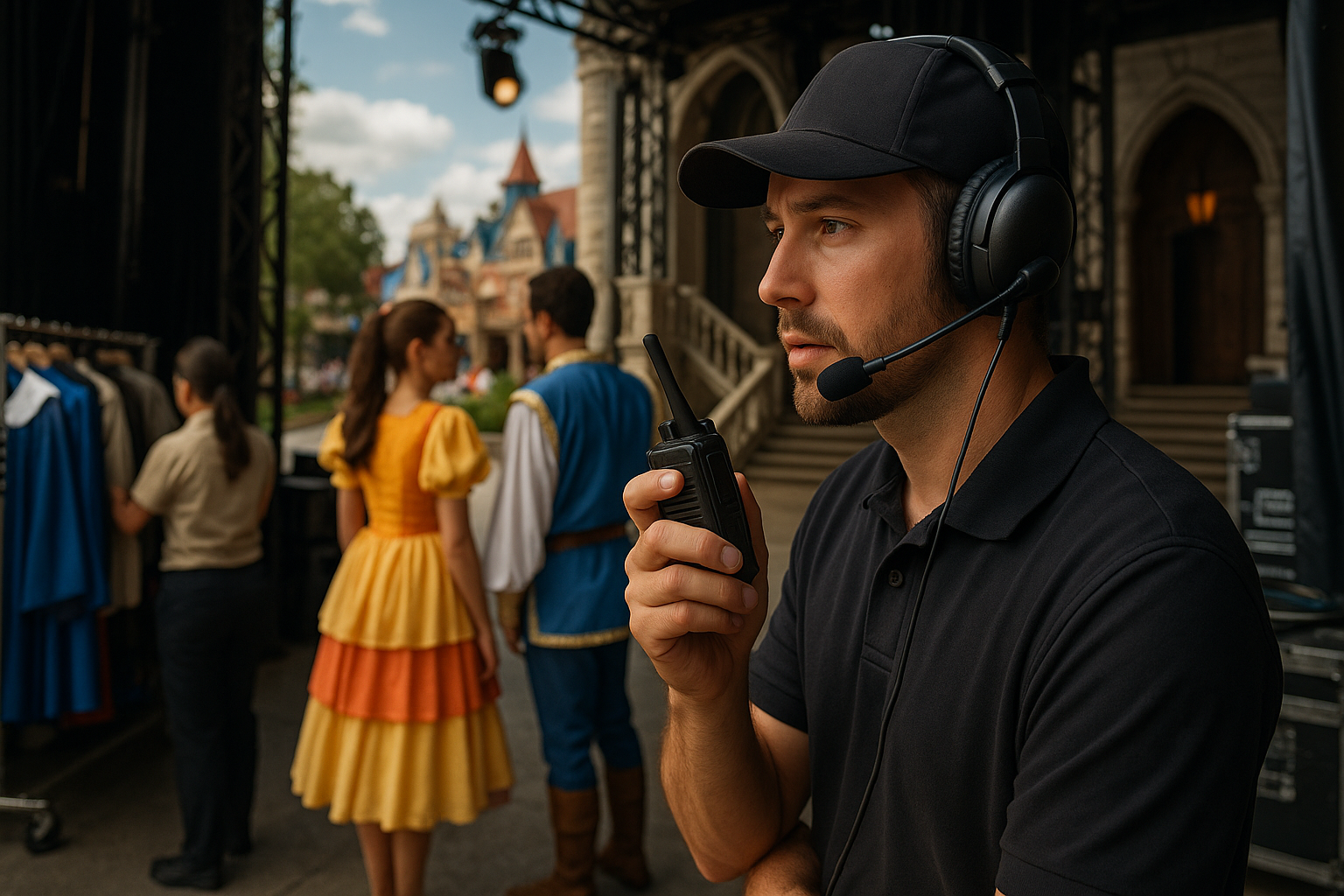
Backstage Changeovers: The Communication Skills That Keep Live Entertainment Moving
A live show may last only a few minutes, but the work between performances can be just as demanding. Costumes need to be reset, props returned, performers briefed, technical equipment checked, and the next cast or crew moved into position—often while guests are still nearby and the schedule is already counting down.
For theme park entertainment teams, a smooth changeover depends on more than speed. It requires clear communication, careful backstage etiquette, and a shared understanding of who is responsible for each task. Employees who learn to manage changeovers well become valuable not only to entertainment departments, but also to production, operations, guest services, and leadership teams.
What a Backstage Changeover Involves
A changeover is the organized transition from one performance, parade unit, character appearance, or entertainment activity to the next. The exact process varies by venue, but it may include:
- Clearing performers and equipment from the performance area
- Resetting props, scenic pieces, or portable equipment
- Returning costumes, accessories, and personal items to assigned locations
- Checking microphones, headsets, instruments, or technical equipment
- Communicating schedule changes or performance notes
- Moving the next cast or crew into position
- Confirming that backstage paths are clear and safe
Some changeovers happen in a dedicated backstage area. Others take place in tight corridors, shared dressing rooms, service roads, or spaces that are only partially hidden from guests. That makes organization and professional behavior essential.
Why Changeover Communication Matters
Entertainment departments often involve several teams working at the same time. Performers may be focused on their next entrance, technicians may be troubleshooting equipment, costume staff may be preparing wardrobe pieces, and production leaders may be monitoring the schedule.
Without clear communication, small misunderstandings can create larger problems. A prop may be placed in the wrong location. A performer may miss an update. A costume piece may not be ready when needed. A technician may begin moving equipment through a hallway that another team is using.
Good communication helps everyone understand three basic points:
- What has already happened? For example, the previous cast has cleared the area and the props have been returned.
- What still needs to happen? A microphone check, costume adjustment, or scenic reset may still be incomplete.
- Who owns the next step? Clear responsibility prevents tasks from being assumed, duplicated, or forgotten.
Use Specific Information Instead of Vague Updates
“We’re almost ready” may sound reassuring, but it does not tell the next team what to expect. A stronger update identifies the situation and the remaining action.
For example, an employee might say, “The previous cast is clear, but the handheld microphone still needs to be tested before the next entrance.” That message gives the team useful information without creating unnecessary confusion.
Effective backstage updates are usually:
- Brief enough to be understood during a busy transition
- Specific about the location, item, or task involved
- Directed to the person or team responsible
- Professional in tone, especially when the schedule is tight
If a communication system such as radios or headsets is used, employees should follow their department’s expectations for channel use, call signs, and private information. If the situation is not urgent, avoid adding unnecessary radio traffic while another team is handling a time-sensitive issue.
Build a Reliable Personal Reset Routine
One of the best ways to improve changeovers is to create a consistent reset routine. When employees rely on memory alone, rushed transitions can lead to missed details.
For performers
A performer’s reset may include returning costume pieces, checking personal belongings, reporting wardrobe concerns, and confirming the location and timing of the next call. Costumes and accessories should not be left in random areas simply because the next performance is approaching.
For technicians
Technical team members may need to inspect cables, batteries, microphones, instruments, or portable equipment. A quick visual check can identify a problem before the next performance begins. Equipment should be stored in its designated location whenever possible so the next person can find it quickly.
For production assistants and support staff
Support staff often connect multiple parts of the operation. They may help track timing, move supplies, relay updates, or guide performers through shared spaces. A written checklist or established sequence can make these responsibilities more consistent, particularly during several consecutive performances.
Protect Safety During Fast Transitions
Backstage areas become hazardous when people prioritize speed over awareness. Equipment cases, costume racks, cables, props, and personal bags can quickly narrow walkways. Employees may also be moving while carrying items or watching for a cue.
Practical habits can reduce risk:
- Keep walkways and emergency access areas clear.
- Store equipment where it cannot roll, fall, or obstruct a door.
- Announce yourself when moving through a crowded or blind area.
- Do not leave bags or personal items in shared traffic paths.
- Ask for assistance with oversized or awkward equipment.
- Report damaged equipment, spills, or unsafe conditions promptly.
Employees should follow the training and procedures provided by their employer. If a changeover cannot be completed safely within the available time, notifying the appropriate lead is more professional than quietly taking a shortcut.
Managing Last-Minute Changes Without Creating Chaos
Entertainment schedules can change because of weather, technical issues, performer availability, guest flow, or operational decisions. The challenge is not simply receiving a new instruction; it is making sure the change reaches everyone affected by it.
When a plan changes, confirm the essentials:
- Which performance or activity is affected?
- What is the new timing or location?
- Which performers, technicians, or support teams need to know?
- Does the change affect costumes, props, equipment, or guest-facing information?
- Who should receive updates if conditions change again?
Repeat-back communication can be useful for important details. Briefly restating an instruction helps identify misunderstandings before they affect the performance. For example: “Understood—the next set moves to the alternate location, and the cast should report there ten minutes earlier.”
Backstage Etiquette Is Part of the Guest Experience
Guests may not see every backstage task, but they can still notice the results. A delayed entrance, missing prop, visible frustration, or blocked service path can affect the atmosphere of the entire venue.
Professional backstage etiquette includes respecting performers’ concentration, keeping voices controlled, avoiding unnecessary interruptions, and handling disagreements away from guest-facing areas. It also means treating every role as part of the same production. A costume employee, stage technician, performer, character attendant, and production coordinator may have different responsibilities, but each depends on the others.
Employees who consistently stay calm, communicate clearly, and leave spaces ready for the next team develop a reputation for reliability. Those habits can support future opportunities as trainers, leads, production assistants, coordinators, or supervisors.
Turn Every Changeover Into a Learning Opportunity
After a difficult transition, take a moment to identify what caused the problem. Was the timing unclear? Was equipment stored in the wrong place? Did two teams receive different instructions? Was there no clear owner for the final reset?
Not every issue requires a major process change. Sometimes a simple adjustment—such as labeling a storage area, clarifying a radio message, or adding one item to a checklist—can prevent the same problem from happening again.
Live entertainment depends on visible talent, but it is sustained by the less visible work between performances. Employees who master backstage changeovers help protect safety, improve teamwork, and keep the guest experience consistent even when the schedule is demanding.
Theme Park Connections gives professionals across the theme park and attractions industry a place to connect with other industry employees, expand their professional networks, share experiences, learn about different departments, discover career opportunities, and build relationships throughout the attractions community. For entertainment professionals especially, those connections can provide insight into production, technical, operations, and leadership paths that may not be obvious from one department alone.