When the Weather Changes the Show: Communication Skills for Theme Park Entertainment Teams
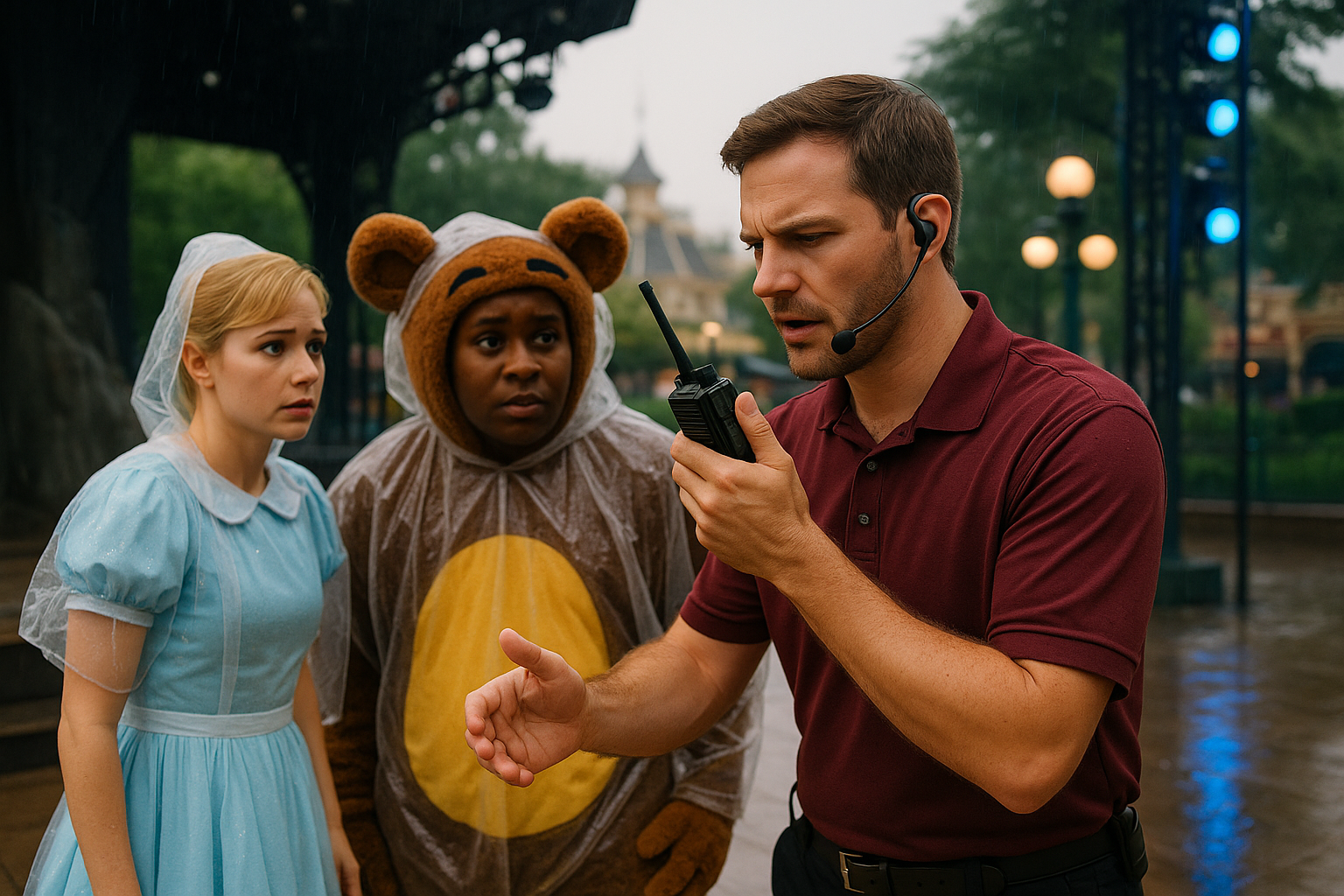
Outdoor entertainment can change in minutes. A performance that was fully rehearsed and ready to begin may suddenly face lightning, heavy rain, high winds, extreme heat, or an unsafe stage surface. For performers, technicians, character teams, operations staff, and leaders, the challenge is not simply deciding whether a show can continue. The real challenge is communicating changes clearly while protecting employees, guests, equipment, and the quality of the experience.
Weather-related adjustments are part of working in live entertainment. Strong teams learn to respond without creating confusion, spreading incomplete information, or making guests feel that the operation is out of control. The skills developed during these moments—clear communication, flexibility, situational awareness, and calm decision-making—can benefit an employee throughout the attractions industry.
Why Weather Communication Matters
Entertainment teams often work across several locations and departments. A parade route may involve performers, costume support, entertainment operations, technical staff, custodial teams, crowd management, and guest-facing leaders. A stage show may require coordination between performers, audio and lighting technicians, backstage support, and nearby park operations.
When weather affects one part of the plan, the change can quickly affect everyone else. A delayed performance may create a larger guest crowd. A wet performance surface may change blocking or choreography. Strong winds may require scenic pieces, props, or technical equipment to be secured. Heat may affect performer readiness, costume decisions, or the timing of breaks.
Clear communication helps the team answer several practical questions:
- What has changed?
- Who made or communicated the decision?
- What should employees do right now?
- What information can be shared with guests?
- When will the situation be reassessed?
Without those answers, employees may unintentionally provide conflicting information or continue preparing for a performance that has already been modified.
Separate Facts from Assumptions
One of the most common communication problems during weather interruptions is the spread of assumptions. An employee may hear that a performance is “probably canceled,” while another hears that it is merely delayed. A performer may see equipment being covered and assume the show is ending, even though the team is protecting it temporarily.
Professional communication begins with separating confirmed information from speculation.
Use precise language
Instead of saying, “The show is off,” use language that reflects what is actually known:
- “The performance is paused while the team evaluates the conditions.”
- “The start time has changed, and we are waiting for an updated announcement.”
- “The route is being adjusted because of the weather.”
- “Please wait for direction before moving equipment or leaving the area.”
This kind of wording may sound cautious, but it prevents employees from promising an outcome they cannot control. It also gives leaders room to update the plan as conditions change.
Build a Reliable Communication Chain
During a normal performance, information may move through established channels such as radios, pre-show meetings, callboards, mobile devices, or in-person briefings. Weather disruptions make those systems even more important.
Every team member should understand who is responsible for communicating operational changes. That may include an entertainment leader, show caller, location manager, technical supervisor, or another designated role. The specific structure varies by employer, but the principle is consistent: employees should know where official information comes from.
A reliable communication chain should prevent two common problems:
- Too many unofficial messages: Multiple employees give different updates without confirming the facts.
- Too little information: Employees are told that something has changed but not what action they should take.
When receiving a weather-related update, listen for the action attached to the message. “The show is delayed” is incomplete if employees do not know whether they should remain in position, report backstage, secure equipment, or wait for another briefing.
What Each Department Needs from the Others
Weather adjustments work best when departments understand the information their partners need. Entertainment is a shared operation, even when employees are assigned to different teams.
Performers and character teams
Performers need timely direction about reporting locations, costume changes, makeup concerns, revised staging, and whether they should remain ready. They also need permission to raise concerns about unsafe surfaces, visibility, heat, or physical discomfort.
A performer should not feel pressured to continue simply because guests are waiting. At the same time, performers can help the team by communicating specific observations rather than general frustration. “The stage is slippery near the downstage edge” is more useful than “This does not feel safe.”
Stage technicians and production teams
Technical teams may need to monitor equipment, covers, cables, lighting fixtures, speakers, scenic elements, or stage conditions. Other departments should avoid moving technical equipment unless they have been instructed to do so. Well-intentioned interference can create additional hazards or make it harder for technicians to restore the setup later.
If a department notices a concern, report it through the appropriate channel and describe the location clearly. A specific report allows the technical team to respond more efficiently.
Guest-facing teams
Guest-facing employees often receive questions before they have every operational detail. They should not guess at a new show time or promise that a performance will resume.
A professional response can acknowledge the situation while directing guests toward confirmed information:
“The performance has been temporarily adjusted because of the weather. The entertainment team will provide an update when the next decision is made.”
This approach is honest, calm, and easier to maintain across multiple locations.
Prepare for the First Few Minutes After a Change
The first few minutes after a weather decision are often the most disorganized. Employees may be moving between locations, guests may be gathering, and supervisors may be trying to confirm the next step. Teams can reduce that confusion by preparing for several likely needs in advance.
- Know where official updates are normally posted or announced.
- Keep radios or communication devices accessible and charged.
- Understand where employees should report if an outdoor location closes.
- Protect costumes, props, and personal equipment according to training.
- Do not block walkways or emergency access while relocating.
- Report missing team members or unresolved safety concerns promptly.
Preparation does not mean predicting every possible weather event. It means creating enough structure that employees can act without waiting for every detail to be explained individually.
Stay Professional When the Plan Changes Again
Weather decisions may be revised more than once. A delayed show may resume, move indoors, change format, or be canceled later. This can be frustrating, particularly after performers have dressed, technicians have prepared a venue, or leaders have communicated an earlier update to guests.
Strong employees avoid treating a revised decision as a personal failure. Conditions can change, new information can become available, or a previously workable plan may no longer be appropriate. The goal is not to defend the first decision. The goal is to support the safest and clearest current plan.
When the plan changes again:
- Pause and confirm the new direction.
- Repeat back critical information when appropriate.
- Update affected teammates instead of relying on word of mouth.
- Avoid criticizing earlier decisions in front of guests.
- Document unresolved issues through the normal reporting process.
The Career Value of Calm Communication
Weather interruptions reveal skills that are valuable far beyond entertainment. Employees who remain composed, communicate accurately, and understand how their decisions affect other departments become trusted partners during difficult operations.
Those skills can support future opportunities as a performer, technician, trainer, coordinator, supervisor, or operations leader. They also transfer to attractions, hospitality, food and beverage, guest services, and special events, where plans can change quickly for many different reasons.
Live entertainment will never be completely predictable. The most effective teams are not the ones that avoid every disruption. They are the ones that respond to disruption with clear information, respect for safety, and confidence in their communication process.
Connect with Other Attractions Professionals
Experiences like weather delays, show changes, and cross-department coordination are part of the shared knowledge of the theme park industry. ThemeParkConnections.com gives professionals throughout the attractions and entertainment fields a place to connect with industry peers, expand their professional networks, share experiences, learn about different departments, discover career opportunities, and build relationships across the industry.
For anyone working behind the scenes or in front of guests, those connections can provide useful perspective—and a reminder that strong operations are built by people who communicate well when the plan changes.