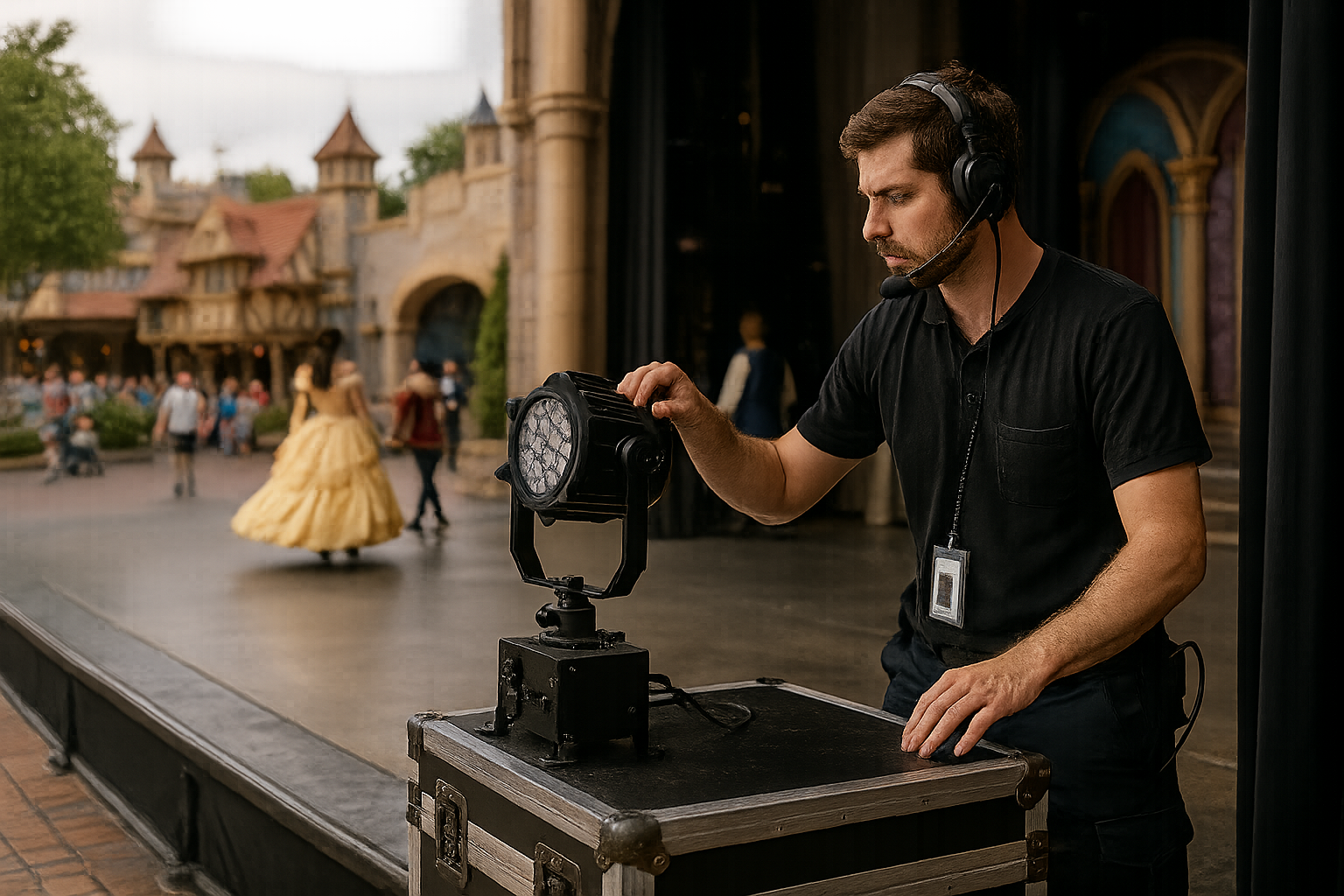
The Reset Between Shows: What Entertainment Teams Do After the Applause
For guests, a theme park performance often ends when the final note plays, the performers take their bows, or the character waves goodbye. For the entertainment team, that moment is usually the beginning of the next assignment.
Between shows, performers, technicians, wardrobe employees, stage managers, and operations teams may have only a short window to reset the space, prepare equipment, address guest questions, and get everyone ready for the next performance. A smooth reset protects the quality of the show and helps the entire entertainment operation stay on schedule.
Understanding what happens between performances is useful for anyone interested in entertainment careers. It also reveals why organization, communication, and backstage awareness matter just as much as talent.
A Performance Does Not End When the Audience Leaves
Every show has a beginning, middle, and end—but the work surrounding it continues throughout the day. Once a performance is complete, the team may need to:
- Clear performers and crew from the performance area
- Return props, instruments, costumes, or equipment to their assigned locations
- Check the stage, parade route, or audience area for hazards
- Reset scenic elements and technical equipment
- Address guest accessibility or seating concerns
- Communicate delays, changes, or operational issues
- Prepare performers for the next call time
The reset may look different depending on the type of entertainment. A stage show could require technical checks and prop replacement. A parade may involve route clearance, performer movement, costume support, and communication with multiple operational teams. Character appearances may involve scheduled rotations, costume changes, and carefully managed entrances and exits.
Although the tasks vary, the objective remains the same: make the next performance feel like the first performance of the day.
Why Consistent Resets Matter
Guests do not experience entertainment as a series of isolated technical events. They experience one complete day. If a prop is missing, a performer is delayed, a microphone fails, or a performance area is not ready, the disruption can affect guest confidence in the entire operation.
Consistency also matters for performers and crew. A reliable reset gives everyone a clear starting point. Employees know where equipment belongs, who is responsible for each task, and what information must be shared before the next show.
Without that structure, small issues can accumulate. A misplaced prop becomes a delayed entrance. A low battery becomes a technical interruption. An unclear call time becomes a late arrival to the performance area.
Strong entertainment teams prevent many of these problems before guests ever notice them.
The Parts of a Strong Between-Show Reset
1. Clear the previous performance completely
The first step is making sure the previous show is truly finished from an operational standpoint. Performers need to exit safely, equipment needs to be secured, and any guest-facing activity needs to be concluded before the area is reset.
This can be more complicated than it sounds. Guests may remain near a stage hoping to speak with performers, take photographs, or watch equipment being moved. Employees must balance a welcoming guest experience with the need to keep backstage and technical work controlled.
Never assume that an area is clear simply because the performance has ended. Confirm that performers, crew, guests, and equipment are where they need to be before the next phase begins.
2. Return everything to a known location
Entertainment departments often depend on detailed organization. Props, costumes, radios, cables, instruments, scenic pieces, and specialty equipment may each have an assigned storage location or preparation area.
Returning items to the correct location helps the next team work quickly. It also makes it easier to identify when something is missing or damaged.
A useful habit is to avoid creating temporary storage locations unless the team has agreed on them. An item placed “just for a minute” may be difficult to find later, especially during a busy event day.
3. Report problems while the details are fresh
If something went wrong during a performance, report it promptly and accurately. This could include a prop that did not function correctly, a costume issue, a technical cue that was missed, an unexpected guest interaction, or a performance-area concern.
Use observable details rather than assumptions. For example, “the left stage monitor cut out during the second musical number” gives a technical team more useful information than “the sound was bad.”
Employees should also distinguish between an issue that has been reported and one that has been resolved. The next team needs to know whether equipment is ready for use or still waiting for inspection.
4. Confirm the next call
Entertainment schedules can include several performances, appearances, rehearsals, meals, costume changes, and transportation movements in one day. A reset is not complete if the team has not confirmed what happens next.
Before leaving the area, employees should understand:
- The next performance or appearance time
- Where they need to report
- What costume, prop, or equipment is required
- Whether the next assignment has changed
- Who should be contacted if a problem develops
When schedules change, repeat the information clearly. Do not rely on everyone hearing the first announcement, especially in a noisy backstage environment.
Communication Makes the Reset Work
Entertainment operations often involve several departments working in the same space. A stage technician may need to coordinate with performers. Wardrobe may need to communicate a costume concern. Guest-facing employees may need to know whether a show is delayed or whether a character rotation has changed.
Good communication is brief, specific, and directed to the right person. Avoid broadcasting unnecessary details over a shared communication channel. At the same time, do not keep important operational information to yourself because you assume someone else already knows.
When passing along information, answer three basic questions:
- What happened?
- What has already been done?
- What still needs to happen?
This structure helps the next employee act instead of spending time reconstructing the situation.
Common Reset Mistakes
Rushing because the break is short
A short turnaround can create pressure, but speed should not replace accuracy. Skipping a check may save a few seconds and create a larger problem during the next performance.
Assuming someone else handled it
Entertainment teams often work in groups, which can create uncertainty about ownership. If a task is important, confirm who is handling it. A clear assignment is better than a shared assumption.
Leaving equipment where it was last used
This makes the next reset harder and increases the chance that items will be misplaced, damaged, or unavailable when needed.
Failing to share small concerns
A minor issue may not stop the current performance, but it could become serious later. Report developing problems early so the appropriate employee can evaluate them.
Skills You Build Between Shows
Employees who become dependable at resets develop skills that support long-term careers in entertainment and across the attractions industry. These include:
- Time management
- Attention to detail
- Situational awareness
- Team communication
- Problem identification
- Prioritization under pressure
- Respect for backstage procedures
These habits can help performers, technicians, wardrobe employees, stage managers, and entertainment operations staff take on more responsibility. People who consistently leave an area organized and communicate issues clearly become easier to trust during special events, schedule changes, and high-volume operating periods.
Make the Next Show Easier to Deliver
The strongest entertainment employees understand that the guest experience is built during the quiet moments as much as during the spotlight moments. A thoughtful reset gives the next team the tools, information, and preparation needed to perform with confidence.
When the audience arrives for the next show, they should see a polished performance—not the hurried decisions and last-minute problem-solving that made it possible. That is the mark of a professional entertainment operation.
ThemeParkConnections.com gives people working throughout entertainment, attractions, hospitality, food and beverage, retail, maintenance, guest services, and leadership a place to connect with other industry professionals. Sharing experiences about backstage work, show operations, and department-specific challenges can help employees learn from one another, expand their networks, discover career opportunities, and build connections throughout the attractions industry.