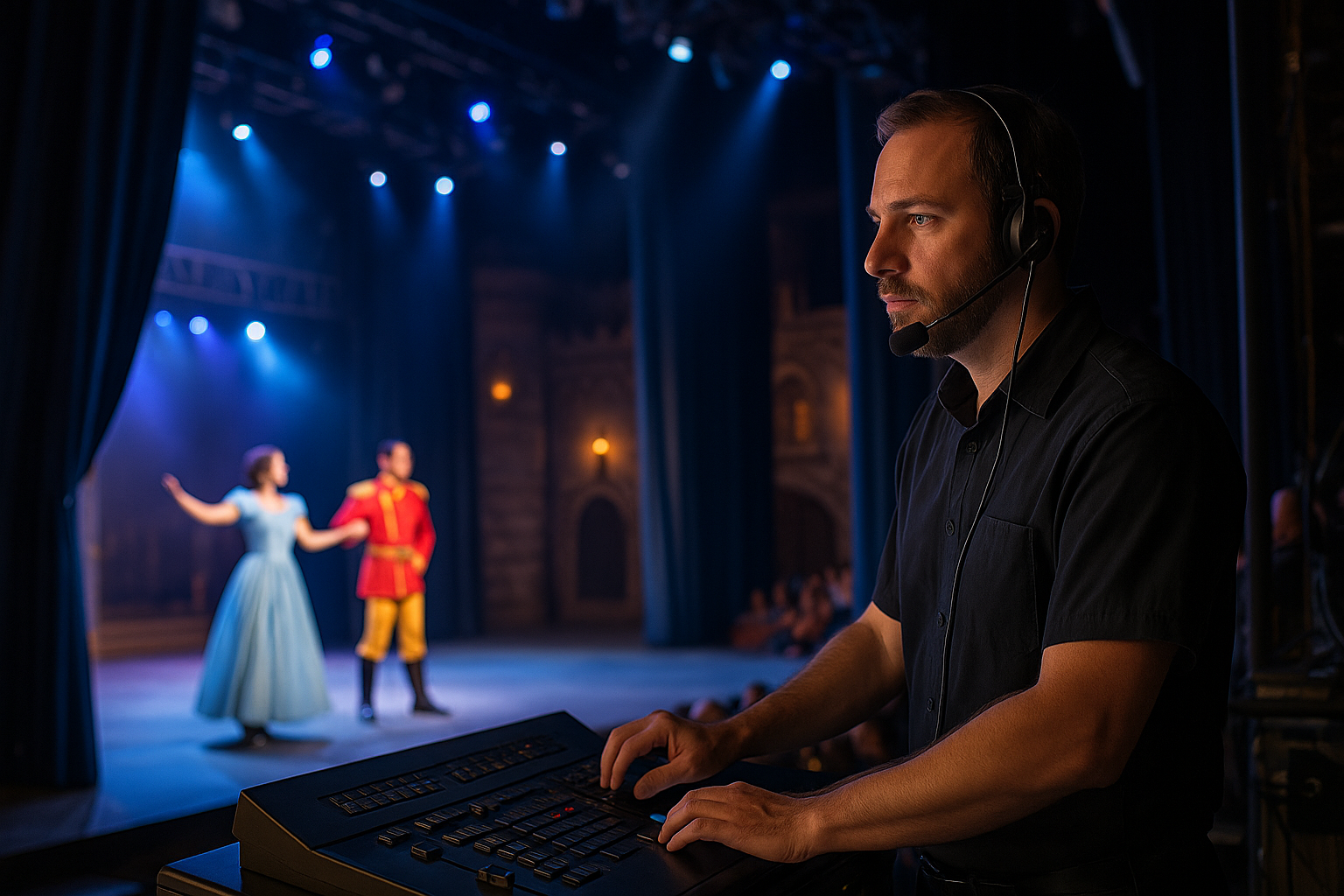
The Quiet Work Behind a Smooth Theme Park Show: What Stage Managers Notice in Every Performance
Guests usually remember the visible parts of a theme park show: the performers, music, costumes, lighting, special effects, and the moment the audience reacts together. Behind that experience, a stage manager is tracking dozens of details that most guests never notice.
For employees interested in entertainment production, leadership, or operations, understanding the stage manager’s role offers a valuable look at how live theme park entertainment stays consistent. The job is not simply calling cues. It involves communication, timing, safety awareness, problem-solving, and the ability to remain calm when a performance does not go exactly as planned.
What a Stage Manager Is Really Monitoring
A stage manager serves as a central point of communication during a performance. Depending on the production, that may include coordinating with performers, technicians, wardrobe, makeup, front-of-house teams, operations leaders, and other departments supporting the show.
During a performance, the stage manager may be watching or listening for:
- Whether performers are in the correct places at the correct times
- Whether entrances and exits happen safely
- Whether music, lighting, projections, props, and special effects are properly timed
- Whether a performer appears to need assistance
- Whether the audience is reacting in an unexpected way
- Whether weather, equipment, or facility conditions could affect the show
- Whether the next scene or sequence is ready to begin
Many of these details are handled through established show documents, communication systems, rehearsals, and department procedures. The stage manager’s skill comes from combining that preparation with real-time awareness.
Why Timing Matters More Than Guests Realize
Live entertainment depends on timing. A performer may need to reach a specific location before a lighting change. A scenic element may need to be clear before another performer enters. A musical cue may signal the start of choreography, a costume change, or a special effect.
If one element falls behind, the stage manager must determine whether the show can continue as planned, whether a cue should be delayed, or whether an alternate action is needed. The decision is not always dramatic. Sometimes it is as simple as holding a transition for a few seconds. Other times, the team may need to skip a segment or adjust the performance.
Small timing differences can create larger problems if they are ignored. A late entrance can affect spacing. A missed prop handoff can disrupt a scene. A delayed technical cue can create confusion for performers who are relying on it. Strong stage management prevents one minor issue from becoming a visible chain reaction.
The Importance of Pre-Show Preparation
A smooth performance often begins long before the audience enters. Pre-show preparation gives the team an opportunity to identify problems while there is still time to address them.
Reviewing the day’s conditions
Outdoor and semi-outdoor entertainment may be affected by heat, rain, wind, humidity, or changing light conditions. Indoor shows may face different concerns, including equipment issues, facility conditions, or unusual guest activity in the audience area.
The stage manager may need to confirm that the team understands any operational changes for the day. A performance may use alternate blocking, modified effects, different entrances, or a revised sequence depending on the conditions and the direction provided by the appropriate leadership teams.
Confirming performer and technical readiness
Pre-show checks may include confirming performer readiness, checking communication channels, reviewing known equipment concerns, and making sure departments understand any changes from earlier performances. This is also when a stage manager may clarify responsibilities if a team member is absent or a replacement is working the shift.
Preparation does not guarantee that nothing will go wrong. It improves the team’s ability to respond when something does.
Clear Communication Under Pressure
Entertainment teams often work in environments where communication must be brief and precise. A stage manager may need to pass along information without distracting performers, alarming guests, or creating confusion among multiple departments.
Effective communication usually has several qualities:
- Specific: It identifies the situation and the action required.
- Concise: It avoids unnecessary detail during time-sensitive moments.
- Calm: It keeps the team focused rather than spreading panic.
- Confirmed: It makes sure the receiving person understood the message.
- Professional: It avoids blame while the immediate issue is being managed.
For example, saying that a performer is “having a problem” may not help the team respond. A clearer message might identify that the performer has not reached a designated entrance point and that the next cue should be held until the position is confirmed.
Employees in other departments can apply the same principle. Radio communication, shift handoffs, maintenance calls, and guest recovery all benefit from precise information delivered at the right time.
When the Performance Does Not Go as Planned
Live entertainment requires judgment because not every issue has the same level of urgency. A minor costume concern, a missed prop, a technical irregularity, and a performer safety issue may each require a different response.
Separate the immediate response from the later review
During the performance, the priority is usually maintaining safety, protecting the audience experience when possible, and supporting the team. Afterward, the team can review what happened, document the issue through the appropriate process, and identify whether a change is needed.
This separation helps employees avoid trying to solve every part of a problem at once. A stage manager who begins assigning blame in the middle of a performance is likely to make communication less effective. A stage manager who stabilizes the situation first can lead a more useful review later.
Know when not to improvise
Improvisation can be useful in performance, but operational improvisation has limits. Employees should not create a new procedure, bypass a safety measure, or make a decision outside their authority simply to keep a show moving.
Good judgment includes knowing when to pause, escalate, or follow an established contingency plan. The best solution is not always the one that preserves every second of the show. Sometimes the correct decision is the one that protects people and gives the team time to reset.
Skills That Transfer Beyond Entertainment
Stage management develops abilities that are valuable throughout the attractions industry. Employees who work in entertainment may build experience in:
- Prioritizing several moving parts at once
- Communicating across departments
- Leading peers without creating unnecessary tension
- Recognizing safety and operational concerns early
- Documenting incidents and recurring issues
- Giving clear feedback after a difficult shift
- Maintaining composure in front of guests and coworkers
These skills can support future opportunities in entertainment operations, event production, training, guest experience, attractions leadership, technical operations, and other areas where timing and coordination matter.
Learning to See the Whole Show
For anyone interested in theme park entertainment, one of the most useful habits is learning to look beyond an individual task. A performer should understand how their entrance affects the next cue. A technician should know how a delay may affect the cast. A front-of-house employee should recognize how guest movement can influence the performance environment.
That broader perspective helps teams work as one operation rather than as separate departments. It also makes employees more prepared to step into lead, trainer, or coordinator roles.
The next time a theme park show appears effortless, remember that the smoothest performances are supported by people constantly observing, communicating, and making careful decisions behind the scenes. For employees who enjoy organization, teamwork, and live problem-solving, stage management can be one of the most rewarding paths in the attractions industry.
Theme Park Connections gives professionals across entertainment, attractions, hospitality, food and beverage, retail, maintenance, and guest services a place to connect with others in the industry. By sharing experiences, learning about different departments, discovering career opportunities, and building a broader professional network, employees can better understand the many paths available throughout the attractions industry.