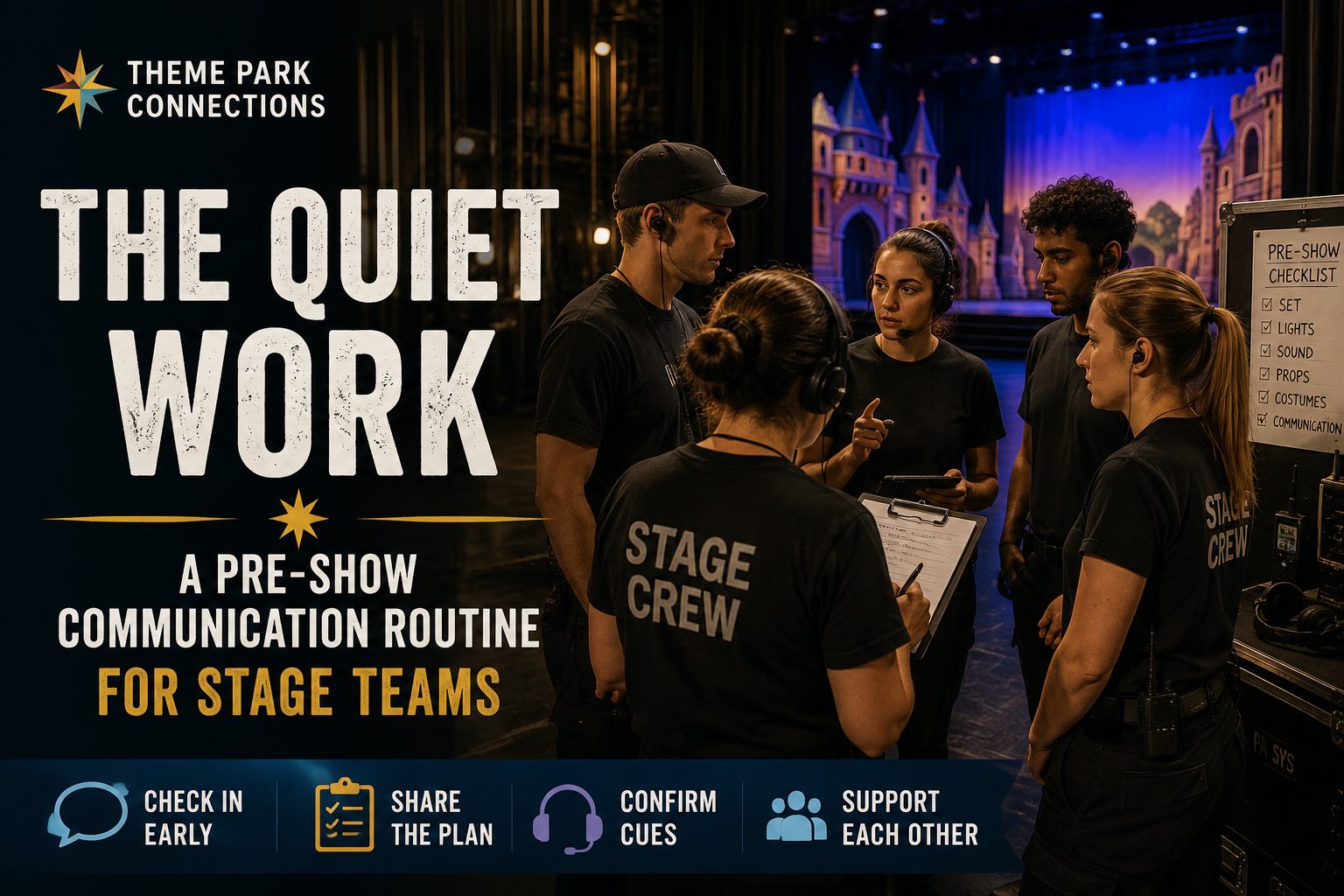
The Quiet Work Before the Applause: A Stage Technician’s Pre-Show Communication Routine
Guests may remember the music, costumes, lighting, and performers, but entertainment shows depend on a different kind of performance before the audience ever takes a seat. Stage technicians, show callers, wardrobe teams, performers, custodial employees, and operations leaders must align on dozens of details before the first cue.
That preparation is often quiet and invisible. It may look like a radio check, a walk through the stage area, or a short conversation about weather. In practice, a strong pre-show communication routine can prevent delays, protect performers and guests, and help the entire entertainment team respond calmly when conditions change.
Why Pre-Show Communication Matters in Theme Park Entertainment
Theme park entertainment rarely operates in a controlled theater environment. Shows may take place outdoors, in high-traffic areas, or across multiple performance spaces. The team may be dealing with heat, rain, noise, changing crowd patterns, costume concerns, technical issues, or a previous show that ran late.
Because of that, the pre-show conversation is more than a reminder of the schedule. It gives the team a shared understanding of the current operating picture.
A useful pre-show check helps answer questions such as:
- Is the performance area ready for performers and guests?
- Are all required team members present or properly covered?
- Have weather or environmental conditions changed?
- Are props, costumes, scenery, and technical elements ready?
- Are there known issues that could affect the show?
- Who has authority to make a timing or operational decision?
When these questions are addressed early, the team has a better chance of solving problems before they become visible to the audience.
The Essential Elements of a Pre-Show Briefing
Confirm the show status
Begin with the basics: the scheduled show time, performance location, expected duration, and any relevant schedule changes. If the show is part of a larger entertainment offering, confirm whether a parade, special event, character appearance, or nearby activity could affect access to the area.
Small timing differences can create major complications. A delayed reset may reduce the time available for a performer change. A nearby event may alter guest flow around an outdoor stage. A clear opening status gives every department the same starting point.
Review changes from the previous performance
One of the most valuable pieces of information comes from the team that just completed the previous show. A pre-show briefing should identify anything that changed during that performance, including:
- A microphone, headset, monitor, or lighting concern
- A prop that was difficult to move or reset
- A costume issue that requires wardrobe attention
- A stage surface that became slippery, wet, or obstructed
- A guest-flow problem near an entrance or performance boundary
- A cue that required an adjustment
The purpose is not to assign blame. It is to make sure the next team does not discover the same problem for the first time during a live performance.
Identify the communication chain
Everyone working a show should know how information will move during the performance. That does not mean every employee needs to hear every radio call. It means the team should understand who communicates with whom and who makes decisions in specific situations.
For example, a stage technician may notice a technical issue, while a show caller or entertainment leader coordinates the operational response. A performer may report a costume concern to wardrobe rather than attempting an adjustment that is outside their role. A team member monitoring the audience area may alert the appropriate leader if guest behavior affects the performance boundary.
Clear communication paths prevent duplicate calls, conflicting instructions, and unnecessary radio traffic during critical moments.
Use Radio Communication With Intention
Radio etiquette matters in every theme park department, but entertainment teams often work around music, special effects, crowd noise, and timed cues. A message that is unclear or delayed can affect more than one department.
Before the show, make sure team members understand:
- Which channel or communication method is being used
- Who needs to acknowledge key calls
- Which updates require immediate escalation
- What information should be shared in person instead of over the radio
- How to communicate if a performer or technician cannot respond immediately
Keep transmissions concise and specific. Identify the location, describe the condition, and state what assistance is needed. “Stage left issue” is difficult to act on. “Stage-left entrance has a loose cable cover near the performer access point; requesting a safety check before places” gives the receiving employee a clearer next step.
Team members should also avoid filling the channel with casual conversation immediately before a show. A quiet radio channel gives people room to hear important calls and respond without repeating information.
Weather and Environment Should Be Part of the Conversation
Outdoor entertainment teams often have to make decisions based on conditions that can change throughout a shift. Heat, wind, rain, lightning, humidity, wet surfaces, and reduced visibility may affect performers, equipment, costumes, props, and guest areas.
Employees should not improvise safety decisions or rely on personal judgment when established procedures apply. However, everyone should be prepared to report changing conditions accurately and promptly.
A useful environmental check might include:
- Whether the performance surface is dry and clear
- Whether wind is affecting lightweight scenery or props
- Whether performers have access to needed water or recovery support
- Whether equipment covers, cables, or barriers need attention
- Whether guests are gathering in locations that create an operational concern
Reporting a condition early gives leaders more options. Waiting until performers are in position or guests are already settled can make the response more difficult.
Practice “What If?” Without Creating Panic
A pre-show briefing does not need to become a long emergency meeting. A short discussion of likely disruptions can help employees respond with less hesitation.
Depending on the production, the team may review what to do if:
- A performer is delayed or unavailable
- A prop does not arrive at its expected location
- A guest crosses a performance boundary
- Audio or lighting behaves unexpectedly
- Weather changes during the performance
- The show must pause, shorten, or stop
The goal is not to predict every possible problem. It is to make sure employees know where to direct information and understand that they should communicate concerns rather than quietly work around them.
Common Pre-Show Mistakes
Assuming yesterday’s plan still applies
Entertainment operations change quickly. A procedure that worked during a previous shift may not fit today’s staffing, weather, construction, event schedule, or equipment status. Treat the briefing as a current update, not a formality.
Using vague language
Words such as “soon,” “probably,” or “it should be fine” can create different expectations. Use clear status terms when possible: ready, pending, unavailable, under review, or awaiting confirmation.
Leaving newer employees out
New team members may hesitate to ask questions because they do not want to interrupt a busy crew. Invite questions before the show begins, especially about access points, radio procedures, reset responsibilities, and escalation paths.
Only discussing technical details
A show can be technically ready and still face an operational problem. Guest flow, performer access, wardrobe timing, crowd noise, and nearby construction can all affect the performance. A strong briefing includes the entire experience, not just the equipment.
Build a Reputation for Reliable Preparation
Employees who consistently arrive prepared, communicate clearly, and notice potential problems early become valuable members of an entertainment operation. Those habits can support future opportunities in stage management, technical direction, show calling, event operations, training, and leadership.
You do not need to dominate the briefing to demonstrate professionalism. Often, the most useful contribution is a precise update, a thoughtful question, or a reminder about a detail that could affect the next cue.
The best pre-show routines are brief, focused, and honest. They create shared awareness without slowing the team down. More importantly, they help employees understand that a successful show is built through coordination long before the audience applauds.
Find More Connections Across the Attractions Industry
Entertainment employees often work closely with departments that have completely different responsibilities, from attractions and food and beverage to hospitality, maintenance, retail, and guest services. Learning how those teams communicate can broaden your understanding of park operations and reveal career paths you may not have considered.
ThemeParkConnections.com gives people working throughout the theme park and attractions industry a place to connect with other professionals, share experiences, learn about different departments, expand their networks, and discover career opportunities. Whether you are entering entertainment for the first time or building toward a technical or leadership role, conversations with people in other parts of the industry can help you see where your skills may take you next.