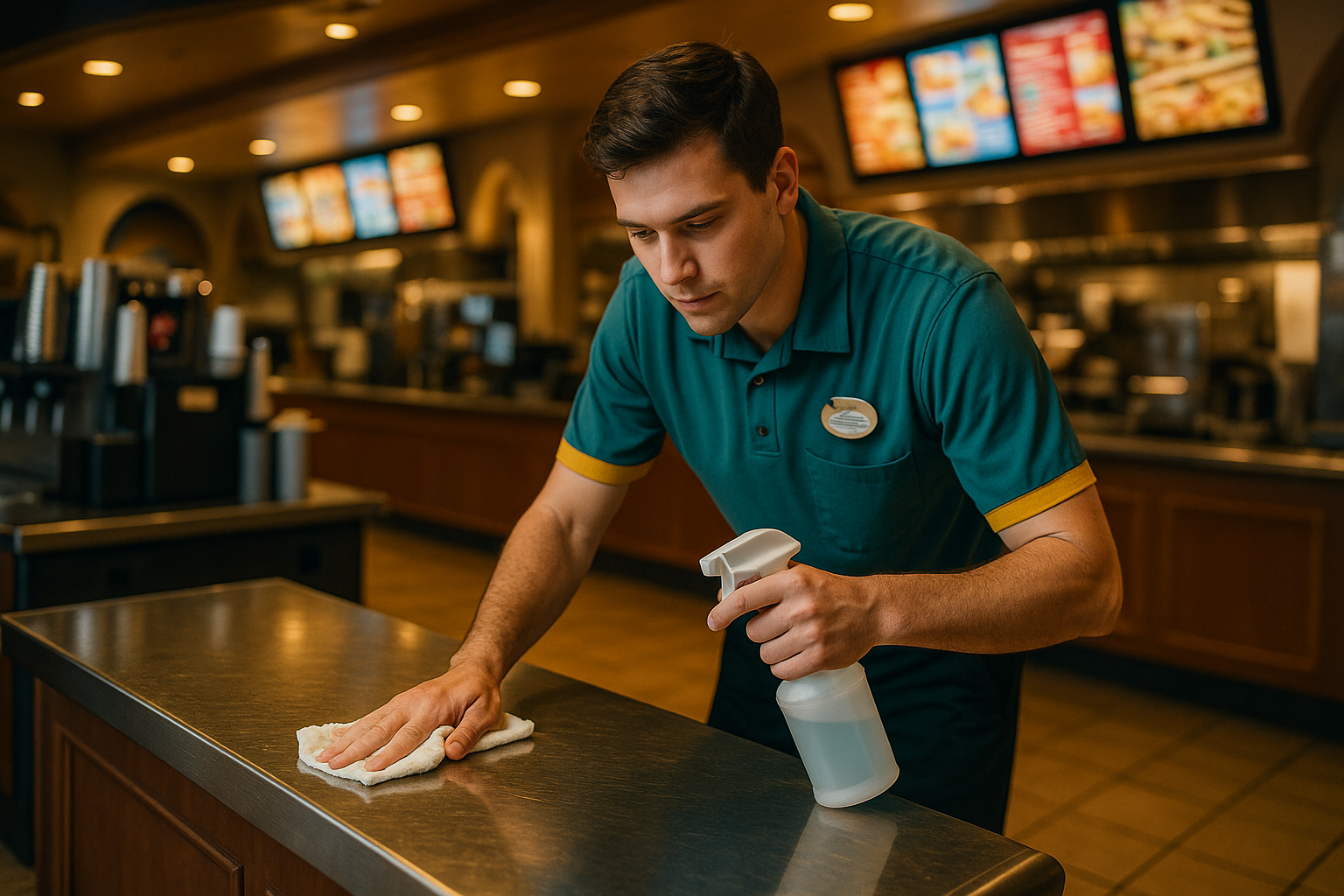
The Last 30 Minutes Matter: Closing a Theme Park Restaurant Without Creating Tomorrow’s Problems
In a high-volume theme park restaurant, the final minutes of a shift can be just as demanding as the lunch rush. Guests are still ordering, mobile pickups may continue arriving, equipment needs attention, food must be handled safely, and the next day’s opening team depends on the closing crew to leave the operation in good condition.
A rushed closing can create problems that do not appear until the next morning: missing supplies, unclear prep needs, incomplete cleaning, inaccurate counts, or equipment issues that could have been reported earlier. A strong restaurant close is not simply about finishing tasks before clocking out. It is about setting up the next shift to begin confidently.
Closing Starts Before the Restaurant Stops Serving
One of the most common closing mistakes is waiting until the doors are locked to begin thinking about the close. In a theme park environment, that approach usually leads to rushed decisions and unfinished work.
Experienced food and beverage teams begin preparing while service is still active. This does not mean neglecting guests or shutting down stations prematurely. It means identifying which tasks can be completed without affecting the guest experience.
Depending on the operation, that may include:
- Checking remaining packaging, cups, lids, napkins, and condiments.
- Organizing a stockroom or service area as supplies are replenished.
- Consolidating approved items according to local food-handling procedures.
- Removing empty boxes and unnecessary waste from work areas.
- Reviewing which menu items may need to be communicated to the closing leader.
- Confirming that cleaning supplies and tools are available before they are needed.
These small actions reduce the number of jobs competing for attention after the final guest leaves.
Separate Guest-Facing Work From Closing Work
A restaurant can be technically open while parts of the operation are already transitioning toward close. The challenge is making that transition without making guests feel pushed out or inconvenienced.
Employees should be careful about how closing activity appears from the guest’s perspective. Loudly stacking chairs, wiping down active ordering areas, or removing supplies that guests still need can make the restaurant feel closed before it actually is.
A better approach is to divide tasks into three groups:
Tasks that can happen during service
These are low-impact activities that do not interfere with food production or guest interaction. Examples may include restocking sealed supplies, organizing back-of-house areas, breaking down empty cartons, or cleaning unused sections of a work area.
Tasks that begin after the final order
These may include shutting down designated stations, completing approved product handling, cleaning food-contact surfaces, and beginning the deeper cleaning sequence.
Tasks that must wait until the operation is fully secured
Some work requires the restaurant to be empty of guests and employees who are not part of the close. Equipment shutdowns, final sanitation steps, cash procedures, locking areas, or other controlled processes should be completed according to the location’s training and leadership direction.
Knowing the difference helps the team move efficiently without creating safety or service problems.
Follow the Order of Operations
Closing tasks are rarely interchangeable. Doing them in the wrong order can create extra work or force employees to repeat steps.
For example, cleaning a surface before removing nearby waste may mean cleaning it again. Breaking down a station before confirming that no additional orders are needed can delay service. Moving equipment before it has been properly handled can create a safety concern.
Every location has its own procedures, but a useful general sequence is:
- Confirm that service has ended or that a station is approved to close.
- Secure or handle food and supplies according to training.
- Remove waste and clear unnecessary materials.
- Clean and sanitize assigned areas.
- Complete equipment or station shutdown steps.
- Restock the items required for opening.
- Inspect the area for missed tasks, spills, damage, or unusual conditions.
- Report anything that needs leadership, maintenance, or opening-team attention.
The exact process should always follow the procedures established by the employer. The key lesson is to avoid treating closing as a collection of unrelated chores. It is a sequence, and the sequence matters.
Do Not Hide Tomorrow’s Problems
A clean-looking restaurant is not necessarily a well-closed restaurant. An employee may wipe down a station and leave without mentioning that a refrigerator seemed warmer than expected, a dispenser was malfunctioning, a drain was slow, or a supply level was unusually low.
Closing employees are often the last people to observe the operation before the next day begins. That makes their observations valuable.
Before leaving, consider whether the next team needs to know about:
- Equipment that performed differently than usual.
- Supplies that will need replenishment before opening.
- Products or packaging that were unavailable during service.
- Unusual spills, leaks, odors, damage, or pest concerns.
- Guest issues that require follow-up.
- Cleaning tasks that could not be completed and why.
- Areas that may need additional inspection.
Reporting a concern does not mean declaring an emergency every time something is imperfect. It means giving the appropriate leader accurate information so the issue can be evaluated and addressed through the proper channel.
Leave the Opening Team a Useful Starting Point
The best closing crews think about the first hour of the next shift. What will the opening team need to find? What information would prevent them from wasting time or repeating work?
This may include clearly organized supplies, a known shortage, a completed cleaning task, or a note about a piece of equipment that needs attention. A short, accurate update is more useful than a vague statement such as “everything is done.”
If your location uses a checklist, log, communication book, digital system, or verbal review, treat it as part of the operation rather than paperwork added at the end. A missing update can be just as disruptive as a missed cleaning task.
Common Closing Mistakes to Avoid
Starting too late
Waiting until the final guest leaves to begin every task creates unnecessary pressure. Look for safe opportunities to prepare throughout the shift.
Assuming someone else handled it
When several employees share closing responsibilities, tasks can be missed because each person believes another employee completed them. Clarify assignments and speak up if something is unfinished.
Rushing sanitation
Cleaning quickly is not the same as cleaning effectively. Follow the required process, use the appropriate materials, and ask a leader when you are unsure about a step.
Leaving vague information
“Needs fixing” is less helpful than a clear description of what happened, where it occurred, and when it was noticed.
Ignoring the guest perspective
Closing activity should remain professional and discreet while guests are still present. The restaurant may be preparing to close, but the guest experience is not over yet.
Why Strong Closing Habits Help Your Career
Closing work develops skills that apply well beyond food and beverage. Employees learn prioritization, food safety awareness, communication, accountability, time management, and operational judgment.
Leaders also notice employees who consistently leave accurate information, protect standards during busy periods, and help the next team begin successfully. Those habits can support future opportunities as a trainer, coordinator, lead, supervisor, or manager.
A reliable close is rarely dramatic. It is visible in the details: the organized station, the accurate report, the properly handled equipment, and the opening team that does not have to solve yesterday’s problems before serving its first guest.
Build Your Theme Park Industry Network
Food and beverage employees understand how much of a theme park operation happens outside the guest’s view. Sharing those experiences with people in other departments can reveal new career paths, useful operating ideas, and skills that transfer across the attractions industry.
ThemeParkConnections.com gives professionals across theme parks, resorts, entertainment, retail, guest services, maintenance, and food and beverage a place to connect with industry peers, expand their professional networks, share experiences, learn about different departments, and discover career opportunities.
Sometimes the next step in your career begins with a conversation about the work happening after the restaurant closes.