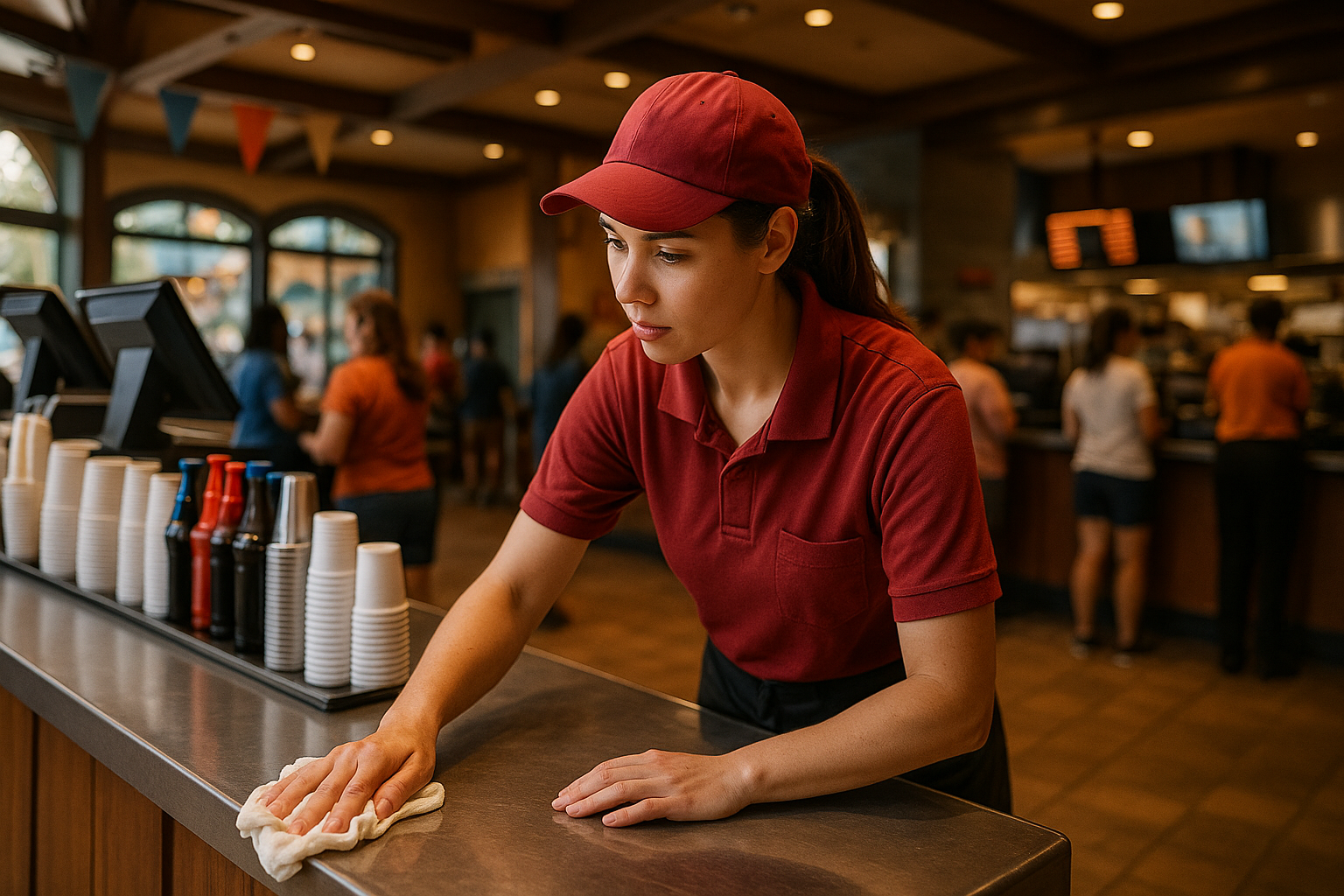
The Five-Minute Reset: Keeping a High-Volume Theme Park Restaurant Ready for the Next Rush
In a theme park restaurant, the busiest moment is not always the hardest part of the shift. The real challenge often comes in the short window after one rush ends and before the next one begins.
That brief period may last only a few minutes. Guests are still moving through the dining area, mobile orders are arriving, team members are returning from breaks, and the next wave may already be forming outside. A well-organized reset can help the restaurant recover quickly. A rushed or incomplete reset can create longer waits, confused employees, missing supplies, and preventable guest complaints.
The goal is not to make the restaurant look perfect. The goal is to restore the operation to a reliable starting point before demand increases again.
What a Restaurant Reset Really Means
A reset is a short, focused recovery period between service surges. It is different from a full closing procedure or a deep cleaning task. Instead, employees address the issues that could interfere with the next several minutes of service.
Depending on the restaurant, a reset may include:
- Refilling high-use ingredients, cups, lids, utensils, or packaging
- Clearing and sanitizing guest tables and service counters
- Removing trash before containers become full
- Restoring condiment, beverage, and self-service areas
- Checking that registers, screens, printers, and order displays are functioning
- Communicating product shortages or equipment concerns
- Reassigning employees to the positions that will be needed next
The most effective resets are prioritized. Employees do not attempt to complete every possible task. They focus on the tasks that protect speed, accuracy, cleanliness, and safety during the next rush.
Start With a Fast Operational Scan
Before jumping into cleanup, take a quick look at the entire service area. A thirty-second scan can reveal problems that are easy to miss when everyone is focused on one station.
Ask a few basic questions:
- Where is the current bottleneck?
- Which supplies are closest to running out?
- Are guests waiting because of ordering, payment, food production, or pickup?
- Is the dining area filling faster than employees can clear it?
- Does any equipment appear slow, blocked, empty, or unreliable?
For example, the kitchen may have enough food prepared, but the pickup counter could be crowded with completed orders. In that situation, cooking more product will not solve the immediate problem. The team may need to organize the pickup area, identify orders, and direct guests more clearly.
Similarly, a beverage station that is out of ice can create a line even if every register and food-production position is operating normally. A reset works best when it addresses the actual constraint rather than the most visible task.
Use the “Next Rush” Test
One practical way to prioritize is to ask: If attendance suddenly increased in five minutes, what would slow us down first?
The answer will vary by restaurant and time of day. Common examples include:
- A nearly empty supply of the most popular packaging size
- A missing utensil or condiment restock
- A full trash can near the ordering area
- A disorganized pickup counter
- An employee returning from break without knowing their next position
- A food item that requires additional preparation time
This question keeps the team focused on operational readiness instead of simply completing familiar chores. Wiping every table may feel productive, but replacing a critical supply or communicating a food shortage may have a greater effect on the next guest experience.
Divide the Reset by Position
Resets become inefficient when everyone assumes someone else is handling the same task. Clear ownership helps the team move quickly without repeated questions.
Front-of-house employees
Front-of-house team members may focus on guest-facing areas, including dining tables, trash removal, condiment stations, beverage areas, menus, and queue organization. They can also watch for guests who appear unsure where to order, wait, or pick up food.
Food-production employees
Kitchen employees may check ingredient levels, packaging, prep needs, holding areas, and equipment conditions. They should communicate early if an item will require additional time or if a station is approaching a shortage.
Cashiers and order-takers
Employees working registers or ordering points can confirm that payment equipment, receipt printers, menus, and order screens are operating properly. They are also in a strong position to identify recurring questions from guests and share that information with the rest of the team.
Leads and supervisors
Leaders should avoid becoming the only person who knows what needs to happen. Their role is to identify priorities, assign tasks, monitor the next rush, and remove obstacles. A concise direction such as “You restock lids, you clear the pickup counter, and I’ll check the kitchen levels” is usually more effective than a general instruction to “get ready.”
Do Not Let the Reset Create New Problems
Even routine recovery tasks require awareness. Employees should avoid blocking guest pathways, leaving cleaning supplies unattended, or creating confusion at ordering and pickup points.
A few habits make resets safer and smoother:
- Keep carts, boxes, and trash containers out of primary guest traffic whenever possible.
- Communicate before leaving a position that still needs coverage.
- Replace supplies in consistent locations so employees can find them quickly.
- Report damaged equipment, spills, or unsafe conditions instead of assuming someone else noticed.
- Use approved cleaning and food-handling practices for the location.
- Do not allow restocking tasks to interfere with active food production or guest service.
A reset should improve the operation, not make it harder for employees or guests to move through the space.
Build Better Communication Between Rushes
The minutes after a rush are also an opportunity to pass along information. A short handoff can prevent the next team from starting with incomplete details.
Useful information might include:
- Which menu items are selling especially quickly
- Which supplies need to be monitored
- Whether guests are misunderstanding a sign or queue direction
- Whether a piece of equipment is working inconsistently
- Which orders or special situations still need attention
- Whether additional coverage may be needed in a particular position
Keep the communication specific. “We are busy” does not tell the next employee what to do. “The pickup counter is filling up, and the large drink lids are nearly gone” gives the team two clear priorities.
Turn Reset Skills Into Career Skills
Employees who become good at resets often develop skills that are valuable beyond food and beverage. They learn to recognize bottlenecks, prioritize under pressure, communicate clearly, and understand how separate positions affect one another.
Those abilities can support future opportunities as trainers, leads, supervisors, event-service coordinators, or operations professionals. A team member who notices that a small supply issue will become a major delay has already begun thinking like an operations leader.
To strengthen this skill, pay attention to patterns. Which tasks are repeatedly missed? Which supplies run out first? Which part of the restaurant becomes crowded during each rush? Sharing those observations respectfully can help improve the team’s routine and demonstrate thoughtful operational awareness.
Small Resets Protect the Guest Experience
Guests may never notice that a restaurant completed a successful five-minute reset. That is often the point. They simply encounter a cleaner service area, a more organized line, fewer delays, and employees who appear prepared for the next wave.
High-volume food service depends on more than speed during the rush. It also depends on what the team does in the few minutes before the rush arrives. When employees learn to scan the operation, prioritize the next likely bottleneck, and communicate clearly, a short reset can protect the entire service period.
For people working in food and beverage or exploring careers across the attractions industry, ThemeParkConnections.com offers a place to connect with other industry professionals, share experiences, learn about different departments, and expand a professional network. Those connections can also help employees discover career opportunities and build a broader understanding of how theme park operations work together.