The Post-Rush Reset: Restoring a Theme Park Restaurant Before the Next Wave
A theme park restaurant can go from manageable to overwhelmed in a matter of minutes. A parade ends, a nearby attraction experiences downtime, or a large group arrives at once, and suddenly every register is active, the pickup counter is crowded, tables need attention, and team members are solving problems faster than they can explain them.
The rush itself is only half the challenge. The next test is what happens after it ends.
A strong post-rush reset helps a food and beverage team recover quickly without carrying yesterday’s—or even the last hour’s—chaos into the next service period. It restores supplies, clears communication gaps, identifies equipment concerns, and gives employees a chance to prepare for the next wave of guests.
Why the Post-Rush Reset Matters
Many restaurant problems become more visible after a rush. A team may finish serving a long line only to discover that cups are nearly gone, a popular menu item is low, the condiment station has not been replenished, or a register is behaving inconsistently.
If those issues are ignored, the next rush begins from a weaker position. Employees spend the following service period reacting instead of serving. Guests experience longer waits, more unavailable items, and inconsistent information.
A reset creates a short recovery window. It does not mean slowing down or assuming the day has become quiet. It means using the available time to restore the operation before demand increases again.
Start With a Quick Operational Scan
The first step is to look at the entire location instead of immediately focusing on one task. A restaurant can appear calm while several important areas still need attention.
Take a quick scan of:
- Front registers and ordering points
- Food pickup and service counters
- Dining areas and high-traffic walkways
- Condiment, beverage, and utensil stations
- Storage and restocking areas
- Equipment that performed poorly during the rush
- Any guest concerns still waiting for follow-up
This scan helps the team identify the issues that will affect the next operating window. A few minutes spent deciding what matters most can prevent employees from scattering into low-priority tasks while a major service problem remains unresolved.
Reset in the Right Order
Every location will have its own procedures and priorities, but a useful reset generally follows the flow of service.
1. Restore the guest-facing areas
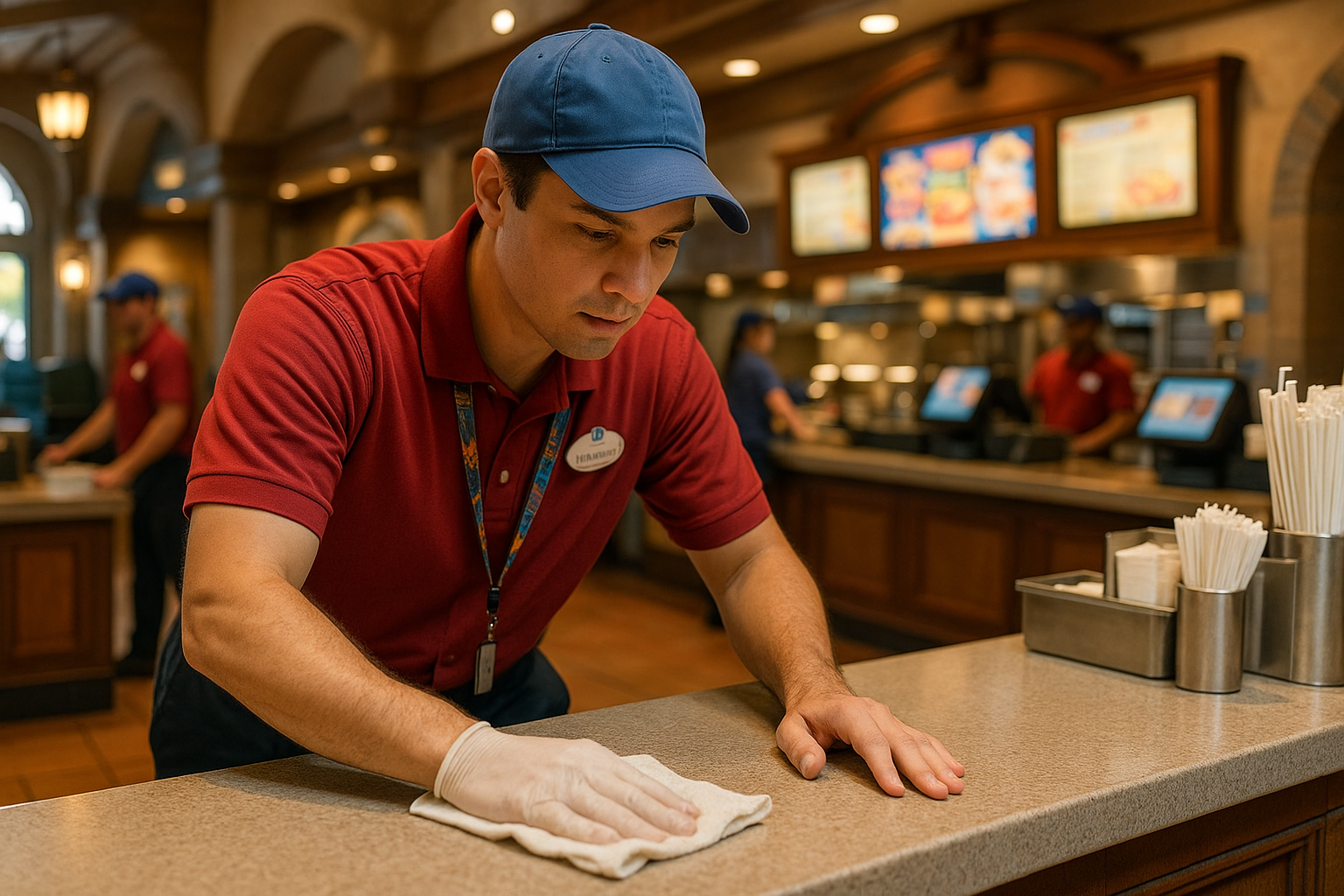
Begin with the spaces guests see and use. Remove trash, clear tables, address spills through the appropriate process, and restore the appearance of service counters. A restaurant that looks neglected can make guests assume the entire operation is disorganized—even if the kitchen is working efficiently.
Pay attention to areas that became crowded during the rush. A line may have formed around a beverage station, a mobile pickup area, or a narrow walkway. Restoring clear paths supports both guest movement and employee safety.
2. Replenish high-use supplies
Do not wait until an item is completely gone before replacing it. Restock the supplies that are most likely to affect speed during the next rush, such as cups, lids, napkins, utensils, packaging, straws, condiments, and frequently ordered ingredients.
Experienced employees learn which items disappear first at their location. That knowledge is valuable, but it should also be shared with newer team members. A new employee may notice that a supply is low without realizing how quickly it will become a service problem.
3. Confirm menu availability
After a busy period, check whether the team can continue offering the full menu. If an item is temporarily unavailable, make sure the appropriate employees know before the next guest asks for it.
Clear communication is especially important between preparation areas, registers, and leadership. Guests should not hear three different answers from three different employees. If a product is limited or unavailable, the team needs consistent information about what can be offered instead and who should handle escalated concerns.
4. Report equipment concerns early
A piece of equipment does not need to fail completely before it deserves attention. An intermittent printer problem, slow beverage dispenser, refrigerator temperature concern, or fryer issue can become much more disruptive during the next rush.
Employees should report concerns through the location’s established process and provide useful details:
- What happened
- When it happened
- How often it has occurred
- Which part of service was affected
- Whether the issue is still occurring
“The machine is acting strange” is difficult to act on. A more useful description explains what the employee observed and what happened afterward. Accurate reporting helps leaders, maintenance teams, and the next shift make better decisions.
Use the Reset to Improve the Next Rush
A reset should not be limited to cleaning and restocking. It is also an opportunity to identify patterns.
Ask practical questions:
- When did the rush begin?
- What caused demand to increase?
- Which station became the bottleneck?
- What item or supply ran low first?
- Where did guests need the most assistance?
- Did employees lose time searching for products or information?
The answers may reveal a recurring pattern. A restaurant near an entertainment venue may see a predictable surge after a show. A location near a popular attraction may experience a sudden increase when that attraction reopens. A seasonal event may change which menu items sell fastest.
Sharing these observations with a lead or supervisor can help the team prepare more effectively. The goal is not to criticize whoever was working during the rush. The goal is to turn experience into better preparation.
Do Not Let the Reset Create a New Problem
One common mistake is pulling too many employees away from active service. A full reset may be useful, but guests still need to be served, questions still need to be answered, and the location may become busy again without warning.
Assign responsibilities clearly. One employee may focus on the dining area while another checks supplies. A leader can monitor the line and redirect people if demand increases. If the reset must be paused, the team should know which tasks are essential and which can wait.
Another mistake is assuming that a quiet moment will last. In a theme park, attendance patterns can change quickly. Keep the reset efficient, stay aware of the surrounding area, and be prepared to return to service immediately.
The Career Value of Strong Restaurant Recovery
Employees who handle post-rush recovery well demonstrate more than speed. They show situational awareness, prioritization, teamwork, communication, and operational judgment.
Those skills matter when pursuing opportunities such as trainer, lead, coordinator, supervisor, or cross-department roles. Leaders notice the employees who recognize what the operation needs next instead of waiting for every task to be assigned.
A strong reset also builds trust among coworkers. Team members know they can depend on someone who stays calm after a difficult rush, communicates problems clearly, and helps prepare the location for what comes next.
Every Rush Should Leave the Team Better Prepared
The best food and beverage teams do more than survive busy periods. They learn from them. A post-rush reset restores the restaurant, protects the guest experience, and gives employees a clearer starting point for the next service window.
Even a short reset can make a meaningful difference when it focuses on the right priorities: guest-facing areas, essential supplies, menu communication, equipment concerns, and lessons from the rush.
For people working in food and beverage, hospitality, attractions, entertainment, retail, maintenance, and guest services, ThemeParkConnections.com provides a place to connect with other industry professionals, share experiences, learn how different departments operate, discover career opportunities, and build relationships throughout the attractions industry.