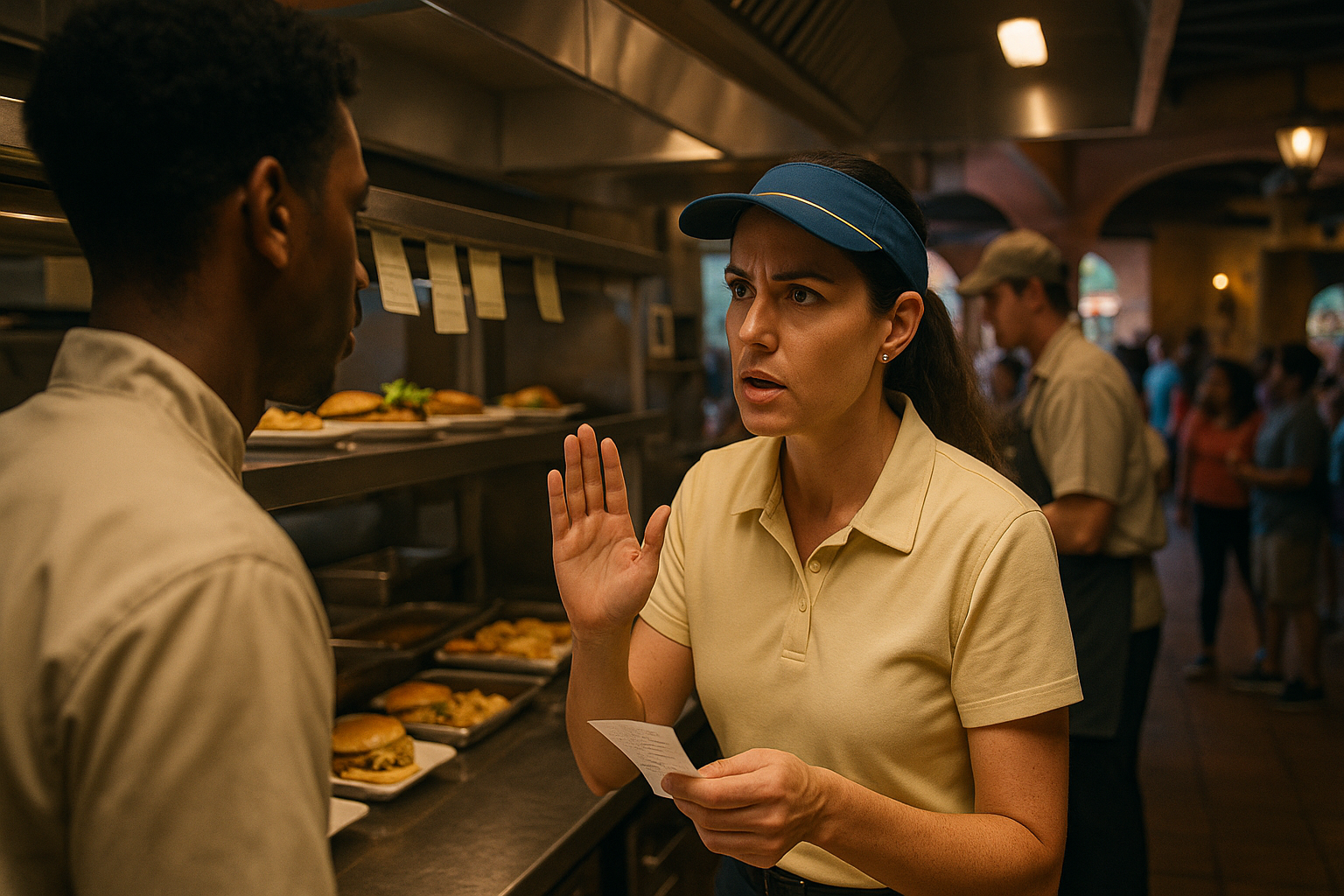
When the Kitchen Falls Behind: Recovering a Food & Beverage Bottleneck in a Theme Park
In a high-volume theme park restaurant, a short delay can spread quickly. One station falls behind, orders begin stacking up, guests wait longer than expected, and employees start making decisions under pressure. The problem may begin with a rush of mobile orders, a large group arriving together, a staffing gap, or a piece of equipment that slows production.
Recovering from a food and beverage bottleneck is not about moving faster at any cost. It is about identifying where the delay is occurring, communicating clearly, and protecting food quality, accuracy, and guest service while the team works through the backlog.
Recognize the Bottleneck Before It Spreads
A busy location is not necessarily in trouble. The warning sign is usually a growing imbalance between stations or steps in the process.
For example, the front counter may continue taking orders at its normal pace while the kitchen cannot prepare them quickly enough. In another situation, the kitchen may be producing food efficiently, but the pickup area becomes crowded because orders are not being assembled or called out quickly.
Common signs of a food service bottleneck include:
- Orders waiting longer than usual at one station
- Employees repeatedly asking where an order is in the process
- Completed items sitting while another component is prepared
- Guests gathering near the pickup area for updates
- Frequent remakes caused by rushed or unclear communication
- Team members abandoning assigned positions without coordination
The first useful question is simple: Where is the work stopping? Finding that point is more productive than telling everyone to hurry.
Separate the Cause From the Symptoms
When a restaurant falls behind, the visible problem may not be the original problem. A crowded counter could be caused by slow order taking, delayed cooking, missing ingredients, poor staging, or unclear communication between the kitchen and front-of-house team.
Look at the entire order path
Follow an order from the moment it is placed until it reaches the guest. Ask:
- Is the order entering the system correctly?
- Is one menu item taking much longer than the others?
- Are employees waiting for equipment, ingredients, packaging, or instructions?
- Are completed orders being held because part of the order is missing?
- Is the pickup area organized well enough for employees to find finished orders?
This quick assessment helps the team respond to the actual constraint instead of creating more activity around it.
Communicate the New Priority
During a rush, employees may each have a different understanding of what matters most. One person may focus on clearing older orders, while another continues prioritizing new orders. A supervisor or designated lead should establish a clear short-term plan.
That plan might include:
- Pausing or slowing a task that is adding to the backlog
- Assigning an employee to support the station causing the delay
- Grouping similar orders when that fits the operation
- Asking front-of-house employees to provide accurate wait-time information
- Escalating equipment, supply, or staffing concerns through the proper channel
Communication should be direct and specific. “We need to catch up” does not tell employees what to do. “The grill is the current delay; one trained employee is moving there, and the counter team should give guests an updated estimate” creates a workable response.
Do Not Let Speed Create More Work
Rushing can make a bottleneck worse when it leads to incorrect orders, missing components, poor portion control, or food that does not meet the location’s standards. Every remake takes time that could have been used to complete another order.
Employees recovering a service delay should continue to protect the basics:
- Read or verify the order before handing it off
- Keep ingredients and finished items properly separated
- Follow required food safety and sanitation practices
- Confirm modifications rather than guessing
- Ask for help when a task is outside the employee’s training or authority
A slightly slower accurate order is often more useful than a fast order that returns to the kitchen for correction.
Manage the Guest-Facing Side of the Delay
Guests usually become frustrated when they do not know what is happening. Employees may not be able to eliminate the wait, but they can reduce uncertainty by providing honest, consistent information.
Useful communication should explain the current situation without making promises the team cannot keep. For example:
- “Your order is still being prepared, and we are working through a higher-than-normal wait.”
- “One item in your order is taking longer, but we are checking on it now.”
- “I am confirming the status with the kitchen so I can give you an accurate update.”
Avoid blaming another employee or department in front of guests. Statements such as “The kitchen lost your order” or “Nobody told me about that” may be true from one employee’s perspective, but they do not help resolve the interaction. Focus on what can be checked and what action will happen next.
Use the Recovery to Improve the Operation
Once the backlog is under control, the team should take a few minutes to identify what created the delay. This does not need to become a long meeting. A brief review can reveal patterns that are easy to miss during the rush.
Consider asking:
- What was the first sign that the location was falling behind?
- Which station became the constraint?
- Did employees know who was coordinating the response?
- Were guests given consistent updates?
- Did any equipment, supply, menu item, or process contribute to the delay?
- What could be adjusted before the next peak period?
The goal is not to assign blame. It is to turn a difficult shift into useful operational knowledge. A recurring delay may point to a training need, a layout problem, an unclear handoff between positions, or a preparation routine that does not match actual demand.
The Skills Behind a Strong Food Service Recovery
Employees who handle bottlenecks well develop skills that apply far beyond one restaurant. They learn to prioritize, observe the full operation, communicate under pressure, and make decisions without losing sight of quality or guest experience.
These skills can support future opportunities in food and beverage leadership, training, catering, banquets, special events, operations coordination, and other departments that depend on organized service. A team member who can calmly identify a constraint and help coworkers respond is demonstrating operational judgment—not simply working quickly.
Theme park food and beverage operations will always have unpredictable moments. The strongest teams are not the ones that never fall behind. They are the ones that recognize problems early, communicate a practical response, and recover without sacrificing accuracy, safety, or respect for the guest.
ThemeParkConnections.com gives people working throughout the theme park and attractions industry a place to connect with other professionals, expand their networks, share experiences, learn about different departments, discover career opportunities, and build relationships across the industry. For food and beverage employees, those connections can offer new ideas from people who understand the realities of rush periods, special events, and high-volume park operations.