The Ten-Minute Reset: Keeping a High-Volume Theme Park Kitchen Ready Between Rushes
In a theme park restaurant, the busiest part of the day rarely arrives as one continuous rush. Instead, service often comes in waves: a crowd leaves a show, a parade route opens, a large group arrives from an attraction, or a sudden change in weather sends guests indoors. The kitchen may have only a few minutes between those waves to recover.
That short recovery period is not downtime. It is the opportunity to restore the operation before the next demand hits. A well-executed kitchen reset can improve speed, reduce avoidable stress, and help the team maintain food safety and service standards during high-volume periods.
What a Kitchen Reset Actually Means
A reset is the process of returning a kitchen or service area to a ready state after a rush. It may take ten minutes, five minutes, or happen continuously while orders are still being completed.
The exact tasks vary by restaurant, menu, equipment, and operating procedures, but a reset usually involves:
- Replenishing ingredients and service supplies
- Removing waste and clearing unnecessary equipment or containers
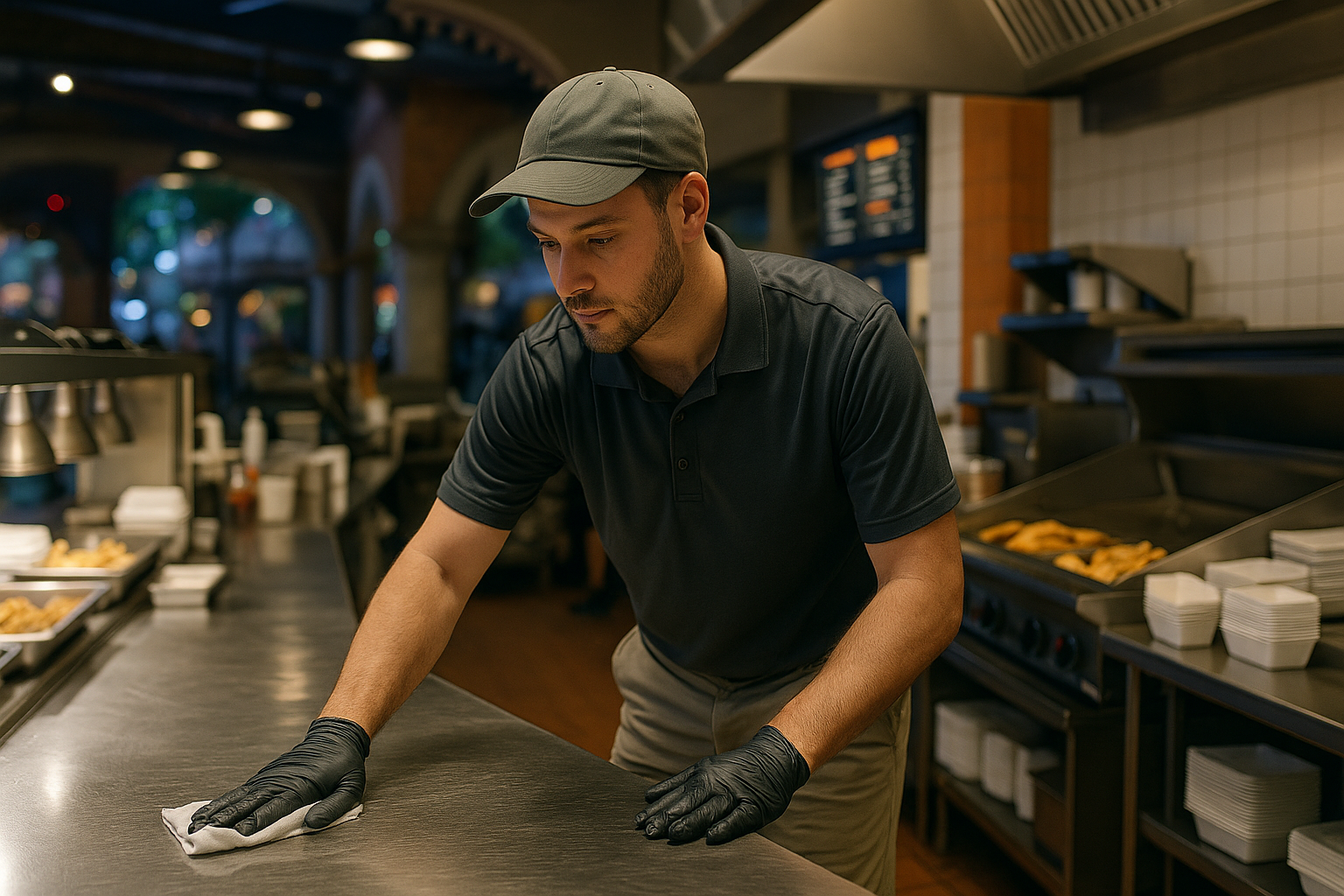
- Cleaning and sanitizing work surfaces according to department standards
- Checking that essential tools are available and functioning
- Organizing the line so employees can work without reaching, searching, or crossing unnecessarily
- Communicating shortages, equipment concerns, or unfinished tasks to the next person
The goal is not to make the kitchen look perfect for its own sake. The goal is to remove the obstacles that slow down the next rush.
Start With the Next Rush, Not the Last One
One of the most common mistakes after a busy period is focusing only on what just happened. Employees clean up the visible mess but do not think ahead about what the next group of guests will need.
Before resetting, ask a practical question: What will stop us first if another rush begins in five minutes?
The answer may be a nearly empty container of a high-volume ingredient, a shortage of takeout packaging, a missing utensil, or a work surface crowded with used pans. Identifying the first likely bottleneck helps the team prioritize instead of attempting every task at once.
A useful priority order
- Safety and food protection: Address anything that could create a food safety concern or conflict with established procedures.
- Critical ingredients: Replenish the items required for the most frequently ordered menu options.
- Service supplies: Restock containers, lids, napkins, utensils, trays, and other high-use materials.
- Equipment readiness: Confirm that essential equipment is available for use and report problems promptly.
- Organization: Return tools and ingredients to their proper locations so the next rush can begin cleanly.
This approach keeps the team from spending valuable recovery time on low-impact details while a major operational need remains unresolved.
Build the Reset Around Roles
Resets become slower when everyone notices the same problem but assumes someone else will handle it. They become more effective when responsibilities are clear.
That does not mean every employee needs a rigid assignment during every recovery period. In a fast-moving restaurant, flexibility is essential. However, the team should understand who is watching the cooking line, who is replenishing supplies, who is handling dish flow, and who is communicating with leadership or the stockroom.
For example, one employee may remain responsible for completing outstanding orders while another restocks packaging and ingredients. A third employee may clear used equipment and prepare the area for the next production cycle. If staffing changes, employees should briefly confirm who is covering each priority.
Clear ownership prevents two common problems:
- Multiple employees perform the same task while another urgent task is ignored.
- Everyone continues serving guests without anyone restoring the operation.
Strong team members also recognize when their assigned task is complete and look for the next constraint instead of waiting to be directed.
Restocking Without Creating More Clutter
Restocking is more than moving supplies from one location to another. Poorly organized replenishment can create new problems by blocking walkways, mixing older and newer product, or placing frequently used items out of reach.
During a reset, use the opportunity to make the work area easier to operate:
- Place high-use items where employees can reach them without unnecessary movement.
- Keep backup supplies organized instead of stacking them wherever space is available.
- Follow department procedures for rotation, labeling, storage, and temperature control.
- Remove empty containers rather than allowing them to occupy valuable workspace.
- Report a shortage early, before the item is completely unavailable.
A team that announces, “We are down to one case of cups,” has given leadership time to respond. A team that waits until the last cup is being used has turned a manageable supply issue into a service disruption.
Use the Reset to Find Repeating Problems
A reset is also a diagnostic moment. If the same issue appears after every rush, it may point to a larger operational problem.
Perhaps a particular ingredient is consistently placed too far from the line. Maybe packaging is stored in a location that becomes inaccessible during peak service. A piece of equipment may take too long to clean between production cycles. Employees may also be repeatedly searching for the same tool because its storage location is unclear.
Not every inconvenience requires an immediate process change, but repeated friction should be noticed and communicated. Employees who identify patterns can help leaders distinguish between a one-time difficult shift and a workflow problem that deserves attention.
Questions worth asking
- Which item ran out first?
- Where did employees lose the most time?
- Which task was repeatedly interrupted?
- Did the layout force employees to cross paths or leave their stations?
- Was any important information missing when the rush began?
These questions turn a stressful service period into useful operational feedback.
Keep Communication Short and Specific
Busy kitchens do not need long explanations during a reset. They need accurate information delivered clearly.
Instead of saying, “We are getting low on everything,” identify the specific concern: “We need more sandwich containers before the next lunch wave.” Instead of saying, “The fryer is acting strange,” explain what was observed and when it occurred, then follow the appropriate reporting process.
Good reset communication usually includes:
- What has already been completed
- What still needs attention
- What supply or equipment issue may affect service
- What the next team or supervisor should know before the next rush
Concise communication helps employees make decisions without creating confusion or unnecessary radio traffic.
Reset Skills Build More Than Speed
Employees who become good at kitchen resets develop skills that apply well beyond food service. They learn to prioritize under pressure, recognize bottlenecks, manage limited time, communicate operational needs, and support coworkers without losing focus on the guest experience.
Those skills are valuable for trainers, leads, supervisors, event teams, and managers. A future leader may not be the fastest person on the line, but they are often the person who notices what the team will need next and helps organize the response.
The next time a rush ends, resist the temptation to simply catch your breath and wait for direction. Look at the operation as the next group of guests will experience it. What would slow the team down? What is missing? What can be restored now?
That mindset turns a short break between rushes into one of the most productive moments in the shift.
Build Your Industry Perspective With Theme Park Connections
Food and beverage operations are only one part of the larger attractions industry. The same habits involved in a strong kitchen reset—prioritizing, communicating, anticipating demand, and supporting the next team—also appear in attractions, entertainment, hospitality, retail, maintenance, and guest services.
ThemeParkConnections.com gives people working throughout the theme park and attractions industry a place to connect with other professionals, expand their networks, share experiences, learn about different departments, discover career opportunities, and build lasting connections across the field.