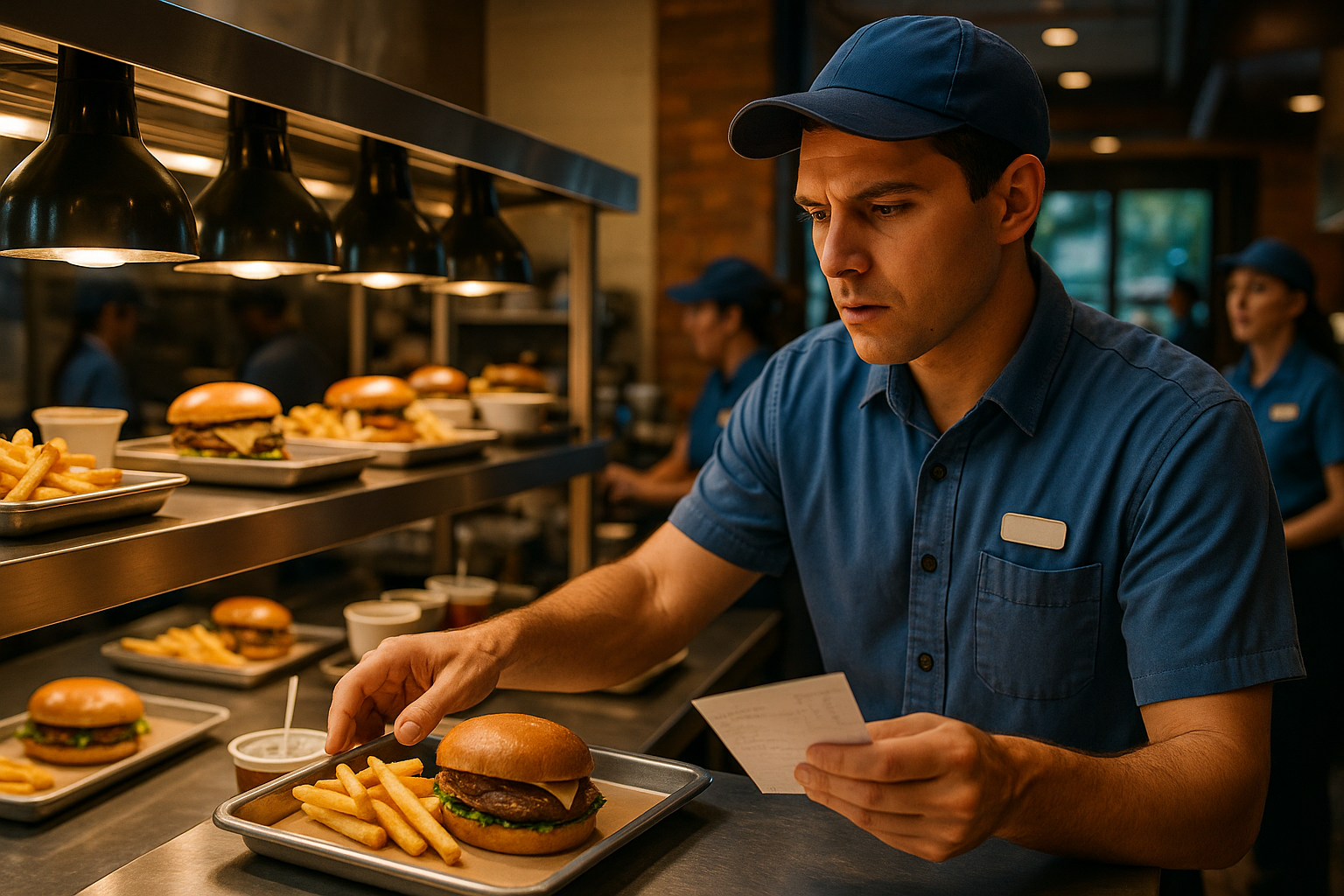
The Expo Position: Keeping a Theme Park Restaurant Moving When Every Order Hits at Once
During a quiet meal period, a quick-service restaurant can appear easy to manage. Orders move from the register to the kitchen, food is prepared, and guests receive their meals with little visible coordination.
Then the rush arrives.
A parade lets out, a popular attraction experiences downtime, or a large group enters the restaurant at the same time. Suddenly, orders are stacking up, special requests are being called out, mobile orders are approaching their promised times, and front-of-house employees are asking whether meals are ready.
This is where the expo position becomes essential. The expeditor, sometimes called the pass or window position, helps connect the kitchen and the guest-facing team. When the role is handled well, it prevents small delays from becoming a full service breakdown.
What the Expo Position Actually Does
The expo employee is not simply the person who places food on a tray. The role is an active coordination point between preparation, order assembly, and service.
Depending on the restaurant, an expo employee may be responsible for:
- Reviewing completed items against the order
- Grouping food and drinks for the correct guest or transaction
- Checking modifiers, allergies, substitutions, and special requests
- Communicating missing or delayed items to the kitchen
- Coordinating with cashiers, runners, mobile-order staff, or dining-room employees
- Keeping the pickup area organized
- Identifying orders that need immediate attention
The exact setup varies between theme parks, resorts, and restaurants, but the central responsibility remains the same: make sure the right order leaves the kitchen complete, accurate, and ready to be served.
Why Expo Matters During a Theme Park Rush
Theme park food service has challenges that are different from many traditional restaurants. Guests may be unfamiliar with the layout, traveling with children, managing a tight schedule, or trying to eat before a show, parade, or reserved experience. A delay of several minutes can create frustration because the meal is connected to the rest of their day.
At the same time, park restaurants often experience demand spikes rather than a steady flow of business. The kitchen may move from manageable volume to a large queue in a very short period.
Without a strong expo position, several problems can develop:
- Completed food sits while the team waits for one missing item.
- Employees remake orders because components were separated or misidentified.
- Special requests are missed during assembly.
- Front-of-house employees repeatedly ask the kitchen for updates.
- Guests receive incomplete meals and must return for corrections.
- The pickup area becomes crowded and difficult to manage.
Expo does not eliminate every delay. It gives the team a clear person responsible for seeing the entire order flow rather than focusing on only one station.
Build a System for Checking Orders
The strongest expo employees avoid relying on memory. During a rush, several orders may look similar, and a tray can be assembled quickly enough that an overlooked modification is not noticed until the guest opens the package.
Use a consistent order scan
Develop a repeatable sequence for every order. For example, check:
- The order number or identifying information
- The number of entrées or main items
- Sides and substitutions
- Sauces, utensils, napkins, and other service items
- Drinks or desserts
- Allergy or special-diet alerts according to local procedures
The sequence matters because it reduces the chance of skipping an item when the kitchen is loud or several employees are speaking at once.
Do not assume that a familiar-looking order is complete. A tray with two sandwiches may belong to a different transaction than the ticket currently in front of you. Confirm before handing it off.
Prioritize the Bottleneck, Not Just the Oldest Ticket
It is natural to work strictly from oldest order to newest order. In many situations, that is appropriate. But expo also needs to recognize when one missing component is holding up multiple orders.
Imagine that several meals are ready except for a side item coming from another station. If the side station is unaware that multiple orders are waiting, the delay can continue while the rest of the kitchen keeps producing food.
A useful expo callout is specific and actionable:
- “Three orders are waiting on fries.”
- “Order 214 is complete except for the allergy-safe item.”
- “Two mobile orders are approaching pickup time.”
- “The dining-room team is waiting on drinks for table seven.”
Clear information helps the appropriate employee respond. Simply saying “We need food” or “This is taking too long” does not give the kitchen enough direction.
Keep Callouts Short and Calm
Communication at expo can become noisy quickly. Multiple people may be calling for items, asking about orders, or requesting clarification. Long explanations often get lost.
Use a simple structure:
What is needed + which order it affects + how urgent it is.
For example: “Order 318 needs one grilled chicken sandwich. Guest is waiting at pickup.”
That callout is more useful than repeating the entire order or expressing frustration. It tells the kitchen what to make, where it belongs, and why the timing matters.
Stay professional even when the rush is difficult. Expo sets the tone for the pass. If the person in that position becomes visibly irritated, employees may stop communicating or begin shouting over one another. A calm voice helps the team continue sharing information.
Know When an Order Is Ready to Leave
Speed matters, but incomplete food is not a successful handoff. Expo employees often face pressure to move orders quickly, especially when the pickup area is filling up. Sending out an order that is missing a side, drink, or required modification usually creates more work later.
Before releasing an order, ask:
- Is every major item present?
- Does the order match the ticket?
- Are modifications visible or clearly identified?
- Are hot and cold items being handled appropriately?
- Does the receiving employee know which guest or order number it belongs to?
If one component is delayed, communicate the status rather than allowing the order to disappear into the crowd. The front-of-house team may be able to explain the delay, deliver the available items when appropriate, or direct the guest to the correct location for follow-up.
Keep the Pickup Area Under Control
A disorganized pickup area makes every problem harder to solve. Tickets can be covered, trays can be placed in the wrong area, and employees may not know which orders are waiting for guests or runners.
Small habits make a difference:
- Separate completed orders from orders waiting on an item.
- Keep the most time-sensitive orders visible.
- Remove old packaging and clutter from the pass.
- Use consistent locations for mobile, delivery, and in-person orders when the operation supports those categories.
- Tell the appropriate employee when an order is ready rather than assuming they will notice it.
These practices are especially helpful when a new employee joins the team during a busy period. A clear setup communicates the workflow without requiring a lengthy explanation.
The Career Skills Hidden in Expo Work
Employees who become strong at expo develop skills that apply well beyond food service. They learn to prioritize competing needs, identify bottlenecks, communicate under pressure, and maintain accuracy while the pace increases.
Those abilities can support future opportunities in:
- Restaurant leadership
- Event and catering operations
- Guest recovery
- Training and onboarding
- Resort food service
- Operations coordination
- Supervisory roles across the park
Expo work also gives employees a broader understanding of how front-of-house and back-of-house decisions affect one another. That perspective is valuable for anyone who wants to become a lead or trainer.
Make the Pass a Control Point, Not a Holding Area
The best expo employees do more than wait for food to appear. They watch the order flow, notice patterns, communicate specific needs, protect accuracy, and help the rest of the team understand what is happening.
During a rush, the goal is not to make every order move at exactly the same speed. The goal is to keep the operation informed and organized so that delays are visible, priorities are clear, and completed meals reach guests correctly.
For people working in theme park food and beverage, mastering expo is a practical way to become more confident in high-volume service while building skills that can lead to greater responsibility.
ThemeParkConnections.com gives professionals across the theme park and attractions industry a place to connect with other employees, share experiences, learn about different departments, expand their professional networks, and discover career opportunities. Conversations with people who have worked in food service, hospitality, operations, and leadership can help you see how skills developed in one position may apply throughout the industry.