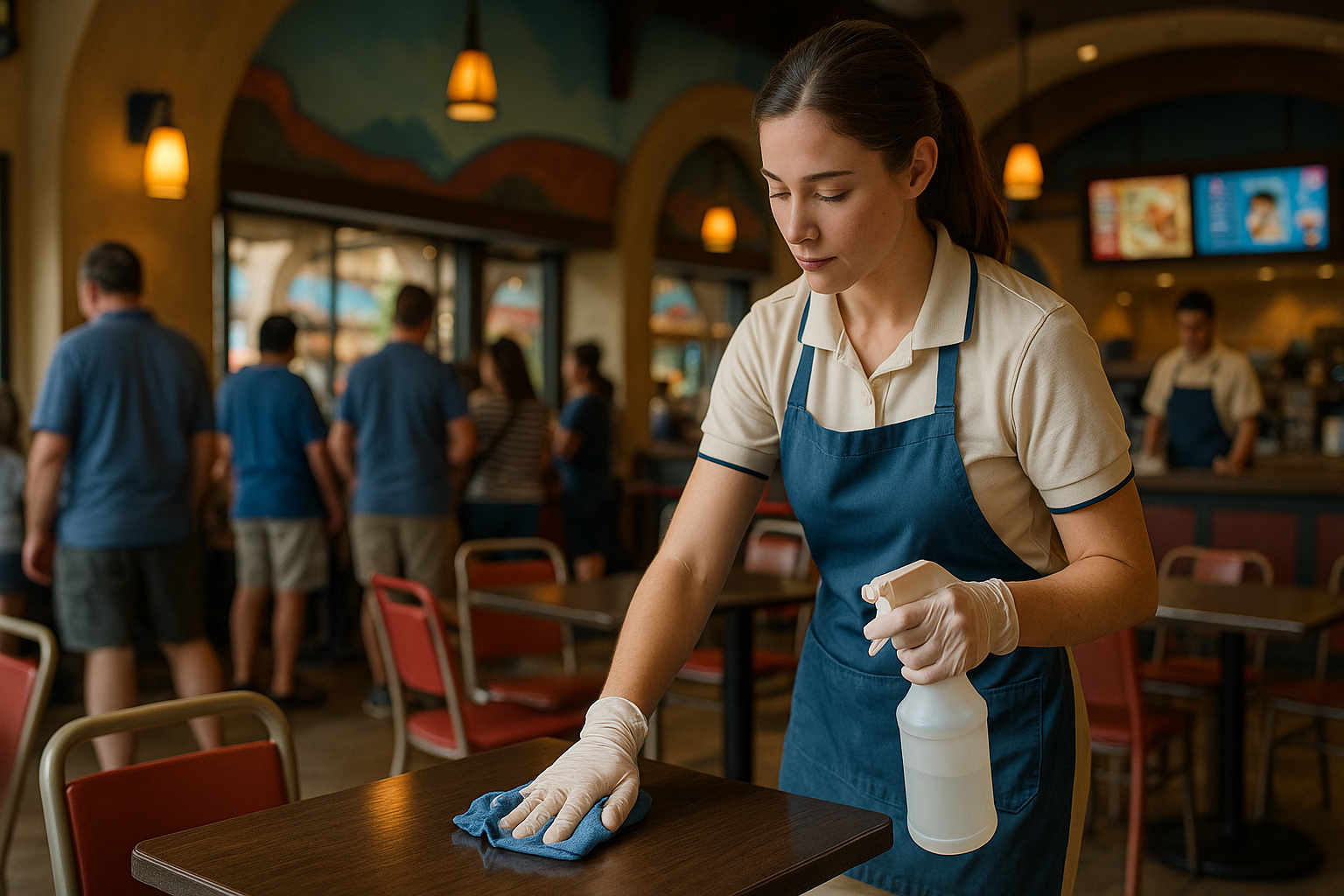
The Quiet Reset Between Rushes: Keeping a Theme Park Restaurant Ready for the Next Wave
In a high-volume theme park restaurant, the busiest moment is not always the hardest one. The real test often comes in the short window after one rush ends and before the next one arrives.
Tables need to be cleared, condiment stations refilled, orders checked, equipment cleaned, trash removed, and employees repositioned—all while guests are still entering, asking questions, and placing orders. That brief period is a reset, and handling it well can determine whether the next rush feels organized or overwhelming.
Employees who learn to use these transition periods effectively become valuable members of a food and beverage team. They help the operation recover faster, reduce preventable delays, and make the next guest wave easier for everyone.
Why the Between-Rush Reset Matters
A restaurant rarely goes from “busy” to “quiet” instantly. Instead, the volume may dip for a few minutes while employees are still finishing orders, restocking supplies, or assisting guests who arrived during the previous rush.
That creates a narrow opportunity to prepare without abandoning the current operation. If the team uses the time well, the next increase in demand is manageable. If the team treats the lull as a complete break, small shortages and unfinished tasks can quickly become larger problems.
A poorly timed reset may lead to:
- Longer waits because essential supplies run out.
- Employees leaving their assigned positions at the same time.
- Guests finding dirty or unavailable tables.
- More order errors during the next rush.
- Additional pressure on the employees who remain at the front counter or service window.
The goal is not to make the restaurant look perfect before the next guest arrives. The goal is to restore the operation to a stable, service-ready condition.
Read the Operation Before Starting
One of the most important food and beverage skills is learning to recognize whether a slowdown is real or temporary.
A restaurant may appear calmer because a line has shortened, but several mobile orders may be waiting in the system. A dining area may look empty while guests are still holding tables and waiting for meals. A kitchen employee may seem available while completing a large batch of food that cannot be interrupted.
Before beginning a reset task, take a quick look at the entire operation:
- Are new orders still arriving steadily?
- Are there unfinished orders waiting for pickup?
- Is the kitchen caught up, or is it still working through a backlog?
- Are guests waiting for assistance at tables, counters, or registers?
- Is another employee already handling a task that affects your area?
This quick assessment helps prevent a common mistake: starting a cleaning or restocking task just as the next rush begins.
Prioritize What Affects Service First
Not every reset task has the same urgency. During a short window, employees should focus first on the items that could interrupt service if left unfinished.
Start with critical supplies
Check the items employees reach for repeatedly during a rush. Depending on the restaurant, that may include cups, lids, napkins, utensils, straws, trays, packaging, sauces, beverage supplies, or frequently used ingredients.
Restocking should be based on what the next rush will require—not simply what is easiest to carry from the storage area. If a supply is nearly empty, refill it before organizing less urgent items.
Restore guest-facing areas
A clean dining area influences how guests experience the restaurant, but the work should be approached efficiently. Clear tables, remove obvious debris, wipe high-use surfaces, and make sure walkways remain open.
Do not spend several minutes perfecting one table while other guests are searching for somewhere to sit. A quick, consistent pass through the entire area is usually more useful than detailed attention in one small section.
Check the service stations
Condiment counters, beverage areas, pickup shelves, and self-service stations can become disorganized quickly. Replacing missing items and removing abandoned trash during the reset prevents employees from having to leave their positions repeatedly during the next wave.
Use Team Communication Instead of Guesswork
Strong reset periods depend on simple communication. Employees should know which tasks are being handled and which areas still need attention.
A short statement can prevent duplicated work:
- “I’m taking care of cups and lids.”
- “I’ll clear the dining room while you check the pickup area.”
- “The kitchen is still catching up, so let’s keep one person at the front.”
- “I’m going to restock sauces, then I’ll return to register support.”
This is especially important when a restaurant is staffed with employees from different positions or experience levels. A new team member may not know which supplies are essential, while an experienced employee may recognize that the apparent slowdown will not last.
When appropriate, keep a leader or coordinator informed about shortages, equipment concerns, or unusual demand. A reset is not the time to quietly work around a recurring problem that should be addressed.
Do Not Let the Reset Create a New Problem
Employees can become so focused on preparation that they overlook guests already in front of them. A guest asking for assistance, an order waiting for clarification, or a family searching for an accessible seating option should not be ignored simply because a restocking task has begun.
Good judgment means being willing to pause a reset task when service requires it. Supplies can wait for a moment. A guest who feels dismissed may not.
Reset work also needs to remain within the employee’s training and assigned responsibilities. Do not move equipment, enter restricted areas, handle unfamiliar tools, or change food handling practices without proper direction. Efficiency should never come from bypassing safety or operating standards.
Build a Personal Reset Routine
Employees can become faster and more reliable by developing a simple mental checklist. The exact order will vary by location, but a useful routine might include:
- Scan the restaurant and identify the most urgent need.
- Confirm that current orders and guests are being supported.
- Refill the supplies most likely to affect service.
- Restore high-traffic guest areas.
- Check with nearby employees before moving to another task.
- Return to the primary position before the next rush begins.
Over time, this routine becomes automatic. Employees begin noticing patterns: which supplies disappear first, when the dining area usually fills, which menu items create bottlenecks, and which tasks are best handled before peak demand.
That awareness is useful beyond food and beverage. It develops prioritization, situational awareness, communication, and operational judgment—skills that apply to leadership, training, guest services, hospitality, and other theme park departments.
The Best Resets Are Almost Invisible
Guests may never notice that a team used a short lull to prepare the restaurant. That is often a sign that the reset worked. The next line moves at a steady pace, supplies are available, tables turn over smoothly, and employees do not have to scramble for basic items.
Working effectively between rushes is not about constantly moving for the sake of looking busy. It is about recognizing what the operation needs next and preparing for it before the pressure arrives.
For food and beverage employees, that habit can become one of the clearest signs of professional growth. The strongest team members do not simply respond to the rush in front of them. They help the entire restaurant get ready for the rush that is coming.
Connect With More Theme Park Professionals
Food and beverage operations are only one part of the attractions industry, and many of the skills developed during a restaurant reset—prioritization, communication, teamwork, and anticipation—transfer to other departments.
ThemeParkConnections.com gives people working throughout the theme park and attractions industry a place to connect with other professionals, expand their networks, share experiences, learn about different departments, discover career opportunities, and build connections across the field.