The Invisible Work of Show Call: How Entertainment Teams Keep Performances Moving
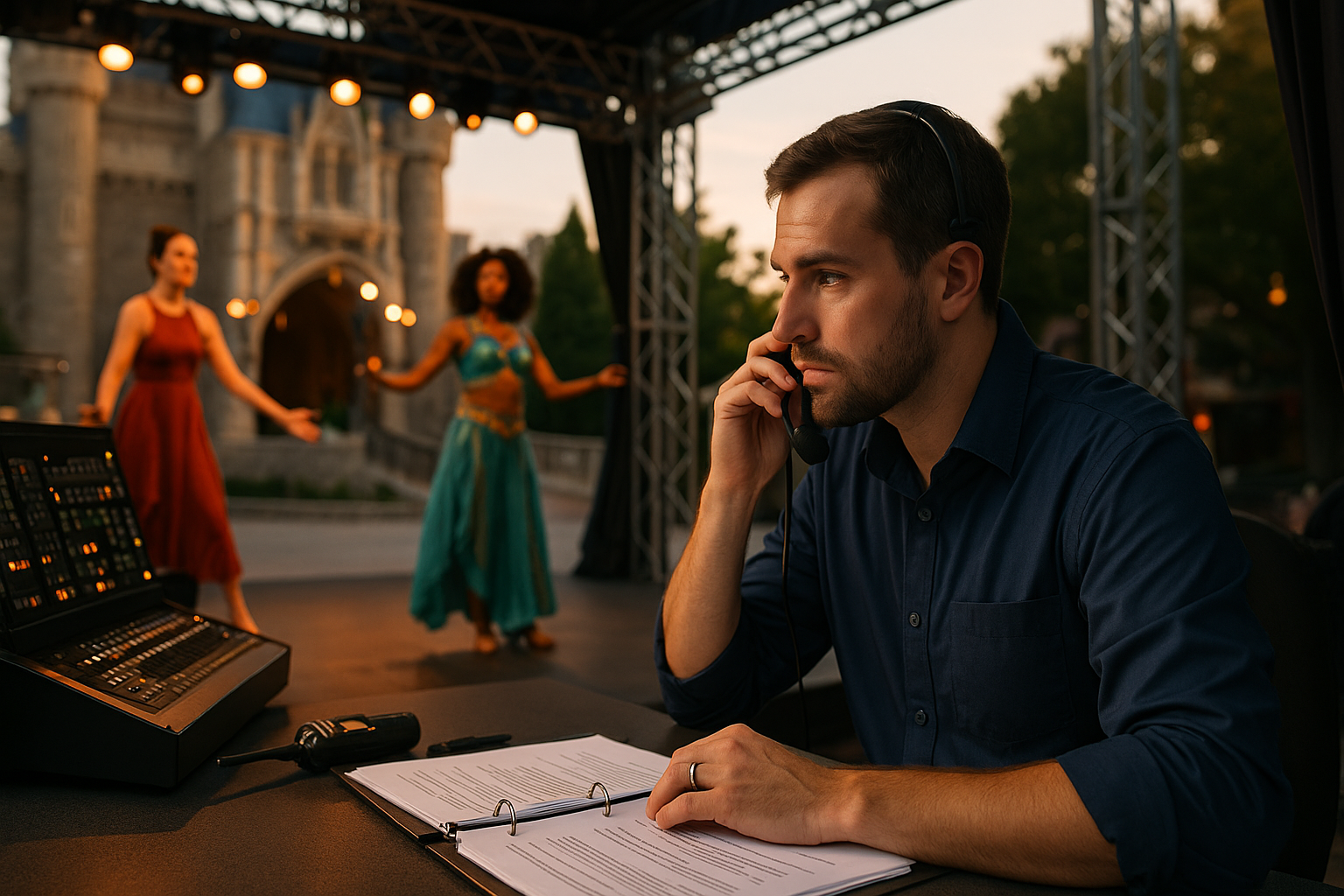
Guests often experience a theme park show as a seamless few minutes of music, choreography, lighting, costumes, and storytelling. Behind that performance is a detailed operating rhythm known as a show call.
A show call is the organized communication process used to coordinate an entertainment production before, during, and sometimes after a performance. Depending on the venue, it may involve performers, stage managers, technicians, wardrobe teams, makeup artists, character attendants, musicians, operations leaders, and other departments. When the call is handled well, guests may never realize how many people are working together. When it is handled poorly, even a small missed detail can affect the entire performance.
Understanding show calls is valuable for anyone interested in theme park entertainment, live events, stage management, technical production, or leadership. It also teaches skills that transfer well across the attractions industry: timing, communication, accountability, and calm decision-making.
What Happens Before the Show Begins?
A successful performance usually starts well before the audience arrives. The pre-show period is when the entertainment team confirms that the people, equipment, costumes, and performance space are ready.
The exact process varies by production, but a pre-show show call may include:
- Confirming performer and technician staffing
- Reviewing schedule changes, special events, or modified performances
- Checking costumes, wigs, props, microphones, and other performance equipment
- Confirming that the stage or performance area is ready
- Reviewing weather or environmental concerns for outdoor entertainment
- Communicating substitutions, absences, or approved changes to the team
- Making sure departments know when performers need to be in position
The show call creates a shared understanding of the plan. Without it, individuals may be ready according to their own schedules while the production as a whole is not ready to begin.
The Role of the Stage Manager or Show Caller
In many productions, the stage manager or show caller serves as the communication center for the performance. This person may not be visible to guests, but they help coordinate the sequence of events and keep the team informed.
A show caller may communicate instructions such as:
- Standby for performers to move to places
- Standby for lighting, audio, video, or special effects cues
- Confirmation that a scene, number, or segment is ready
- Updates about delays or operational changes
- Instructions for holding, modifying, or ending a performance
The strongest show callers are clear without being dramatic. They understand that entertainment teams may be working in noisy backstage environments, crowded wardrobe areas, or locations where radio communication is limited. Their calls need to be specific enough that every department understands what is happening and what action is expected next.
For someone hoping to move into entertainment leadership, learning to communicate with precision is one of the most useful skills to develop. “Be ready soon” is open to interpretation. “Stand by performers for entrance in two minutes” gives the team a clear timeline.
Why Timing Matters So Much
Live entertainment depends on timing because different departments are connected. A performer may be ready, but the microphone may not be checked. The microphone may be ready, but a costume change may still be in progress. The costumes may be ready, but the performance area may need to be cleared.
A few seconds can matter when multiple cues are linked together. A delayed entrance can affect choreography, lighting, music, narration, or the next performer waiting backstage. This is why entertainment teams often work from detailed run sheets, cue lists, checklists, and preset routines.
Good timing does not mean rushing. It means understanding which tasks must happen first, which tasks can happen at the same time, and which tasks require confirmation before the next step begins.
Think in Dependencies
One helpful way to understand a show call is to think in terms of dependencies. Ask questions such as:
- What has to be complete before the performer can enter?
- Who needs to know if a prop is unavailable?
- Which cues can continue if one element is delayed?
- What is the backup plan if a performer or technician is missing?
- Which decisions require a supervisor or manager?
This way of thinking is useful beyond entertainment. Attractions employees use similar judgment when managing capacity, handling a temporary closure, or coordinating a reopening. Food and beverage leaders rely on it during high-volume service. Hotel teams use it when room readiness depends on several departments.
Handling Changes Without Creating Confusion
Entertainment operations rarely unfold exactly the same way every day. Weather, staffing, equipment issues, guest behavior, special events, or changes to the park schedule can affect a performance.
The challenge is to communicate a change without overwhelming the team with unnecessary information. A useful update should answer three questions:
- What changed?
- What does the team need to do differently?
- When does the change take effect?
For example, instead of sending a vague message that a performance is “a little different,” a clear update might explain that the outdoor location has changed, the entrance route is different, and performers should report to the alternate preset area for the next show.
When circumstances are changing quickly, repeating the key information can prevent mistakes. This is not unnecessary repetition; it gives employees who were occupied with costumes, equipment, or guest-facing work an opportunity to catch up.
Radio Etiquette and Backstage Communication
Professional radio communication is a major part of many entertainment operations. Employees should know the expectations for their specific workplace, but several general habits are useful across the industry.
- Listen before speaking so you do not interrupt another message.
- Use concise language and avoid unnecessary background conversation.
- Identify yourself or your department when appropriate.
- Repeat critical information when confirmation is requested.
- Move sensitive or lengthy discussions to a more appropriate channel.
- Keep your tone calm, especially when a problem is developing.
Backstage communication also requires discretion. Performers, costumes, production problems, and schedule changes may involve information that does not need to be discussed in public areas. Professionalism includes knowing what to say, where to say it, and who actually needs the information.
What New Entertainment Employees Often Miss
New employees sometimes focus so heavily on their own assignment that they lose sight of the full production. A performer may concentrate on getting into costume. A technician may focus on a piece of equipment. A character attendant may focus on a route or meeting point. All of those tasks matter, but the show depends on how they connect.
Experienced team members learn to look ahead. They notice when a colleague is running late, when a prop has been moved, or when a performance area is becoming difficult to access. They communicate early rather than waiting until the issue affects the show.
That does not mean stepping outside your role or making decisions you are not authorized to make. It means recognizing potential problems and reporting them through the correct channel while there is still time to respond.
Building Show-Call Skills for Your Career
If you want to develop skills related to show calling or entertainment operations, start by becoming dependable in the basics. Arrive prepared, learn the schedule, understand your department’s terminology, and pay attention to how experienced employees communicate.
You can also build your skills by:
- Learning to read production schedules and cue sheets
- Practicing concise verbal and written communication
- Asking questions about how departments coordinate
- Observing rehearsals and identifying operational dependencies
- Volunteering for approved cross-training opportunities
- Keeping organized notes during changes or unusual performances
These habits can lead to opportunities in stage management, technical direction, entertainment operations, event production, and supervisory roles. They also demonstrate that you understand the larger operation rather than only your individual task.
Making the Invisible Work Count
A polished theme park performance depends on hundreds of small decisions that guests may never see. The show call is one of the systems that brings those decisions together. It gives employees a common timeline, creates accountability, and helps the team respond when the plan changes.
For entertainment employees, mastering show-call communication is more than learning a backstage routine. It is practice in leadership, coordination, and problem-solving under real operating conditions. Those skills have value throughout the attractions industry.
ThemeParkConnections.com gives professionals across theme parks and attractions a place to connect with other industry employees, expand their networks, share experiences, and learn about departments outside their own. Whether you work in entertainment, operations, hospitality, maintenance, or guest services, building those connections can help you discover career opportunities and understand the many paths available throughout the attractions industry.