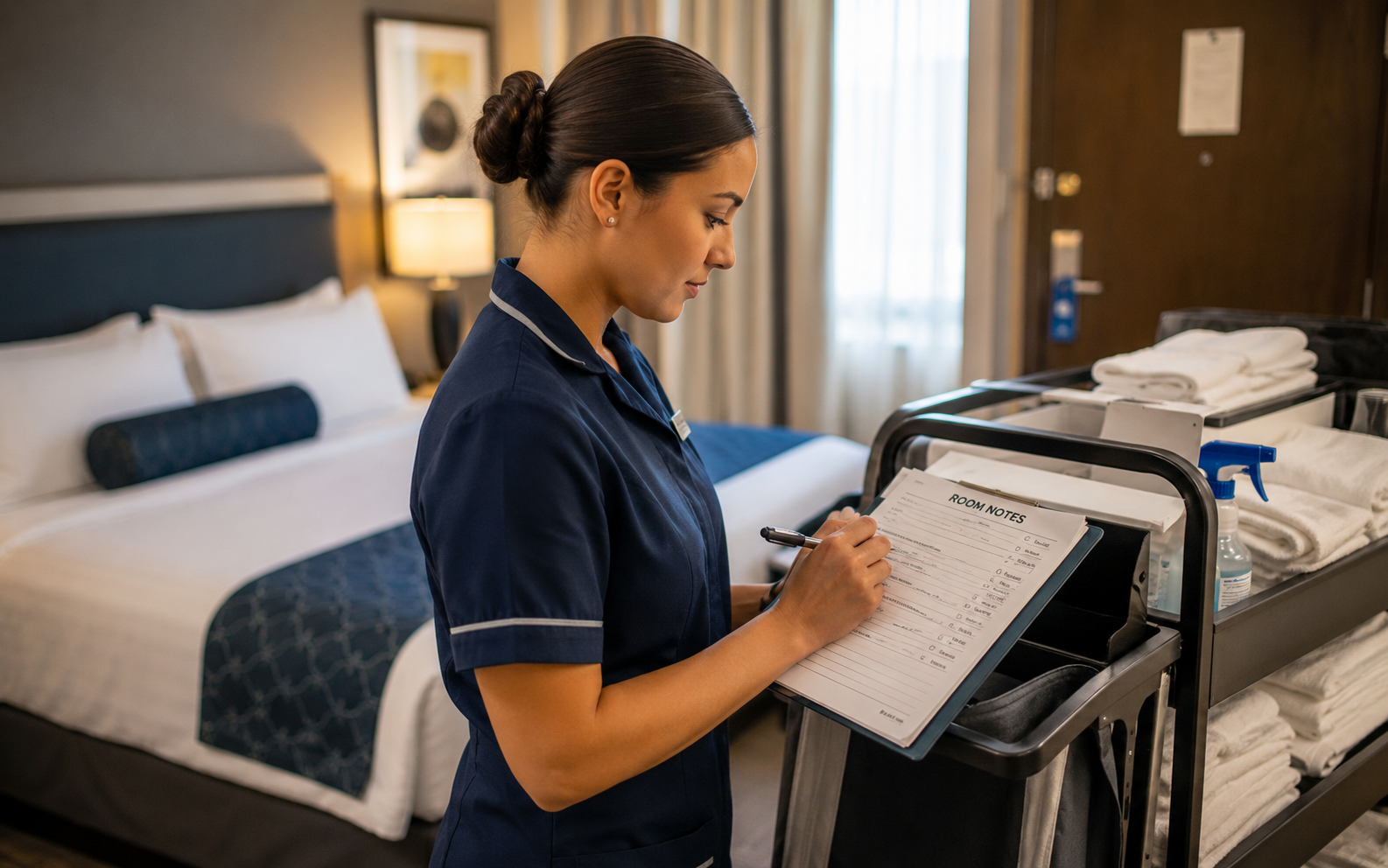
The Housekeeping Handoff: Why Room Notes Matter During Same-Day Turnover
In a theme park resort, a guest may spend the morning in a crowded attraction queue, the afternoon watching a parade, and the evening checking into a hotel room that needs to feel calm, clean, and ready. That experience depends on more than speed. It depends on accurate communication between housekeeping employees, inspectors, front desk teams, maintenance, and leadership.
Same-day room turnover can be one of the most demanding parts of resort operations. Rooms may need to be cleaned, inspected, repaired, and released within a narrow window. When information is missing or unclear, small problems can create delayed check-ins, repeated work, frustrated employees, and an avoidable impact on the guest experience.
For housekeeping employees and anyone working in resort operations, learning how to write useful room notes is a practical skill that supports both efficiency and professionalism.
Why Housekeeping Notes Matter
A room attendant may discover a loose fixture, a television issue, a damaged piece of furniture, or a guest item left behind. The next employee who handles that room may not have seen the problem firsthand. A clear note gives them the context they need to make the right decision.
Good documentation helps answer basic operational questions:
- What was noticed?
- Where in the room did it occur?
- Was the issue corrected, reported, or left for another department?
- Does the room need a follow-up inspection?
- Could the condition affect the next guest?
A vague message such as “Room needs maintenance” does not provide enough information. A more useful note might identify the exact location and condition: “Bathroom sink faucet continues to drip after handle is fully closed.” That description allows the receiving team to understand the problem before entering the room.
Accurate notes also protect employees from relying on memory during a busy shift. When several rooms, work orders, and guest requests compete for attention, written information reduces the chance that an issue will be forgotten during a handoff.
What Makes a Room Note Useful?
Be Specific About the Location
“Lamp broken” is less helpful than “left bedside lamp does not turn on; outlet and switch were checked.” The second version tells the next employee where to look and what has already been attempted.
Use room landmarks whenever possible:
- Left or right side of the bed
- Entryway closet
- Desk drawer
- Bathroom vanity
- Balcony door
- Shower or bathtub area
- Near the television or seating area
Specific details are especially valuable in large resort rooms, suites, villas, and connecting-room configurations where several similar items may be present.
Describe the Condition, Not Just the Category
Words such as “damaged,” “dirty,” or “broken” can mean different things to different people. Describe what is actually visible or occurring.
For example, instead of writing “carpet problem,” note whether the carpet has a visible stain, lifted edge, loose transition strip, or area that requires specialized cleaning. Instead of “curtain issue,” explain whether the curtain is off its track, missing a hook, or unable to close completely.
The goal is not to write a long report. The goal is to provide enough information that another employee can understand the situation without needing to ask several follow-up questions.
Separate Completed Work From Outstanding Work
A room note should make it clear what has already been handled. If a room attendant removes trash, replaces linens, or reports an equipment issue, that information should not be confused with work that still needs to happen.
Useful wording may include:
- “Replacement batteries requested; device still unavailable.”
- “Spill cleaned, but upholstery requires additional treatment.”
- “Missing towel replenished; no further action needed.”
- “Maintenance notified; room remains unavailable pending follow-up.”
This distinction prevents duplicate work and helps supervisors prioritize rooms that still require attention before they can be released.
Room Notes During a Tight Turnaround
Same-day turnover creates pressure because multiple departments may be working on the same room in sequence. Housekeeping cleans the space, an inspector reviews it, maintenance addresses defects, and the front desk may be waiting for an updated room status.
During this process, short and accurate communication becomes more valuable than lengthy explanations. A strong handoff should focus on facts that affect the next step.
Prioritize Guest Impact
Not every imperfection has the same operational importance. A minor cosmetic concern may be documented for later attention, while a nonfunctioning air-conditioning unit, plumbing problem, safety concern, or room-access issue may prevent the room from being released.
When documenting an issue, consider how it affects:
- Guest safety
- Basic room functionality
- Cleanliness or sanitation
- Privacy and security
- Accessibility
- The room’s readiness for arrival
This does not mean employees should make decisions outside their role. It means they should communicate enough information for the appropriate person to make an informed decision.
Avoid Assumptions
Employees sometimes write notes based on what they believe happened rather than what they observed. Statements such as “guest broke this” or “maintenance forgot to fix it” can create unnecessary conflict and may be inaccurate.
Document observable facts instead:
“Drawer front is detached on the right side” is more professional than “guest damaged drawer.” If additional investigation is needed, the appropriate department or leader can handle it.
Neutral language protects the quality of the handoff and keeps the focus on resolving the issue.
Common Documentation Mistakes
Writing Notes That Are Too Brief
Short notes save time only when they are understandable. A message such as “Needs attention” may require a supervisor to track down the original employee, inspect the room again, and determine what the note meant.
Using Unclear Abbreviations
Abbreviations may be familiar within one team but confusing to another department. If a note could be read by housekeeping, front desk, maintenance, engineering, or leadership, use language that all of them can understand.
Failing to Update the Status
A room issue can change quickly. If the problem has been corrected, the note should reflect that. If the room is waiting for another department, that should also be clear. Outdated notes can cause employees to repeat inspections or delay a room unnecessarily.
Including Unnecessary Personal Information
Room documentation should contain operational information, not speculation or unnecessary details about guests. Keep notes factual, relevant, and respectful. If a situation involves a sensitive guest concern, follow the employer’s established reporting process rather than placing excessive detail in a general room note.
Building a Strong Handoff Habit
Employees can improve their documentation by using a simple mental checklist before submitting a note:
- What did I observe?
- Where is it located?
- What action did I take?
- What still needs to happen?
- Could this affect the room’s release?
It is also helpful to read the note as if you were the next person entering the room for the first time. Would you know what to look for? Would you understand whether the issue is resolved? Would you know who needs to act next?
These habits strengthen more than housekeeping performance. They develop skills in observation, prioritization, written communication, and cross-department coordination. Those skills can support future opportunities in housekeeping leadership, resort operations, quality assurance, front desk management, maintenance coordination, and training.
Small Notes, Smoother Operations
A well-written housekeeping note may take only a few seconds to create, but it can save several minutes for the next employee and prevent confusion across an entire shift. In a resort environment where room readiness directly affects arrival flow and guest confidence, that consistency matters.
Strong room documentation is not about creating paperwork for its own sake. It is about giving the next person reliable information at the moment they need it. When employees communicate clearly, same-day turnover becomes easier to coordinate, problems are addressed more efficiently, and guests are more likely to receive the seamless arrival experience the resort intends to provide.
ThemeParkConnections.com gives professionals throughout the theme park and attractions industry a place to connect with other employees, expand their professional networks, share experiences, learn about different departments, discover career opportunities, and build relationships across the attractions industry. For resort and hospitality employees, those connections can provide valuable insight into the many career paths available beyond a single role or property.