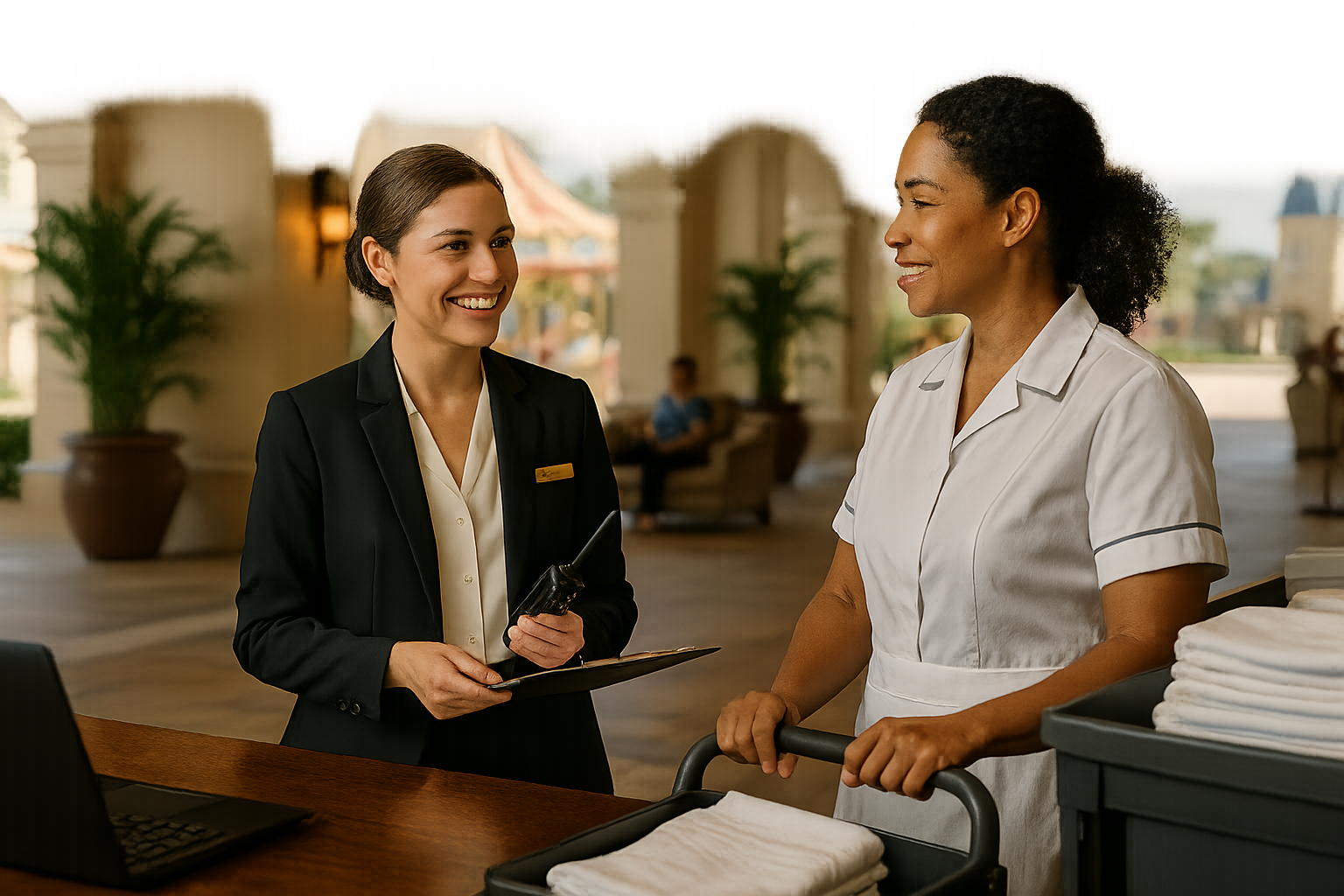
The Handoff That Keeps a Resort Running: Building Better Communication Between Housekeeping and Front Desk Teams
At a theme park resort, a guest’s experience does not begin at the park entrance. It may begin in a hotel lobby, at a front desk, or in a room that is ready exactly when the guest arrives. When communication between housekeeping and front desk teams breaks down, the effects can be immediate: delayed check-in, frustrated guests, rushed room attendants, and avoidable pressure on supervisors.
A strong housekeeping-to-front-desk handoff is one of the quieter systems that keeps a resort operating smoothly. It is not flashy, but it directly affects guest confidence, employee workload, and the property’s ability to respond during busy arrival periods.
Why the Housekeeping and Front Desk Handoff Matters
Front desk employees need accurate room-status information to make realistic decisions. Housekeeping teams need clear priorities so they can focus their effort where it will have the greatest effect. Both departments are working toward the same result, but they often see the operation from different angles.
The front desk may be focused on:
- Which guests are waiting to check in
- Early arrivals and special circumstances
- Room moves or maintenance-related concerns
- Current lobby volume
- Guest expectations created during the reservation process
Housekeeping may be focused on:
- Which rooms have been cleaned
- Which rooms still need service
- Rooms requiring extra attention or inspection
- Supply shortages or equipment issues
- Staffing levels and the pace of room turnover
Neither perspective is complete on its own. A room may be physically cleaned but still awaiting inspection. A room may be listed as available but have an unresolved maintenance concern. A guest may be waiting for a particular room type while the housekeeping team is prioritizing rooms for a large arrival group.
Clear communication helps both departments work from the same information instead of making assumptions.
Use Specific Information Instead of Vague Updates
One of the most common communication problems in hotel operations is the vague status update. Statements such as “It should be ready soon” or “Housekeeping is working on it” may sound helpful, but they do not give the receiving employee enough information to make a decision.
A useful update should answer three basic questions:
- What is the current status?
- What is preventing the room from being released?
- What action is expected next?
For example, instead of saying, “Room 214 is almost done,” a more useful update might be: “Room 214 has been cleaned and is waiting for inspection. The supervisor is checking it next.” That information gives the front desk a clearer understanding of what remains.
When an exact completion time is unknown, employees should avoid inventing one. It is better to explain the next step than to promise a time that may not be realistic.
Prioritize Without Creating Confusion
During a busy arrival period, several rooms may appear urgent at the same time. Front desk employees may be receiving questions from waiting guests, while housekeeping leaders are balancing room assignments, call-outs, and rooms that require additional work.
Priorities should be communicated in a way that distinguishes urgency from preference. Useful information may include:
- A guest who has been waiting for an accessible room
- A room needed for a family traveling with young children
- A room connected to a guest recovery situation
- A room required for a time-sensitive operational reason
- A room that is part of a coordinated group arrival
This does not mean every request can be placed ahead of the existing workload. It does mean the housekeeping team has enough context to make an informed decision and communicate realistic expectations.
Front desk employees should also avoid sending repeated individual requests for the same room through multiple channels. Duplicate messages can create confusion and make it harder for supervisors to see the true priority list. If a situation changes, provide the updated information clearly and identify what has changed.
Build a Reliable Shift Handoff
A shift handoff is more than passing along a list of unfinished rooms. It is an opportunity to identify open issues before they become guest-facing problems.
Information Worth Including
- Rooms still awaiting cleaning or inspection
- Rooms with maintenance concerns
- Rooms requiring additional supplies or special setup
- Guest requests that remain unresolved
- Rooms placed out of service or temporarily unavailable
- Changes in staffing or coverage that may affect response time
- Any situation that requires follow-up from the incoming team
The most effective handoffs are concise and organized. A long explanation can cause important details to get lost, while an overly brief handoff may leave the next team guessing. Employees should focus on what the next shift needs to know, what action is pending, and who owns that action.
When possible, use the property’s approved communication tools and status systems consistently. A verbal update can be useful, but important operational information should not depend entirely on someone remembering a conversation later.
Handle Disagreements Without Making the Guest the Messenger
Housekeeping and front desk employees may disagree about whether a room is ready, how a priority was assigned, or which department should handle a problem. These disagreements are normal in a busy operation, but they should be addressed directly and professionally.
Employees should avoid asking the guest to carry information between departments. Telling a guest, “Housekeeping says the room is ready,” or “The front desk did not tell us about that request” shifts internal confusion onto the person the team is trying to assist.
A better approach is to clarify the facts privately:
- What information does each department currently have?
- Is the room status accurate in the appropriate system?
- What specific action is needed next?
- Who will communicate the final update to the guest?
If the issue cannot be resolved quickly, involve the appropriate supervisor rather than allowing the disagreement to continue in front of guests or other employees. Professional communication protects both the guest experience and the working relationship between departments.
Small Habits That Improve Daily Coordination
Strong interdepartmental communication usually comes from repeatable habits rather than one major meeting. Employees can improve the handoff by:
- Using consistent room-status language
- Updating information as soon as a situation changes
- Repeating critical details to confirm understanding
- Identifying the next action instead of simply reporting a problem
- Keeping messages brief during high-volume periods
- Following up on requests rather than assuming someone else handled them
- Thanking partner departments when they help resolve a difficult situation
These habits also develop valuable career skills. Employees who communicate clearly across departments demonstrate organization, judgment, accountability, and an understanding of the larger operation. Those qualities matter for future roles in hospitality, guest services, leadership, training, and resort operations.
A Better Handoff Creates a Better Guest Experience
Guests may never know which department confirmed their room status or resolved a maintenance concern before arrival. That is often the sign that the operation worked well. The guest simply experiences a smooth check-in and a room that is ready when expected.
Housekeeping and front desk teams do not need identical responsibilities to operate as one team. They need shared information, realistic expectations, and a dependable process for passing work from one person or department to another.
For professionals building a career in hospitality, learning to make those connections is an advantage. The ability to see beyond one department, communicate useful information, and help others succeed is the kind of operational awareness that can lead to greater responsibility.
Theme Park Connections gives professionals throughout the theme park and attractions industry a place to connect with other industry professionals, share experiences, learn about different departments, discover career opportunities, and build relationships across the attractions community. For hospitality employees especially, those connections can provide insight into resort operations and career paths beyond their current role.